When it comes to shonen manga, anime and games, there are few with as much knowledge and love as the Shonen Otaku. Join me as we look at all different varieties of action-packed media. Mostly games.
In 2004, the original Yu-Gi-Oh manga ended and America, being
as late to the party as we possibly could, only then started getting it
translated in 2005 while the anime was going into the filler arcs. You would think the original series would be
wrapping up with the story ending, but if you think that you clearly don’t know
Shonen Jump. The anime was such a money
maker in America
that 4Kids commissioned Studio Gallop to make a movie and the Capsule Monsters
miniseries. Even Japan wasn’t
done with the manga because they made Yu-Gi-Oh R! The original Yu-Gi-Oh was being kept around
for at least a little while longer while the sequel to the anime, Yu-Gi-Oh GX,
was starting to take off.
Recommended read.
That means more original-era games and the last game included in the Early
Days Collection.
A player might notice something around this time of Yu-Gi-Oh game releases; there were no new characters introduced in them and, barring the game-original Reshef of Destruction, there hadn't been for a while. That's because Battle City was the last part of the manga to center around the card game. After that came the final part with exploring the pharaoh's memories, where only two card games would be played for the rest of the story, none of which was between any new characters. By 2004, in Japan, at least, the original manga ended. This means the games had to start using the same roster of characters in new ways.
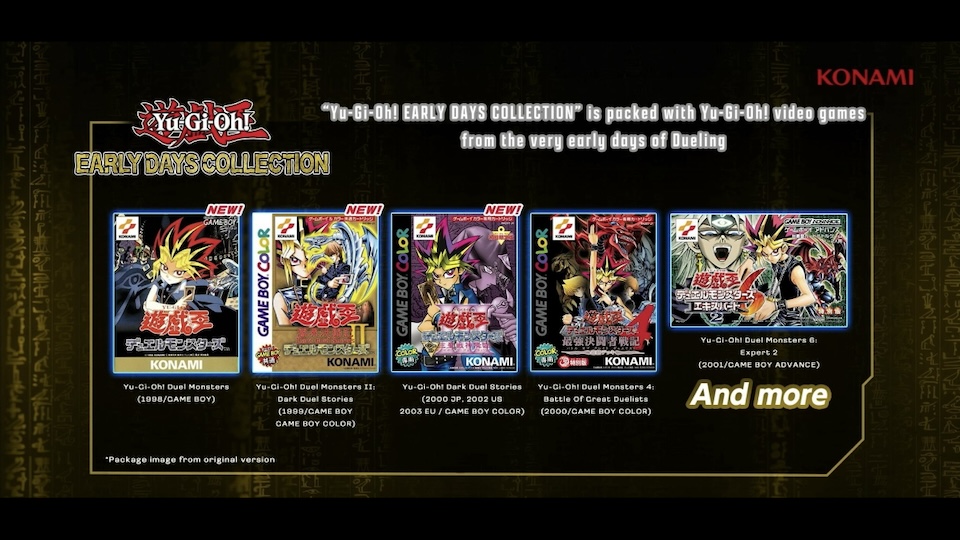
Yu-Gi-Oh Expert 2 is the only game in the Early Days Collection
that has no translation, at least for its original version. After Eternal Duelist Soul borrowed Expert
2’s dueling system for the English release, Expert 2 as a whole would get a
revision released for international audiences.
I call it a “revision” and not an “updated version” because it takes a
handful of cards out, changes some art and tweaks a few things that could be
considered either for better or for worse.
I guess Digital Eclipse threw the original version in there for the sake
of thoroughness and for the Japanese gamers that care. The game we got in America would be titled Yu-Gi-Oh:
Worldwide Edition: Stairway to the Destined Duel.
The Game Boy Advance era is where I think Yu-Gi-Oh games hit
their first big stride. Up to this point,
the games other than Capsule Monster GB with cheats have only reached the level
of “good enough.” Dungeon Dice Monsters
comes off like an experiment to see what the designers could do with the GBA’s
increased power and memory, which would explain why the monster clashing
graphics are the most visually interesting and system-pushing part of the whole
thing in an otherwise barebones framework.
After that, they took a big leap and made the first Yu-Gi-Oh game to
follow the rules of the real card game, the game that would be released in
America as Yu-Gi-Oh: The Eternal Duelist Soul.
At the turn of the millennium, Yu-Gi-Oh started finding its
footing and established what the franchise would become moving forward. The official card game from Konami was taking
hold and just as impactful was the premier of the Yu-Gi-Oh Duel Monsters anime.
There was no stopping the Yu-Gi-Oh hype train in Japan
and that meant there was no stopping the assembly line of Yu-Gi-Oh games to
feed the hungry masses that couldn’t get enough of it. It was another year and another Yu-Gi-Oh
game, this time titled Yu-Gi-Oh: Tri Holy God Advent. In Japan, that is.
It wasn’t until a year later that Yu-Gi-Oh made its American
debut when the Duel Monsters anime was dubbed into English by 4Kids Entertainment,
hot off the success of the merchandise fountain that is Pokemon. Fitting that the 4Kids dub of Yu-Gi-Oh named
a god after Roger Slifer because this thing exploded like the ending to Lobo’s
Paramilitary Christmas Special.
I could go on a long-winded old man monologue about how it
was the hottest thing in cool and one of my first shonen anime ever that I still
enjoy to this day despite its faults, but this is a game collection review so
I’ll keep it short. Yu-Gi-Oh’s anime
became a monster hit, but the manga it was based on still wouldn’t be
translated to English for a few more years.
If you look on the back of some of the English game boxes (they’re in
the instruction manuals in the collection) they say they’re based on the hit
television series, which is not technically true, and on the back of some manga
releases, a bit of text tacked on says it’s the inspiration for the hit anime
featuring scenes too intense for television, which actually is true in both
languages. In America, Yu-Gi-Oh was riding the
coattails of the anime specifically.
As I already stated in my review of Yu-Gi-Oh: Duel Links,
I’ve been a fan of the original Yu-Gi-Oh ever since it arrived in America through
the anime from Studio Gallop. When
Kazuki Takahashi wrote his manga about a kid gaining Egyptian magic and playing
games, he couldn’t have predicted the phenomena that it would become, let alone
that his little one-off Magic: The Gathering knock-off would be at the center
of it all. When Shonen Jump gets a hit
manga on their hands you’d better believe they’re going to merchandise that
sonbitch.
Inevitably that meant games across all manner of consoles,
in particular Nintendo’s handhelds. The
Yu-Gi-Oh Early Days Collection puts the first 13 (the marketing says 14, but
I’ll get to that) Nintendo handheld Yu-Gi-Oh games into one package and I was
hyped to get to both replay games I used to love and play games I never got to
before. The enhancements and new
translations made it all a big deal, but I swear you wouldn’t know just how big
a deal it was if you read the reviews.
I was going to get the collection anyway, but I’m
disappointed by the reviews of it I’ve read thus far. Regardless of whether I agree with them or
not, most give a general overview of the collection and come across as though
they only played each game for a little while before writing them off. Understandable, since there’s 13 games and they
only have so much time, but I’m of the mind that even if one were to recommend
the game, readers might want to know which games are more worth their time, how
many are any good, what to expect from each game in more detail and what the
cheats included in the collection can do to enhance their enjoyment.
The other sentiment I see is that it’s a collection made
only for the old-school Yu-Gi-Oh players and that the only people who will
enjoy the games are the ones nostalgic for them. I think that’s both a reductive way of
thinking and not true. There are games
in the collection that, even today, are a fun time, outdated cards or not. I would love for younger people who weren’t
around for them to experience some of these games and maybe get invested into
the card game’s simpler times.
I’m going to review the Yu-Gi-Oh Early Days collection more
thoroughly, less at the package as a collective whole and more the parts that
make it up so that readers can make a more informed purchase. I’ll look at every game in the collection,
give some context of where the source material was at the time of each game’s
release and some context of where I was at the release of some of these
games. I am writing this as a fan, but
I’ll try to keep the nostalgia goggles off.
Continuing from the first half for this year, there are a couple games I was unable to play or couldn't include. I was going to include SNK's Ironclad, but it was made for the Neogeo CD, a home console, and never got an arcade release. To counterbalance that, because of health complications, I haven't been able to go to the arcades I need to, which is the only way for me to play almost all of Capcom's Marvel licensed games, meaning I can't include X-Men vs. Street Fighter. If only the lawyers would let us have those games on home consoles again.
Yeah while I was getting this post ready, Capcom announced a new fighting collection with every Marvel fighting game and their Punisher game for good measure. It's kind of cheating the premise that I'm playing each of these games by order of release, but once I get that collection, I'll edit my thoughts on each one into previous posts and try to get back into the mindset of their respective year when playing them. I doubt any of them are going to change any of the winners of the year.
For now, we're in 1996 and SNK brought back their crossover fighting game idea in a big way.
Characters are the lifeblood of a fighting game. They are
the means by which the players engross themselves in the game through their
varying fighting styles and personalities as they clash in combat. From Mexican
wrestlers to masked karatekas to flawed super soldiers, the guys you see in
fighting games get wild.
Fighting game characters often shine in their own particular
way.Some are made to look cool first
and foremost, some are meant to be the most fun to play with and others are
made to be extremely difficult to use, but incredible in the right hands. Over
the years in the many many different fighting games I’ve played, I’ve
identified some fighters that excel in certain ways that no other has ever
matched.To recognize those standouts,
I’ve made this list of awards to celebrate the best of the best in fighting
game history, the Shonen Otaku Awards!
The only criteria I have for these awards is that they
cannot be from fighting games based on a license.
Voice actors are a critical part
of any animated medium.Just like any
live-action movie or TV show, no game or animated series would have anything
close to the kind of emotional impact it has without the performance to back it
up and voice actors have just as much training and background as the Hollywood stars.Among the many actors in games and anime, there are a select few who
stand out as my favorites.Based on my
previous writing one may expect such favorites to be the likes of Keith
Silverstein, Kevin Michael Richardson, David Brimmer, Maddie Blaustein or
Christopher Corey Smith, but that is a misconception.To set the record straight, I present my top
5 favorite voice actors ever.
Vanillaware is an example of an auteur game company that more companies should aspire to be. A company whose games are filled with love, care and everything that the developers like that, by extension, a good portion of players like them should like as well. Indeed, I have liked Vanillaware's games in the past. Odin's Sphere and Muramasa: The Demon Blade were both excellently-presented fantasy action games with substantial stories and simplistic head-on combat that only needed a few buttons at their core.
With Vanillaware's latest title, Dragon's Crown, I don't think me and the developers share the same tastes as well as in the past. Everything in its core is the company's enjoyable signature, but the smaller aspects around it keep Dragon's Crown from reaching greatness.
A climax is defined as "the point of greatest intensity or force in an ascending series or progression." In any story in any medium, it's the point where the plot goes all-out and the ultimate conflict plays out before the final resolution. It's what you likely remember the most when you walk out of a movie or finish reading a book, assuming there weren't any awkward moments that eventually became more remembered than anything else in the story it came from.
They can be done through a grand battle like the destruction of the Death Star in Star Wars or can even be a conflict of wits and unfolding plans like in Death Note or A Most Wanted Man.
But game stories have always had a preference for combat to keep the player interested, involved and empowered. In fact it's rather hard to think of many games with stories to tell that don't have combat of some sort in them.
I try not to be blinded by nostalgia. A game that held up back when there were few
games that even tried what it did can very well be total crap now thanks to
developers having a much stronger grasp on what they’re doing.
But it’s hard not to be blinded by nostalgia for Super Mario
Land 2: 6 Golden Coins. It was one of
the big games of my childhood I had on the original Game Boy alongside The Legend of Zelda: Link’s Awakening and the Game Boy
version of Donkey Kong. Of the three, I
only beat Link’s Awakening and they were all lost to the cruel forces of time
and ignorance.
Now a grown man who’s beaten the Viewtiful Joe games on
V-rated mode, I felt there was unfinished business with these games. Now that Super Mario Land 2 is on the 3DS
virtual console, I sought to finally close that chapter on my childhood and see
how the game held up after all these years.
Already going into detail on Mortal Kombat's key characters has taken up so much space it had to be divided into twopages, like the look into Blazblue's story.
And yet that is only the beginning. We have not even begun to delve into the appeal of the Mortal Kombat franchise, because there are even more aspects that make the Mortal Kombat brand what it is. If you thought the first two parts were long, you haven't seen anything yet.
Villains in the other fighting games I’ve covered have been
of the moustache-stroking variety, always having a sinister plan and team of
badasses at their beck and call to further their goals. Mortal Kombat’s villains are very much the
same.
Being on an even stronger system than the 3DS with 10 more playable characters added to the lineup of cuties, I was expecting Shinovi Versus to be even bigger and better than the first. I was right about it being bigger, and even better in some ways, but maybe not quite better overall.
For a blog called the Shonen Otaku Corner, I haven’t written
very much about anime or manga. It’s
been almost entirely focused on games instead of what the term “shonen” is
usually applied to. This is because, at
heart, I’m a gamer first and as much as I love the action-packed stories of
shonen, I find the way they can translate into kickass action games (and
vice-versa) captivating. Sometimes the
games can be better than their source material, as is the case with the rock-crushingly
popular shonen franchise Naruto.
Halloween is approaching. Everyone is getting out their costumes, setting up the
spooky decorations and watching classic horror movies. It’s also the time some gamers take to play
their favorite scary games, as well as October-themed specials going on for
games like Killing Floor and Team Fortress 2.
But for a lot of us, the scares are what we’re looking
for. Now’s the time to play the classics
like Eternal Darkness, Resident Evil, Silent Hill 2, System Shock 2 or Amnesia.
This year I have a recommendation on another horror
game. I’ve already gone over how Clock Tower is the scariest game ever made, but this
year I’m taking a moment to appreciate the aspects of a classic horror game
that don’t contribute to the horror.
Skullgirls keeps its music simple, but catchy. One of the key composers is Michiru Yamane, who’s
best known for her work on the long-running Castlevania series, so the
catchiness is to be expected.
To fit with the 40s motif of the game, the music is largely
comprised of jazz-like scores and softer melodies, with lots of saxophones,
pianos, and soft drum beats. Skullgirls
uses stage themes instead of character themes, and many of them feel like
something you’d hear in a game while exploring a world in an adventure game
instead of all the guitar-rocking of Guilty Gear and King of Fighters. This works nicely and makes the different,
well-imagined locations around the CanopyKingdom more memorable.
On a Halloween-themed episode of the Jimquisition,
Destructoid’s Jim Sterling brought up an interesting point regarding horror
games, and I think he was right on the money.
However, I was somewhat disturbed that he only gave a passing mention to
the game Clock Tower, because it deserves more credit than that. Clock Tower (that’s the original SNES game, not the first one released in America on the PS1)
is the scariest game I have ever seen.
It’s not like today’s games with proper controls, extensive voice
acting, and fun gameplay. After all,
it’s an SNES game, but, as Jim explained, it’s the distinct lack of those
features that make it so effective. I
have felt more true terror watching someone else play Clock Tower than I have
felt actually playing the Resident Evil remake and Silent Hill: Shattered
Memories. To summarize, these are 4 things Clock Tower has going for it that makes it so much scarier than
games today.
1. Gritty graphics
Jim already covered this trait
with his brief look at the Friday the 13th game, and the same
concept applies to Clock Tower. The
graphics are gritty, dark, and not pleasing to look at. Through the game, you discover the dead
bodies of all your friends who are killed in different ways. The 16 bit SNES is able to portray them with a degree of photorealism, but the pixilation of the old images creates an unsettling and
unfamiliar atmosphere that puts them somewhere on the slope down the uncanny
valley. The dead bodies you find all get
close-ups that are absolutely horrifying, and I can only imagine how scary they
must’ve looked to gamers back in the day the game was made. This is the big factor in what makes the
original Clock Tower scarier than its PS1 sequel, which is full of bright
colors and goofy-looking polygons. The
graphics only add to the bizarre and unnatural imagery found throughout the
game’s setting.
In Clock Tower, you do not play
as a S.T.A.R.S. member prepared for combat situations nor a space man with
badass buzz saw launchers. You are a
teenage girl with no weapons and almost no means of defense. All your friends are dead, and there’s a
creepy child with a giant pair of hedge clippers in the house that can come out
at any time and cut you in half (though the game never shows that). You can’t fight him. All you can do is run. Run and panic. That and pray you don’t get cornered in a room
with only one door, because then the odds of escape are even slimmer. You can tussle with the freak and possibly
knock him down temporarily or hide from him, but it’s usually not a good idea. And unlike a slasher film, where you know the
crazed murderer will be defeated somehow in the end, the heat is on in Clock
Tower, because whether or not you get that ending is entirely determined by
you: the player, and unless you cheat and look things up online, you don’t have
any idea how it will end. It is that
tension that demonstrates the emotional potential of games as an interactive
storytelling medium.
3. Silence
In games these days, we usually
hear something at nearly all times.
Maybe a side character talking, zombies groaning, the echo of our own
footsteps, and the sounds of lightning from the weather. But in Clock Tower, there is next to nothing. There are only a few sound effects, no music
to distract from the isolation except for fear music when being chased (raising
the tension further), and no voice acting to give the player a familiar human
voice. It is nothing but the cold sound
of silence ringing in your ear along with footsteps and your character's beating heart
until the scare chord plays to shock you even more than whatever it’s
accompanying, breaking the silence and telling you it’s a good time to be
afraid.
Regarded as one of the game's best moments.
4. Scissorman
As a
playable slasher movie, Clock Tower has one of the most effective slasher villains I’ve
ever seen. The main enemy of Clock Tower
is Bobby Barrows, also known as Scissorman.
He’s a strange, deformed little boy who wanders the mansion the
characters moved into with a giant pair of scissors (that I might as well call hedge
clippers), giving him the moniker “Scissorman.”
His schtick is pretty simple. He
can come from anywhere at any time and just walks toward you, snapping his
scissors together the entire time. You’d
think that since he merely walks, you can outrun him, but he moves surprisingly fast,
and it’s not helped by the main character not being very athletic herself. To make matters worse, it’s possible to trip
while running, no doubt leading to players shouting obscenities while their
heart races and the sound of scissors comes ever closer.
Much of this montage demonstrates just what I mean by "anywhere". He more or less teleports!
Even further adding to fear is
the fact that Scissorman is actually a small child, activating some kind of
primal fear we have about children not having a proper conscience.
I think I know why the front yard looks so neat.
All of this contributes to why
Clock Tower is the scariest game I have ever seen. Even the great horror titles of the last
generation haven’t matched its horrific brilliance and subtleties. With any luck, the game will receive a
Virtual Console release, and underwear manufacturers will profit from
it.