The Game Boy Advance era is where I think Yu-Gi-Oh games hit
their first big stride. Up to this point,
the games other than Capsule Monster GB with cheats have only reached the level
of “good enough.” Dungeon Dice Monsters
comes off like an experiment to see what the designers could do with the GBA’s
increased power and memory, which would explain why the monster clashing
graphics are the most visually interesting and system-pushing part of the whole
thing in an otherwise barebones framework.
After that, they took a big leap and made the first Yu-Gi-Oh game to
follow the rules of the real card game, the game that would be released in
American as Yu-Gi-Oh: The Eternal Duelist Soul.
Tuesday, June 23, 2026

Sunday, June 14, 2026
Yu-Gi-Oh: Early Days Collection Review: Part 2
At the turn of the millennium, Yu-Gi-Oh started finding its
footing and established what the franchise would become moving forward. The official card game from Konami was taking
hold and just as impactful was the premier of the Yu-Gi-Oh Duel Monsters anime.
There was no stopping the Yu-Gi-Oh hype train in Japan
and that meant there was no stopping the assembly line of Yu-Gi-Oh games to
feed the hungry masses that couldn’t get enough of it. It was another year and another Yu-Gi-Oh
game, this time titled Yu-Gi-Oh: Tri Holy God Advent. In Japan , that is.
I could go on a long-winded old man monologue about how it
was the hottest thing in cool and one of my first shonen anime ever that I still
enjoy to this day despite its faults, but this is a game collection review so
I’ll keep it short. Yu-Gi-Oh’s anime
became a monster hit, but the manga it was based on still wouldn’t be
translated to English for a few more years.
If you look on the back of some of the English game boxes (they’re in
the instruction manuals in the collection) they say they’re based on the hit
television series, which is not technically true, and on the back of some manga
releases, a bit of text tacked on says it’s the inspiration for the hit anime
featuring scenes too intense for television, which actually is true in both
languages. In America , Yu-Gi-Oh was riding the
coattails of the anime specifically.
Tuesday, June 9, 2026
Yu-Gi-Oh: Early Days Collection Review: Part 1
As I already stated in my review of Yu-Gi-Oh: Duel Links,
I’ve been a fan of the original Yu-Gi-Oh ever since it arrived in America through
the anime from Studio Gallop. When
Kazuki Takahashi wrote his manga about a kid gaining Egyptian magic and playing
games, he couldn’t have predicted the phenomena that it would become, let alone
that his little one-off Magic: The Gathering knock-off would be at the center
of it all. When Shonen Jump gets a hit
manga on their hands you’d better believe they’re going to merchandise that
sonbitch.

Inevitably that meant games across all manner of consoles,
in particular Nintendo’s handhelds. The
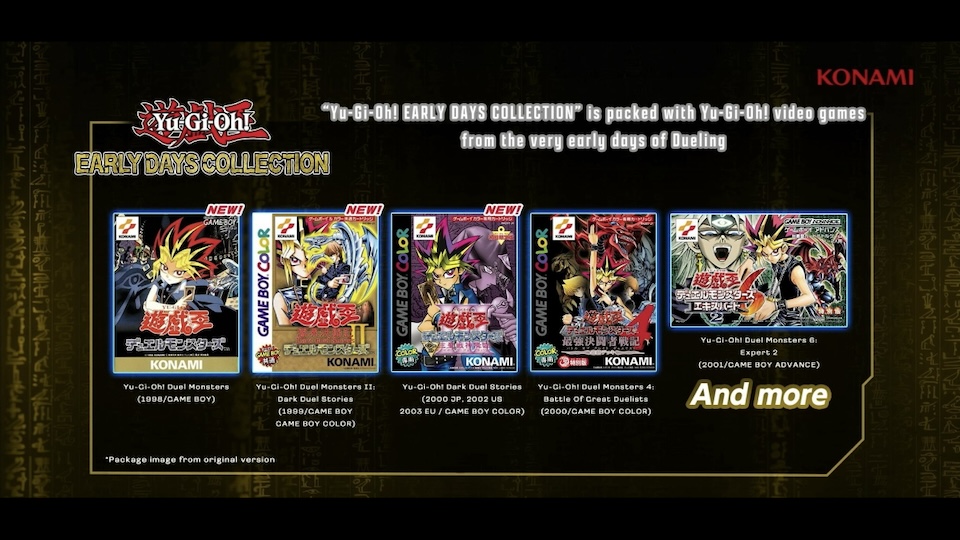
Yu-Gi-Oh Early Days Collection puts the first 13 (the marketing says 14, but
I’ll get to that) Nintendo handheld Yu-Gi-Oh games into one package and I was
hyped to get to both replay games I used to love and play games I never got to
before. The enhancements and new
translations made it all a big deal, but I swear you wouldn’t know just how big
a deal it was if you read the reviews.
Subscribe to:
Posts (Atom)