When it comes to shonen manga, anime and games, there are few with as much knowledge and love as the Shonen Otaku. Join me as we look at all different varieties of action-packed media. Mostly games.
My brief single sentence describing the music in the April Fools version of this post wasn’t entirely off the mark. Mortal Kombat’s music is extremely downplayed
to the point that you may not even notice there’s music at all. Where other fighting games have their music
bombastic or energizing, Mortal Kombat goes for ambience. In fact, in Mortal Kombat 9, there’s an
ambience meter in the sound options menu.
It’s more akin to tribal drumming than the
fanfare of other games. There’s
a lot of fast, looping drum beats, techno synth and long notes without any
particular melodies.
Villains in the other fighting games I’ve covered have been
of the moustache-stroking variety, always having a sinister plan and team of
badasses at their beck and call to further their goals. Mortal Kombat’s villains are very much the
same.
2 years ago I created the Shonen Otaku Corner as a way to share my writing and love of fictional media. Starting with my very first post ever on the second season of Yu Yu Hakusho I've written many game and anime (mostly game) feature stories that have given me excellent practice, strong examples of my skills and at least some recognition. With over 50,000 page views and some posts shared on official and fan Facebook pages, I'm modestly proud at how this blog has turned out.
I wasn't sure what I could do for something as special as my 100th post. Different online personalities have done them in different ways (Linkara's rant on Spider Man: One More Day for his 200th comes to mind). But my reviews and articles come on a case-by-case basis, and I didn't have anything planned for my 100th post.
So instead of a new review or the second part of the Mortal Kombat post, I thought I'd make this 100th post special by making it about the thoughts and processes that go into my writing instead of the end result. Specifically, the three big projects you can see in the tabs at the top of the page and how they came into being.
You may have noticed that the fighting games I’ve looked
over thus far have all been from Japan. The truth is, Japan has the heaviest focus in
making fighting games nowadays. There
have been a few more western-made fighting games in recent years, like the new
Killer Instinct and Skullgirls, but the only western fighting game franchise
that has managed to stick around consistently is one of the first: Mortal
Kombat.
Skullgirls keeps its music simple, but catchy. One of the key composers is Michiru Yamane, who’s
best known for her work on the long-running Castlevania series, so the
catchiness is to be expected.
To fit with the 40s motif of the game, the music is largely
comprised of jazz-like scores and softer melodies, with lots of saxophones,
pianos, and soft drum beats. Skullgirls
uses stage themes instead of character themes, and many of them feel like
something you’d hear in a game while exploring a world in an adventure game
instead of all the guitar-rocking of Guilty Gear and King of Fighters. This works nicely and makes the different,
well-imagined locations around the CanopyKingdom more memorable.
I don’t pay much mind to a lot of indie games. It’s true that creative ideas can come of
them, but too often they end up being 8-bit, pixilated, platformers lacking in
sufficient polish or all three, unlike the big-budget super games I usually
play.
I want my tax dollars to go into that thing!
That’s not to say I just brush indies off entirely. Indie games have allowed for some great
titles reminiscent of an earlier age without going as far back as the archaic age
of 8-bit graphics. I had a lot of fun
with Shank 2 and Castle Crashers, and even with its pixilated presentation
Retro City Rampage’s clever humor and gameplay flow kept me in the
experience. However, as fun as indie
games have been, none of them have absolutely wowed me. They’ve always been at least good, but not
great. 7s out of 10, but not 8s. Recommended, but not must-buys.
I got this for Christmas. That Phil always knows what to get.
I say this because there may be points in this article that
come off as complaints or condescension by comparing it to the other much
bigger-budget games.
Part of the reason for this may be because Skullgirls is not
exactly a big franchise yet. Not
counting its update, Skullgirls Encore, there has only been one game. With the other franchises, all the many games
that have come out have had their ups and downs that can be glanced over in the
grand scheme of things, but with Skullgirls, we have only one game to go over,
so in a manner of speaking, what I say about it applies to every Skullgirls
game there is.
Daisuke Ishiwatari comes back to compose again, so the
battle music consists largely of lots and lots of guitar riffs. However, the music isn’t always as “metal” as
in Guilty Gear. Instruments like the
piano and violin are used almost as often as the guitar is for a more sweeping
soundtrack that combines orchestral music you’d expect from a fantasy JRPG with
the guitar rocking you’d expect from Guilty Gear, which is a brilliant
combination.
Not a whole lot of people in Blazblue are absolutely in the
right, with the exception of Bang. Ragna
hates the NOL, but they’re not all evil.
Hakumen wanted to destroy Ragna, but only because there was a
possibility Ragna might destroy the world.
Everyone has their own goals and ideals, and that is a driving force of
many fights. However, the following
characters are quite clearly not in the right at all.
Covering Blazblue, Arc System Works’ second fighting game megahit, is a challenge. Not because of
the way the game plays; that’s easy enough to describe. The hardest part about explaining Blazblue is
the story. Anyone who says fighting
games lack story can officially go to hell because they have not played the
story mode of the Blazblue series (or read my previous posts).
The home console versions of the games have extensive story modes with far more text and story than the minimal amount presented in the arcade versions. In story mode, it’s a visual novel with
fighting game gameplay, and I love well-told stories with epic shonen
fighting. However, even though I do like it, there's no dancing around the fact that Blazblue
has one of the most complicated, convoluted stories I have ever read, and I
have played all but one Kingdom Hearts game and Virtue’s Last Reward.
Capcom and SNK have always been the titans of fighting
games, with fans in their respective camps pounding on each other dressed in Terry Bogard's hat and Ken Masters' gi, but there’s another company with its own fighting game camps that has essentially been doing its own thing over the years.
Arc System Works is a developer specializing in fast,
hand-drawn 2D fighting games with large character sprites and detailed
animations often mixed with deep, sometimes 3D backgrounds for a unique visual
effect that makes both stand out. They've made many critically praised fighting games this way, some of
which are based on action-packed licenses like Sengoku Basara, Fist of the
North Star, and Persona 4.
Based on a totally true story.
Their best and most prominent games come from the franchises
they made themselves: Guilty Gear and Blazblue.
Though the two are roughly equal in popularity (since it seems both
their camps have the same members), the former is the company’s claim to fame
and currently its longest-running franchise. I’ll
go over Blazblue in the next article, but for now I feel it’s necessary to go
over the franchise that set the stage for it and is still beloved today.
Believe it or not, Arc System Works was founded by several
former SNK developers with a few Capcom devs mixed in as well. SNK’s influence shows itself through ASW's love of
2D artwork and a few similar characters, but unlike SNK’s audience-targeting
designs, Guilty Gear is primarily designed around one man: Daisuke
Ishiwatari. Daisuke is the artist,
programmer (for the most part), musician (for the most part) and writer for
Guilty Gear, as well as the voice of the main character. Everything that Daisuke likes is in the games, making it one of the most indulgent game franchises I have ever seen, not that
that’s a bad thing. The gamers in campGuilty
Gear have tastes that match his, and the people outside of it are still
interested in it because it can be seen as having auteur qualities and simply because it's... Y'know... Cool. Having the game
primarily center around what this one man likes is probably the point, and what
he and the Guilty Gear camp likes is metal.
If there’s any one word that can describe Guilty Gear, it’s
“metal.” Guilty Gear is one of the most
metal game franchises there is.
Keep in mind that because these are articles about fighting
games, I will not be detailing the game Guilty Gear 2: Overture, the
3D action game that takes place after the fighting game installments. I will also not be covering Guilty Gear Xrd
because I am limiting myself to only covering games in each franchise
that have been out for at least a full year, mostly for spoiler reasons. That also means that I will not be detailing Blazblue: Chronophantasma when the time comes.
Story
Guilty Gear takes place several years into the cyberpunk-like
future, specifically 2180 in the first game.
Years before, in 2010, mankind discovered a new, special energy source
they called magic (because that’s the scientific term) and established more
powerful civilizations based around its use.
I must’ve missed that headline back in 2010.
The new technology proved to be humanity’s undoing when one
of the countries developed artificial organic weapons made from magic called
gears.
What precisely a gear is is rather vague, but from what I
understand, they’re creatures that are much more in tune with magic than
ordinary humans. Their appearance can be
anything from humanoid to giant teethed monstrosities, but the main ones in the
series are the former, though some use a special limiter that gives them human
form.
When they aren't human-types.
After the gear leader, the first complete gear, Justice,
turned on humanity, a century-long war commenced that destroyed much of the
world, including Japan, where nearly the entire population was wiped out.
The gears were ultimately defeated and Justice was sealed in an
extradimensional prison thanks to a gear-fighting organization called The
Sacred Order of Holy Knights, which disbanded when it was all over.
The first Guilty Gear takes place a few years after the war,
when a gear named Testament attempts to bring back Justice. Because of his power, and because they're still recovering from a huge war (or perhaps because Testament tricked them),
the Union of Nations holds a fighting tournament to find the strongest person
to fight Testament and stop him.
After the first game, the series drops the tournament structure
and becomes largely about the interaction between the characters, of which
there is quite a lot.
Heroes
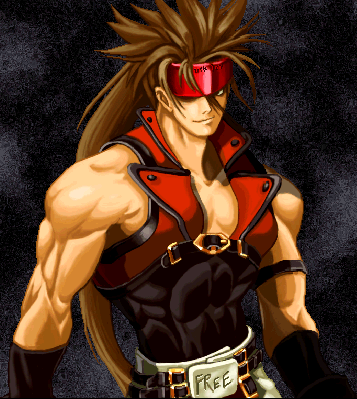
Guilty Gear’s main hero (or at least one of the two primary heroes) is Sol Badguy, a badass, sword-wielding, fire-shooting gear-killing
bounty hunter with a mysterious past slowly brought to light over the course of
the games.
From what we know so far, Sol’s real first name is
Frederick, and he along with two other people helped create the gears. He was made into the first (and possibly only) prototype gear. When the gears rebelled, he joined the Holy
Knights for a time, but left and took a special weapon called the Fireseal sword with him. Now that he’s a vigilante (like many of Guilty
Gear’s characters), Sol is wanted by the authorities.
You can see the previously-mentioned indulgence from Sol
alone. First, he’s an avatar of Daisuke,
even having the guy’s voice. Second, Sol
is practically made entirely of Daisuke’s favorite character traits: frizzled
hair, a revealing punk outfit, belts (the number of belts Guilty Gear
characters wear is ridiculous), a badass, unfazed demeanor, and a headband that
has the words “rock you” etched on it, referencing Queen, one of his favorite
bands. Sol is how Daisuke Ishiwatori
sees himself, to the point that, reportedly, some of his friends jokingly replace his last
name with “Badguy” when talking with or about him.
But just because he’s made specifically to make the designer
look cool doesn’t mean he’s a flat character.
He’s a little clichéd in my opinion, but he has some depth. Sol fights gears because he’s responsible for
them, and his relationship with his enemy and ally Ky Kiske is a somewhat
complicated one.
Someone tell me what the purpose of wearing belts on your sleeves is!
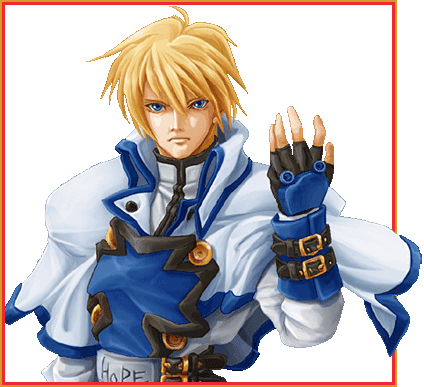
Ky was the most prominent member of the Holy Knights, having
become leader when he was only 16. After
the knights were disbanded, Ky became a member of the International Police
Force, where he upholds the law and investigates phenomena that occurs,
discovering the main villains and forming a rivalry with Sol in the process.
Ky is essentially on the lawful good alignment. He can be understanding of some characters
bending the law (he works with them on a few occasions), but outright monsters or the main villain feel the wrath of his
lightning-based weapon: the Fuuraiken. Think
of him kind of like the Harvey Bullock to Sol’s Batman (only much much better-looking).
Ky’s such a prestigious law enforcer that the main villains
made a robotic copy of him (more on that later).
He is also very much a civilized gentleman.
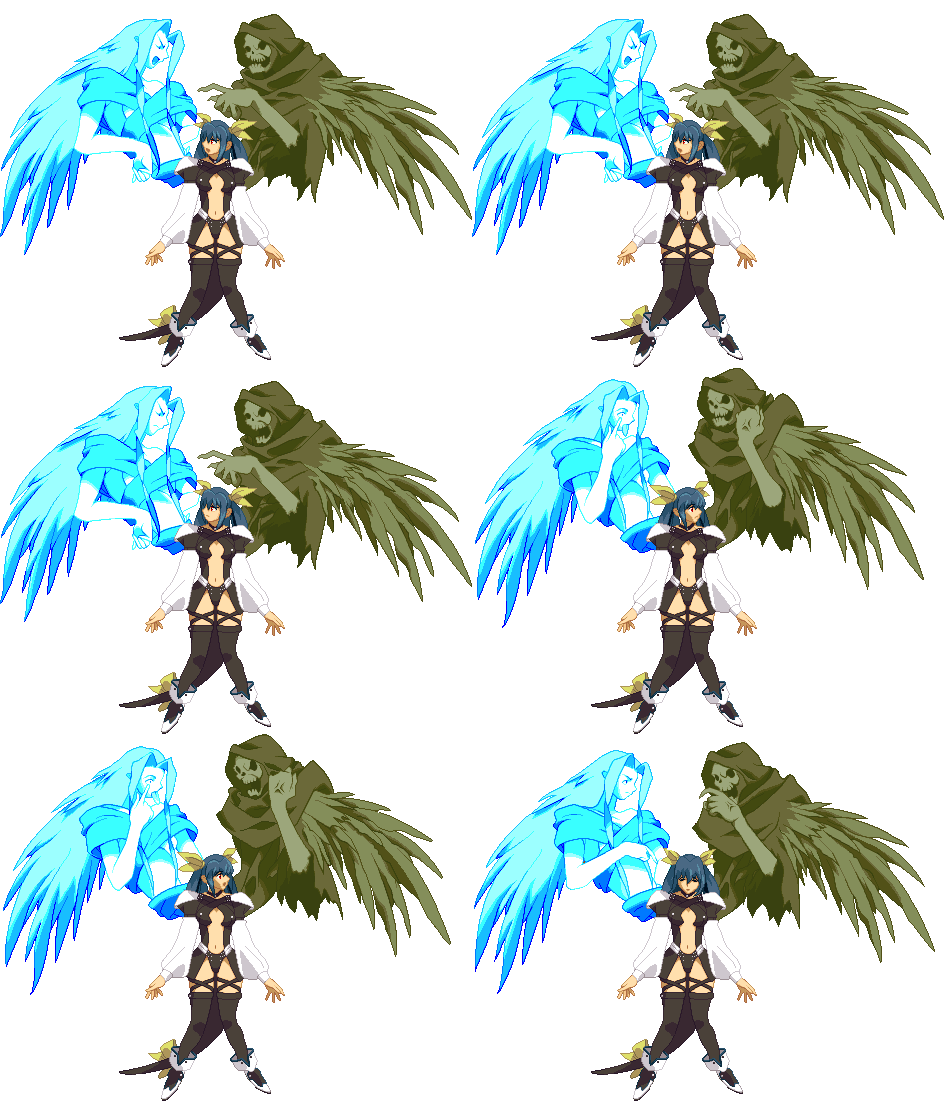
The third focus of the story is Dizzy, a girl
who is half-human and half-Gear, giving her the general appearance and
mannerisms of a human, but also giving her sentient wings, a tail, and a much
faster aging process (she's technically 3). This is likely
because she is the daughter of Justice, who was a human made into a gear.
Because she’s a gear, Dizzy was forced to live in isolation
from the general public, where she was protected by Testament, who had a new
resolve after Justice was destroyed.
Unfortunately, someone found out about her and a gigantic bounty was
placed on her head, leading to the events of Guilty Gear X, where Sol made his
way to her, but spared her life, since she’s the most innocent character in the
franchise by far.
Later, Testament allowed the side character Johnny and his
Jellyfish Pirates to look after her, where she gets along very well with
everyone.
What is the purpose of wearing belts on your wrists?
Dizzy’s two sentient, morphic wings act as her weapons:
Necro, the dark and violent one that uses brutality, and Undine, the light and
gentle one that uses ice. Both care for
Dizzy’s well being, but have different methods of protecting her (they briefly
argue with each other in one of her taunts).
With these three heroes, Guilty Gear has every variation of
good on the alignment spectrum: Chaotic good (Sol), neutral good (Dizzy) and
lawful good (Ky). I don’t know if that
was the intention when they were designed, but having the three variations of
heroes allows for more dynamic (and just plain entertaining) conflicts. Speaking of conflicts…
Villains
In the first Guilty Gear, the villain is the
previously-mentioned commander gear Justice.
Like Sol, she was one of the creators of the gears before she was turned
into the first successful human-like gear against her will, after which she
revolted and led the gears into the massive war.
They apparently made her a self-aware gear on
purpose with no contingency plan for if she rebelled, which is kind of a massive oversight. She had an army of bio-beasts at her command,
and they didn’t have any failsafes.
I thought Bush was out of office by then.
Every gear has no choice but to do what Justice says, all
except for the prototype gear, Sol, who ultimately kills her at the end of the
first game after she’s brought back by her loyal follower Testament.
What is the purpose of the belts on his shoulders?
Testament (not to be confused with the thrash metal band) is
similar to Sagat in that he changes his ways after his boss is defeated. Like Sol, he was originally with the Holy
Knights, but was changed into a gear.
Unlike Sol though, Testament did so willingly, and since he was not a
prototype gear, Testament answered to Justice.
Even after Justice was sealed away, Testament still remained
loyal to her, and in the first game, tried to sacrifice the warriors in the
tournament as a part of a ritual to bring her back, but ended up sacrificing himself instead.
Later, Testament was brought back to life by the young new
commander gear Dizzy, whom he decided to dedicate his life to protecting up
until she decided to join the Jellyfish Pirates. After that, Testament simply became a
protector of the magical forest he and Dizzy lived in. Thankfully he’s not entirely alone there. A blue spirit of some sort that takes the
form of a crow follows him around in battle. It’s
never explained what exactly it is, so I assume it’s just one of his spiritual
forest friends.
Must get pretty boring.
I suppose it’s unfair to classify Testament as a villain,
since his morality is not so black and white, but since he was an antagonist in
the first game, I think it counts.
Testament is a very likable character; noble to a fault,
but understanding.
He has a unique method of fighting as well. He’s great at twirling his scythe (made from
his own blood after the first game) and uses grim reaper-like attacks, but Testament
can also trip up his opponent with trap moves: one a tree that comes out of the
ground and the other a bloody web that is placed in midair. Testament’s opponent can see when he puts the
trap, but they have to memorize the location because they’re invisible once
they’re placed, and sprung when the enemy or one of their attacks touch them.
After the first game, the main villains have been the
Post-War Administration Bureau, a secret organization created to recover from
the war with the gears. Their exact
intentions and plans are unknown, but since said plans involve terrorizing
others, they quite clearly shouldn't be left alone.
They seem to be involved in making weapons for some nefarious purpose, since
they created robotic doubles of both Ky and Justice (the latter likely being a
plot excuse to use Justice as a combatant after she died) and gears as a whole, which were essentially made to be living weapons.
The PWAB is led by someone only ever referred to as “That
Man.” Even Sol only ever refers to him
by that name, which is odd, because he, That Man and the woman who would later
become Justice all helped make the gears, so you would think Sol/Frederick
would know his name.
Unless “That Man” is actually his real name and Mr. &
Mrs. Man were evil enough to name their kid “That.”
So are we dealing with the nazguls, dementors, or Organization 13?
That Man has yet to engage in combat himself (except in
Guilty Gear 2, which I’m not covering).
He never shows his face and operates in the shadows, often sending subordinates
to do the dirty work and occasionally engaging in conversation with some of the
characters.
One of said subordinates is a strange gear named
Raven, who also has yet to fight in the series proper. He seems to be something of a rival to side character Axl Low, a British street fighter from the 20th
century who was forcibly sent through time into Guilty Gear’s future. Apparently Raven is some sort of alternate
version of Axl. Whether that means he’s
some kind of Axl from an alternate future or a nega-Axl from an alternate
dimension has yet to be made clear.
That Man has his own mad scientist as well, named Crow. Crow made the robotic Kys and a robotic
reconstruction of Justice. Like Raven,
he has yet to be playable, instead sending his creations to do the fighting.
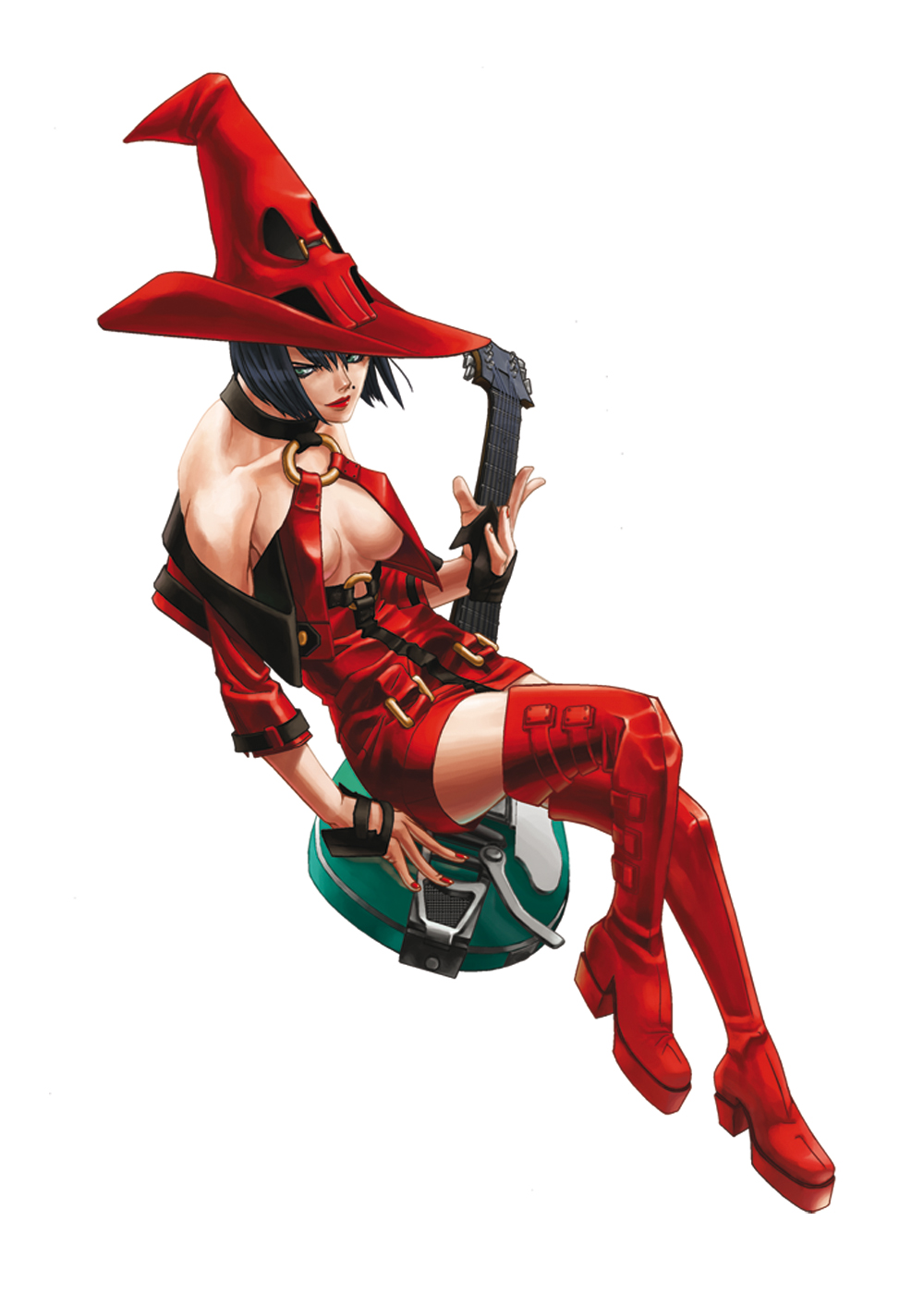
The only person working for the PWAB who actually fights is the guitar-playing woman known only as I-no.
Why does her hat need a belt? And why does it talk?
All you can really say about I-No’s motives is that she
works for That Man and loves terrorizing others. In fact, how loyal she even is can be called into
question, considering there are times where That Man has had to stop her. All she seems to ever do is deride the other
characters, and at one point, transport Sol into the past to make him fight his
past self, because she can somehow travel through both space and time (the latter
takes more power though). I guess either she or the writer don't about the time paradoxes that could cause.
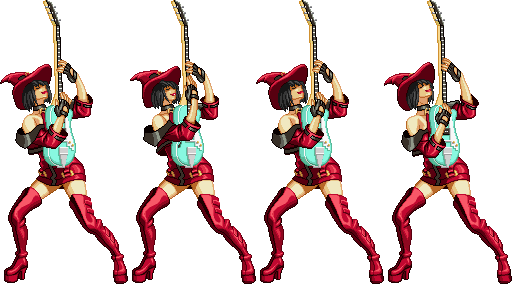
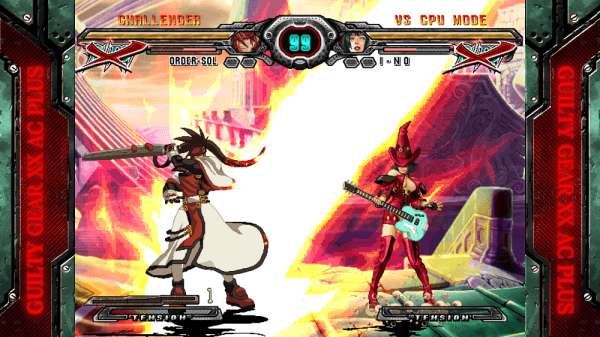
I-No’s impossibly cool weapon is her rocking guitar, which
can send out powerful shockwaves that come in different shapes and sizes. Some are simply projectiles, another is a
piercing aerial strike in the shape of a Halo energy sword, one of her super
attacks is a powerful explosive shock, and in Guilty Gear XX: Accent Core, she
has screen-filling onslaught attack called Megalomania.
I-No is the most prominent villain in Guilty Gear and
arguably one of its most popular characters rivaled only by Sol himself. Sure she’s an evil bitch, but she likes
having fun, and isn’t that a big part of what Guilty Gear is all about?
The Assassin’s Guild
Before I get to the other guys, I think I should detail a very
prominent subplot that runs parallel to Guilty Gear’s main story and involves a
good chunk of the side cast.
In the Guilty Gear universe, the Assassin’s Guild is a shady
organization that has existed for hundreds of years. It was originally founded by the gentlemanly
immortal British nightwalker, Slayer (not to be confused with the band of the
same name).
His wife Sharon is immortal, so he never runs out of blood.
What nightwalkers are isn’t specified, but they seem to be
essentially vampires with dark powers and a name similar to “Darkstalkers,”
which is probably a fun little tribute to the franchise, as some of Arc System
Work’s developers used to work on the Darkstalkers games.
After a while, Slayer retired, and his place was eventually
succeeded by an assassin named Zato-1.
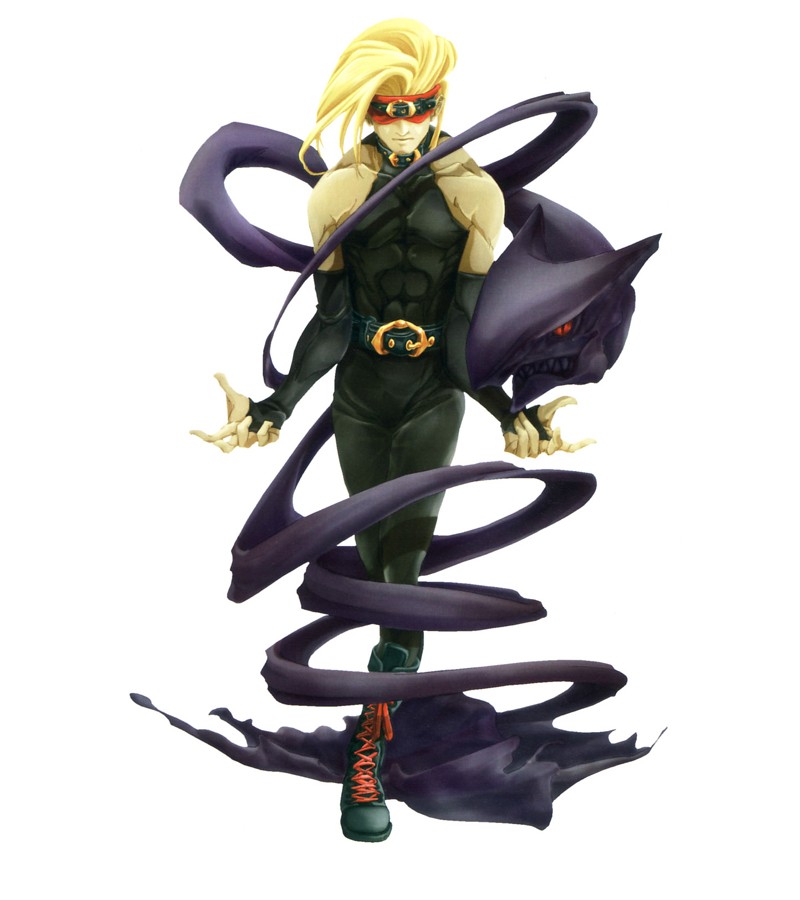
I know he's blind, but does he really have to keep his blindfold on with a belt?
Zato-1 rose to prominence in the guild thanks to the power
he got from a magical creature called a forbidden beast, named Eddie (not to be
confused with Eddie Van Halen), who gave Zato the ability to use his shadow as
a weapon at the cost of his eyesight.
Like most demonic entities you make pacts with, Eddie
corrupted Zato’s mind, leading Zato to be killed by his fellow assassin Millia
Rage (who has her own forbidden beast she uses to control her hair), after
which Eddie completely took over Zato’s dead body. Now, because Zato’s body is deteriorating,
Eddie is looking for a new body to possess, which commonly leads to him
attacking other characters in the same vein as Akuma.
The whole guild is falling apart at this point.
One of the other assassins, Venom, hates Millia for killing (or rather,
attempting to kill, in his denial) the master he was loyal to, and Slayer came
back to forcibly disband the guild because he doesn’t like the direction it’s
taken.
Slayer is kind of a badass... More than other characters, I mean.
Venom has very questionable equipment, not just in his
really stupid belt-laden outfit and that he somehow painted his insignia on his
bangs. The strangest thing about Venom
is his weapon. There is a character that
uses a key, another uses an anchor and another with folding fans, but none of
them are as strange as Venom’s weapon: a billiard cue.
I will never get over that.
A serious, near-faceless, badass assassin takes people out using
billiard balls and a cue. That is both
hilarious and awesome at the same time, especially since it works! Venom is able to place floating pool balls in
the air (up to 4, I believe), which he can hit with his cue to have them
ricochet around the stage and hurt his opponent, possibly multiple times. He also turns his opponent into a white ball
as a grab and shoots even bigger balls for his super attacks.
All this time I’ve been playing regular pool when I should
be playing EXTREME pool!
Break shot.
The Other Guys
While the heroes, villains, and Assassin’s Guild settle
their problems with each other (by talking them out, I'm sure), the other characters mind their own.
Among the side cast are Bridget, a boy raised as a girl by
nuns, Jam Kuradoberi, a Chinese kung-fu girl who opened her own restaurant after
claiming Dizzy’s bounty, and female samurai straight out of Ruroni Kenshin named Baiken, who along with two other characters is one of the few Japanese people
left in the world. During the war,
Baiken’s village was destroyed by gears and she lost an eye and arm (replacing
the arm with a chained claw). During
the attack she saw That Man, and has since sworn revenge. With such a personal connection to the main
villain, she may become a more important character later on.
The other Japanese characters are Anji-Mito (shown with
Baiken above) and May. The few Japanese people left in the world are of interest to the PWAB,
apparently because they’re able to use their own special kind of magic
(ki). Many, like May, don’t utilize it
though, so nobody shoots it out of their hands like an episode of Dragon Ball Z.
May is first mate of the Jellyfish pirates, a gang composed almost
entirely by young girls that travel on land and sea in their giant mechanical
ship. The captain of the fine flying
vessel is a sunglasses-wearing paragon of coolness named Johnny (and his last name isn't Cash).
The very concept raises a few questions. Isn’t only allowing young girls to be
on your crew sexist? What happens when
they grow up? Are there any kinds of
pedophilic implications?
Daisuke doesn’t care.
He liked the idea, and what he says goes. Or at least, what he or Norio Wakamoto says.
Man, look at the size of his belt.
Other characters include the previously-mentioned time
traveler Axl Low, special government agent of destruction Potemkin, a homunculus
named A.B.A. (not to be confused with Swedish music group ABBA) with a giant
talking key, and Faust, the single craziest character in any fighting game
ever.
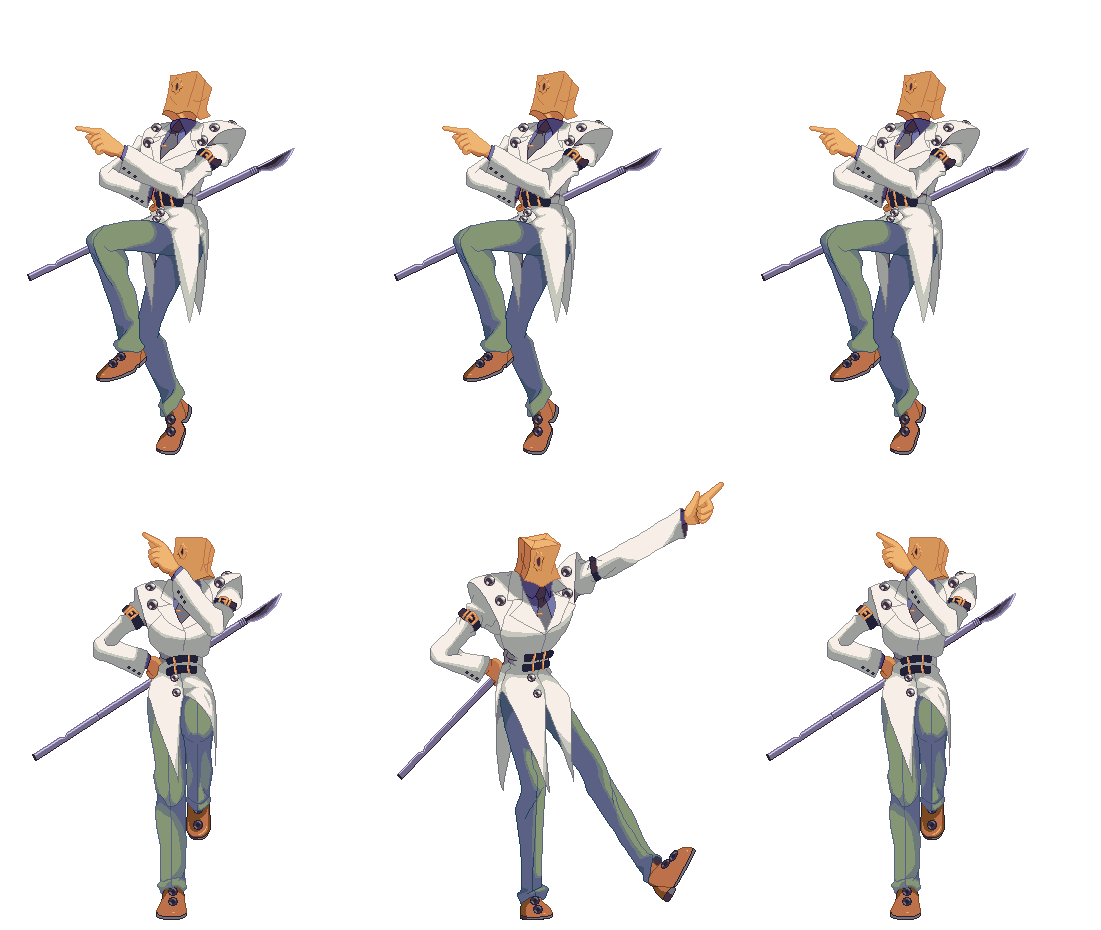
In the first Guilty Gear, Faust went by the name Dr.
Baldhead, a doctor who went crazy and started killing people after he believed he
accidentally killed someone (it later turned out to be a setup by the
Assassin’s Guild). After learning the truth, however,
he put a bag on his head and started going by the name of Faust to atone for
the people he killed by healing others (self-defense notwithstanding). Even when someone calls him Dr. Baldhead, he
tells them he isn’t that man anymore.
Outside of battle, Faust takes his job as a doctor seriously and is a very caring individual if you can ignore him being over 9
feet tall and wearing a bag on his head.
The way he flies to the scene of an incident on his magical umbrella
makes him like a more awesome Marry Poppins.
Does he really need belts for his shirt? What's wrong with buttons?
But when he has to fight, Faust is nucking futs. He uses a gigantic, oversized scalpel as his
weapon of choice, somehow vanishes and then smacks his opponents by hitting
them with a door that comes literally out of nowhere, throws a
never-ending supply of exploding bags, and turns into a baseball player to hit
his opponents with a bat. That’s only
the tip of the iceberg.
His wacky moves and contortionist fighting style make Faust
essentially a combat Loony Toon, and it's what makes him such a stand-out in
Guilty Gear’s cast. Hell, he’s a
standout out of all the characters in fighting games as a whole.
Faust contributes to what is particularly impressive about Guilty Gear: it actually has
one of the smaller character rosters in fighting games, but it’s able to get
the absolute most out of it to make what it has as long-lasting as any other game. I suppose it helps that each one has an
unlockable second moveset in some games, but even without them the characters
are so radically different and have such unique fighting styles, Venom’s
billiards, for example) that it never gets stale.
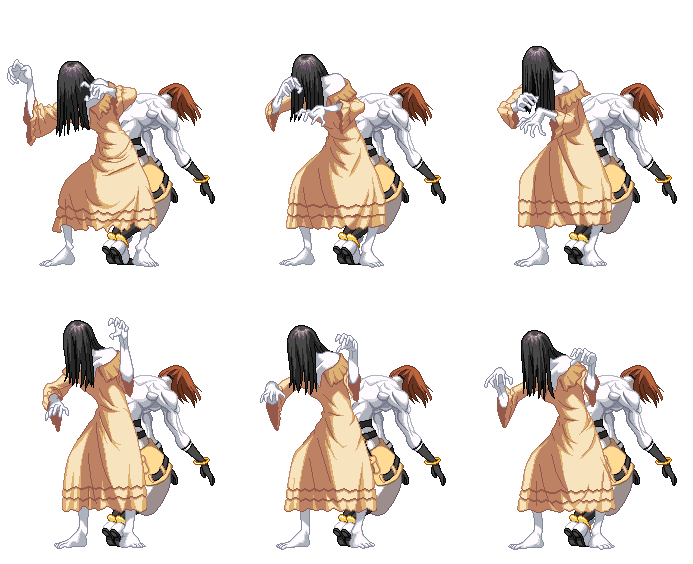
One of the best examples of this is the character Zappa (not to be
confused with Frank Zappa), a young man whose body is constantly possessed by a
number of ghosts, although he doesn’t know that’s what it is and thinks there’s
something wrong with him biologically.
What makes him an interesting character is how these ghosts
help him fight. In battle, Zappa
randomly switches possession between these ghosts, and each of them enables a
certain set of special moves alongside a handful of consistent base moves.
He has a group of ghosts that act as projectiles, a powerful
lightning ghost, a dog ghost, a sword ghost, and his default ghost taken
straight from The Ring.
Of course, Zappa doesn’t like being possessed, which is why
his story is all about looking for Faust to help him (even though he’s
technically not that kind of doctor).
The special battle introduction between him and Faust is pretty humorous,
in my opinion. There’s a lot of comedy
that goes on with the side characters in Guilty Gear.
When it comes down to it, the Guilty Gear characters are the embodiment of Daisuke’s
twisted pleasures and bizarre concepts. If he likes it, he throws it in: belts,
skin-tight outfits, being Japanese, little girls with giant weapons, fancy accessories and…
Music
You may have noticed a recurring trend in character
names. That trend carries over into many
of Guilty Gear’s attack names, like “Break the Law,” “Master of
Puppets,” “Napalm Death” and Ride the Lightning.” As I stated, the game is just crammed with
whatever Daisuke likes, and when you have such a man compose almost all of the
franchise’s music, the thesis that Guilty Gear is really "metal" is reinforced.
Jammin’.
Gameplay
Guilty Gear has a similar basic control structure to The King
of Fighters, but a very different feel and flow.
Instead of having two punch and kick buttons, Guilty Gear
has one punch, one kick, one slash, one heavy slash, and one dust attack
button. The punch and kick buttons are
used similarly to the weak punch and kick buttons in KOF and Street Fighter:
they’re for racking up combos and striking your opponent when they're close. Also like the fighting game big boys, quarter
circle and half circles are used with button presses for special and super
special attacks. Sometimes super special
attacks in Guilty Gear are done with the same quarter and half-circle movements
as the other two, but another common command for a super special attack in
Guilty Gear is half circle back and then straight forward. For me, that took some getting used to.
The slash attacks bring each character’s weapon into play (aside from a few unarmed combatants, like Slayer). A normal slash attack has better reach and does more damage, but
isn’t quite as fast as a punch or a kick, so if your opponent is up in your
grill, you generally want to keep them away with a flurry of punches and kicks
before following up with a slash or two.
The heavy slashes are very much the same: they take a moment to use, but
generally have good range and do strong damage.
The dust attack is a different story. No, it doesn’t kick dust in your opponent’s
face like Ryuji Yamazaki. The dust
attack takes the longest to use and requires good timing. When it connects, it launches your opponent helplessly into the air. If you hold up on the
control stick as they go up, you can follow them up there and deliver a
badass air combo.
Dust attack air combos make the screen turn blue for some reason.
The dust attacks demonstrates a big part of what sets Guilty Gear apart from other fighting games: the
fighting is much more free form. Powerful
attacks send players flying around the stage even more than in The King of
Fighters, combos are racked up with quick attacks that are easy to use in
succession, and just about every character can double jump, high jump, and air
dash around the stage. It has the feel of a multiplayer
brawler like Super Smash Brothers. In
fact, one of the spin-off games, Guilty Gear Isuka, was essentially that. It played much like the other Guilty Gear
games, but allowed for up to four fighters onscreen at once (it was annoying that there had to
be a separate command to change which way you were facing though).
The DS spin-off, Guilty Gear: Dust Strikers took things even
further by adding platforms for players to jump around on.
The special attack gauge in Guilty Gear, called the tension
gauge, is done differently from its peers as well. It’s charged in essentially the same way, though it’s also charged by simply running, but has a much wider variety of
uses. Depending on how full your tension gauge is, you can use a percentage of it for various actions (the
diversity of which depends on the game and control style).
For example, you can often use a super special attack
(“overdrive”) by using 50% of your meter and 25% can be used for certain
special moves that are stronger than a heavy slash attack and use the dust attack button. A common usage of tension is “fortress
defense.” By holding the control stick
back and pressing any two buttons (other than the dust button) at the same time,
you create a barrier that completely negates damage instead of reducing it, but it uses tension regardless of whether it's hit or not, making timing very much key.
Playing offensively is also key. Some Guilty Gear games take away your tension
if you rely on tactics that are too defensive, like avoiding combat as a
whole or guarding the entire time. That’s the game’s way of saying “fight
or GTFO!”
My favorite use of the tension gauge, outside of super
special attacks, is the instant kills, which by name, may sound like
total game breakers, but in reality, they’re extremely impractical. Impractical, but awesome as hell.
In order to use an instant kill, you first have to enter
instant kill mode by pressing all 4 buttons other than the dust attack at the
same time. Once in instant kill mode,
your tension gauge decreases, and you have to use your instant kill attack
before it’s completely out and starts draining your health instead (or you can
press the 4 buttons again to back out).
The thing is, almost all the instant kill attacks only work at point blank range, they can be guarded against, and entering instant kill mode
is a dead giveaway to your opponent.
If the instant kill misses or is blocked, or if the tension
gauge runs out while in instant kill mode, you lose the tension gauge for the
rest of the round, meaning you’ll see it more often used as a humiliating
finisher or a last-ditch move, and even then, probably not in a serious fight.
If it does
connect…
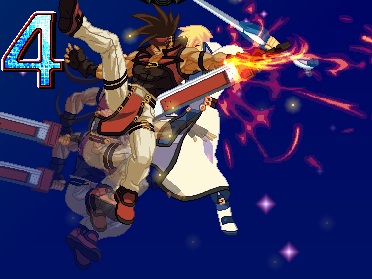
It’s glorious. Each character has their own badass and/or insane instant kill move that “destroys” your
opponent. To name just a few of my
favorites: Slayer punches the enemy into the sky and recites a haiku, Faust
blows up an atom bomb under the enemy, Venom turns his enemy into a billiard
ball and pulls off the previously-pictured break shot, and Eddie makes some
kind of giant blue ghost head that then turns into a skull (possibly to be symbolic). Some are rather plain, just killing the
opponent with a strong attack, but for the most part, instant kills are inventive
and just plain fun to watch. As I said, Guilty
Gear is indulgent, and it’s fun to indulge in our fantasy of destroying people
with the power of rock, a giant blue flame dragon, and a punch to the moon.
That's nothing! When Ralf punches someone, they're deatomized!
The last combat aspect to touch on is the burst gauge, which is
separate from the tension gauge and slowly refills over time on its own. When the burst gauge is full, you can
initiate a burst by pressing any button with the dust attack button. A burst can break an opponent’s combo and/or
knock them away from you for some breathing space as well as potentially
refill your tension. If a burst hits
your opponent, your tension gauge is maxed out.
If it doesn’t, it’s instantly drained.
It’s just another option to the combat that adds depth.
Bursts are actually used in a lot of fighting games,
including Tatsunoko vs. Capcom and other Arc System Works games like Persona 4
Arena, so anyone who has played such games should be quite familiar with them.
Personal Fighter of Choice: Robo-Ky
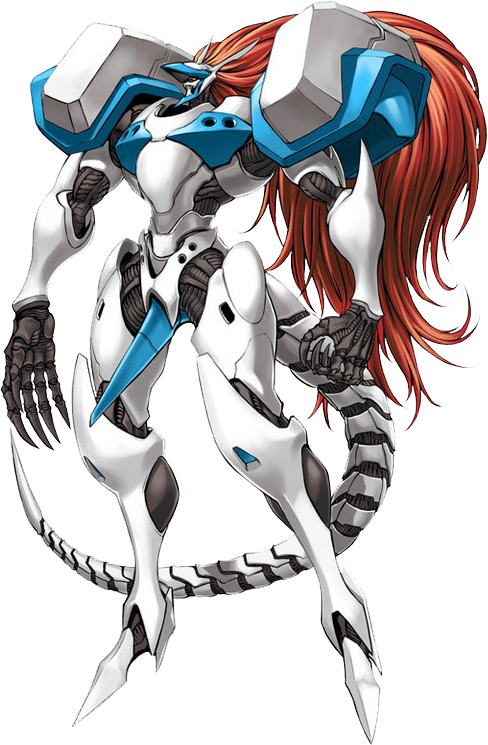
Robo-Ky is superior to the organic original.
Robo-Ky started
out as a carbon-copy of Ky, having been created by the PWAB to imitate him, but
since his debut, he’s established his own, very unique method of fighting with all
sorts of built-in contraptions.
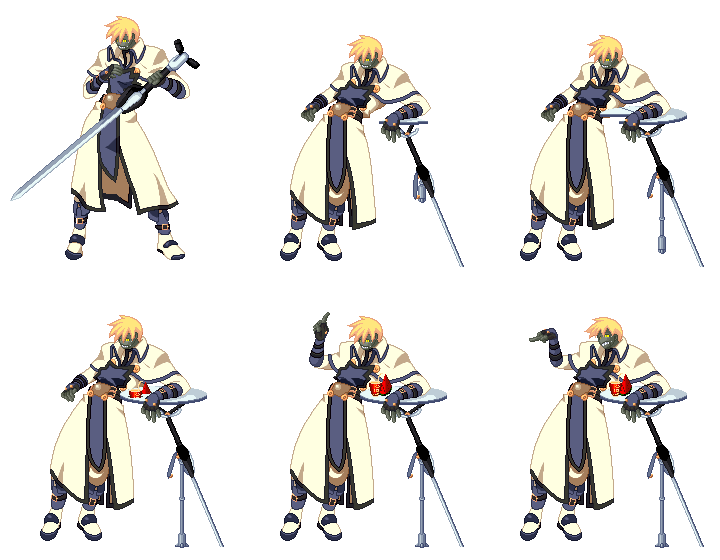
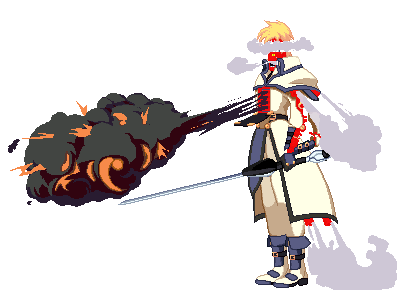
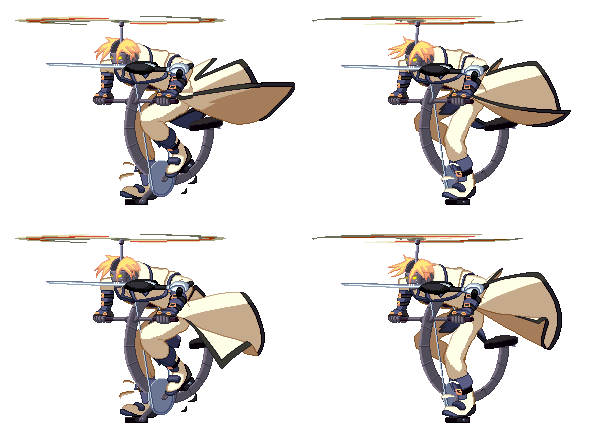
He has lazers
in his eyes, a spiked ball and shotgun in his wrists, missiles in his legs (and they’re longer than his legs are), a bazooka, and even a fancy chair
that folds out of his body and a table that folds out of his sword! Robo-Ky comes prepared!
All these
convenient appliances come with a price though.
Instead of a tension gauge, Robo-Ky has an electric gauge, which he can
charge by either using one of his grabbing special moves on his opponent or
standing on electrical panels he can place in front of himself by ducking and
pressing the dust attack button. This
makes charging the electric gauge a little trickier than a tension gauge, and a
lot of Robo-Ky’s attacks expend electricity in order to not work like crap. With some knockback strategy using basic attacks though, Robo-Ky can actually charge
his electric gauge even faster than a tension gauge.
Separately from
the electric gauge is his overheat gauge. When using some of his stronger, effective normal
attacks, the gauge's temperature indicator rises, requiring Robo-Ky to use one of his heavy slash
attacks to spit the exhaust out, and the closer to overheating he is, the more
the exhaust damages your opponent. If he
doesn’t cool down himself by venting the heat, he takes damage. That’s right, even Robo-Ky’s weakness is weaponized!
Using Robo-Ky
requires some fast and unconventional thinking (my favorite kind), but once you learn when it’s a
good time to place an electric panel or use his exhaust, he can be
incredible. He’s definitely my best and
favorite character to use.
That goes
beyond just being a heinous ass-kicker though.
Robo-Ky also has awesome theme music: his own rendition of Ky’s theme. Foolish humans call Robo-Ky’s music warbled and
loopy, but that is only because their defective minds cannot
comprehend its genius.
And his instant kill is by and large the greatest of
all.
All hail the mighty Robo-Ky!
We both are also of the having people troubles.
ぼくは彼女を抱えていたことがない.
Believe it or
not, at the end of Robo-Ky’s story mode in Guilty Gear XX: Accent Core Plus,
Crow tries to scrap him! Clearly that
man’s brain is defective! Robo-Ky is the
ultimate robot! He’s like the superman
of robots! He fights evil, makes
friends, and then flies off into the distance to fix someone else's life.
The Best of the Bunch
If you’re going
to get a Guilty Gear game for the best character selection and features, you
should get Guilty Gear XX: Accent Core Plus.
It has every single important Guilty Gear character up to that point (again,
excluding Guilty Gear 2), all the newest gameplay improvements, a story mode,
and more.
It should be
noted that Accent Core Plus’s story mode takes place after Guilty Gear XX’s
story mode, so that one may also be worth picking up for those who want to follow the plot. Guilty Gear X had a version with a story mode
too, but it was never released in America because we can’t have nice
things.
You can get
Accent Core Plus on any modern-day system, but the easiest way is to get it for
$15 on the Xbox Live Arcade or Playstation Network.
The HD versions have optional sidebars for the widescreens.
If you’re
feeling cheap though, you can instead get Guilty Gear XX Accent Core without
the plus, which I was able to find on the Wii for an incredibly cheap $5. The original Accent Core omits two characters
(who are technically dead at that point in the story anyway) and a couple
of stages. Accent Core doesn’t have a
story mode either (instead it has an arcade mode with character-specific win
quotes), but the fun gameplay still makes it a great pick-up-and-play title. The Wii version also has Gamecube controller support, so
there’s no need to worry about awkward nunchuck controls.
Still badass.
Other Media
Like The King
of Fighters, Guilty Gear has had a lot of drama CDs and novels that were never
released in America.
What KOF hasn’t
had (to my knowledge) is live performances of its awesome music. I haven’t been to one of them personally, but
I imagine the live performances of Guilty Gear’s soundtracks are
probably the most badass rock concerts ever organized until they make one based
around KOF. The live performances, like
the games themselves, have gotten their own CDs, but unlike the drama CDs,
fluency in Japanese is not necessary to appreciate good music, so if you like it enough, you can import them.
Finally, there’s the obligatory manga, titled Guilty Gear
Xtra, which was never released in America either, but I don't think we're missing
much. Guilty Gear Xtra is basically a
side-story taking place between the first Guilty Gear and Guilty Gear X. It focuses around two young characters: Tyr,
a mysterious young warrior, and Mizuha, a young girl and one of the last
surviving Japanese. The story centers
around the two during a cataclysm in which gears and gear parts are falling
from the sky due to a giant gear airship in space falling apart, all while
dealing with a villainess from the PWAB named Geena. The
Guilty Gear cast from the games play a key role, but little about them is
really expanded upon, since the focus is on the two new characters. Fans may be interested, but it’s ultimately your
average spin-off manga. It does have some above-average artwork though.
With Guilty
Gear Xrd on the horizon, I hope that this article brought some gamers up to
speed with the franchise, even if that wasn’t my original intention. Personally, I’m not getting
Xrd until I see some Robo-Ky! In the
meantime, I’ll keep playing Accent Core and the other fighting games I have. Like Blazblue.
No other fighting game franchise I will ever cover in these
camps has music that comes close to what The King of Fighters has. Through the fusion of a wide variety of music
styles and powerful, fast-paced rhythms, The King of Fighters games have
churned out masterpiece after masterpiece of musical glory. Each one delivers epic riffs that last at
least a minute and a half and always remain dynamic,
perfect for the high-octane fights that take place no matter what style or instruments are used. I would pay good money to see a live
performance of any of these instrumental songs.
Let me put it this way: Street Fighter music you tap your
foot to. Guilty Gear music you bang your
head to. Tekken music you freestyle
to. The King of Fighters music you
flashily fightto.
There are a lot of analogies one can make to compare SNK’s
supergiant The King of Fighters to Capcom’s supergiant Street Fighter. “If
Street Fighter is Chess, King of Fighters is
sumo.” “If Street Fighter is Marvel, King of
Fighters is DC.” The analogy I think is
most accurate is “If Street Fighter is Fist of the North Star, King of
Fighters is Dragonball Z.” I may have already
gone over the main King of Fighters games and why you should absolutely
do whatever it takes to play (most of) them, but for those who want the cliffnotes
version, I have this post.
Because of the length of this article, it will
have to be split into two parts, starting with King of Fighters’ story and
characters. Believe it or not, this one
part is around the same length as the entirety of the Street Fighter camp post. That just goes to show you how
much more story King of Fighters has to it.
Just as Super Mario Brothers kicked off the platforming
genre, Capcom’s Street Fighter 2 kicked off fighting games as we know them
today. You cannot discuss fighting games as a genre and leave out Street Fighter.
It’s arguably the most popular fighting game franchise out
there, with just about every possible piece of merchandise you can think of,
from a TV show to figures to Street Fighter Monopoly. To see what gives this fighting game
juggernaut such a large and dedicated camp, it’s best to look at each component that makes it what it is.
There was a Street Fighter before Street Fighter 2, but no one cares.
Story
Street Fighter’s story spreads across several games
in a rather anachronic order. Canonically, it
starts with the first Street
Fighter (though most of its plot is retconned by the others),
followed by the three Street Fighter Alpha games, 2, 4, and finally Street Fighter 3 (and its sequel, Third Strike).
With the exception of the Street Fighter Alpha games, the
plot of each game revolves around the Street Fighter martial arts tournament
(expect to see a lot of those in these camps).
In Street Fighter Alpha, characters run around
and fight each other while establishing some character.
After the first game, each of the Street Fighter tournaments
have some kind of evil intent behind them, which I will get into when discussing the villains.
Since the people running the tournaments aren’t morally
sound, rules on using supernatural abilities get the curb and everyone breaks
out the flaming kicks and sonic booms. After the characters are done kicking
everyone else’s ass, they do the same to the villain.
Unfortunately, very little of the important plot points
aren't explained in any of the games. The Alpha games help a good deal for some characters, but for many, backstories are instead explained in supplementary material. Who exactly is the ultimate victor of each
tournament is also vague unless you read supplementary material. Even Street Fighter 4, the one with the
heaviest story elements, has a long, drawn-out anime movie that sets up its
story just so you know what the hell's going on.
Street Fighter is a game franchise that does better at
characterization than it does plot.
The Heroes
From the Street Fighter Alpha games to 4 (timeline-wise), there are essentially
two main packs of heroes, who work with each other from time to time.
The first is the iconic duo of Ryu and Ken. The two are good friends and rivals, having both trained
under the same master. Both are
disciplined and love fighting, but while Ryu is often very strict and wanders
the earth to find opponents and get stronger, Ken is much more laid back and
likes to spend time with his girlfriend/wife. Ken enters the
Street Fighter tournaments for fun. Even
though they have their differences, they love sparring with each other, and
both use identical moves that have become infamous in gaming.
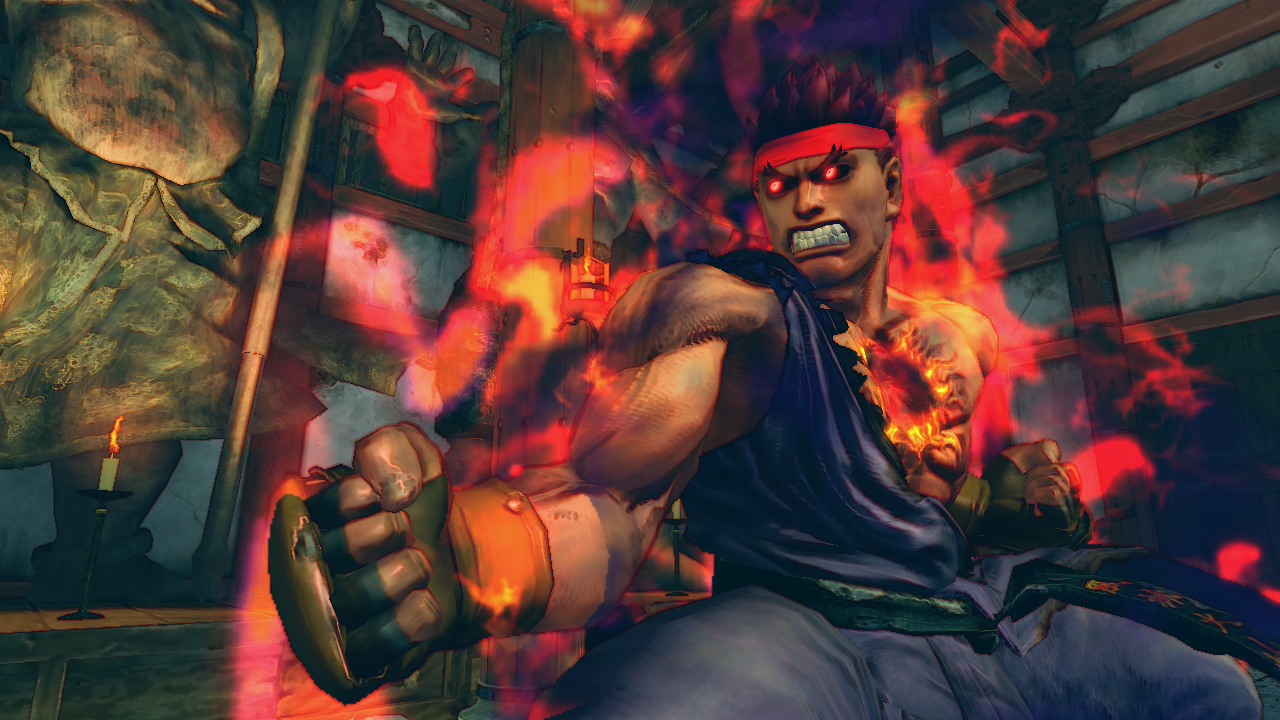
Much of Ryu's wandering is so that he can train himself to control the Dark Hadou within him (it's officially called the Satsui no Hadou, but that's too much of a mouthful for me). The Dark Hadou is kind of like the dark side. It's powerful, but destructive and can kill people if not kept under control. It's never stated outright, but it also seems to be a rare power only one other character, Akuma, seems to have. Ryu lost control of it once in a retcon that says he became Evil Ryu and struck the villain Sagat out of hatred, leaving the man his huge scar. Even though he only appeared once in canon, Evil Ryu has been playable in quite a few games.
Aiding in the fight against evil are two Interpol agents:
kick-centric fighting girl Chun Li and the army man Guile. Both are righteous crime fighters out for
vengeance and justice. Big-time villain M. Bison killed Chun Li’s father and is most likely responsible
for the disappearance of Guile’s friend Charlie (at the end of the Alpha games, in which he was playable). Chun Li and Guile work well together as foils. While Chun Li is
dedicated to her cause, she still shows that she has fun fighting. Guile, on the other hand, is almost always
stone-faced and serious. He’s depicted
as a pleasant person if you’re on his side (he has a wife and kids), just don’t
expect to see him laugh.
Although there are returning heroes in Street Fighter 3, like Ryu and Ken, the main character of 3 is a new
generation hero named Alex, a hot-headed war vet seeking revenge on the man
running the tournament for injuring his friend.
Sadly, he’s only in one Street Fighter game so far, leaving him with very
little character to speak of, even with his appearance in Tatsunoko vs.
Capcom.
The heroes are somewhat archetypal and make for a fun story, but the real driving forces of the stories told are...
Up until 3 (chronologically), the main villain of Street Fighter has
been the criminal organization Shadaloo, led by the evil dictator M.
Bison. Just as the heroes are archetypes, Bison is the archetypal evil
villain. He’s an egomaniacal, cruel,
abusive maniac who does whatever he needs to do to get his way, and he knows
it. His famously cheesy portrayal in the
Live Action Street Fighter movie is not far off.
Bison uses what is referred to as “psycho power.” It is essentially Bison’s physical
manipulation of the evil side of his soul, giving him the ability to corrupt
the minds of others, levitate himself through the air, increase his strength,
and even live without a body, transferring his soul into compatible new bodies, which is good, because psycho power has degenerative effects on them. He purged the good part of his soul, called "soul power", to use it and transferred that into the Italian fortune teller Rose. In a sense, he utilizes pure evil.
In the first two Street Fighter Alpha games, Bison was essentially just another criminal smuggling drugs, but in Street Fighter Alpha 3 he becomes the de facto villain, having his personal assassins and himself attack other characters in order to use their power to act as a fuel source a doomsday weapon called the Psycho Drive, which ultimately fails when his base is destroyed, along with himself.
He comes back in Street Fighter 2 to prove that he's the best, but then he's killed by Akuma, another villain. Naturally, he just gets another body in Street Fighter 4.
One of Bison’s associates is the villain of Street
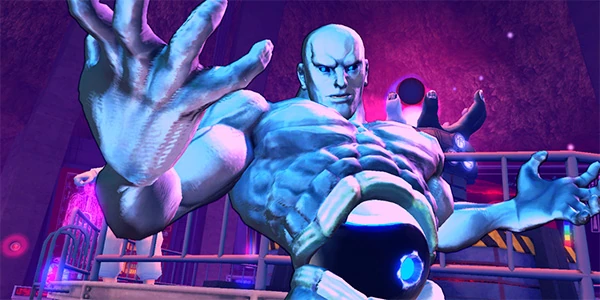
Fighter 4, Seth. Seth is the leader of
Shadaloo’s weapons division, S.I.N., and in the events of Street Fighter 4, he took over while his boss was away, prompting Bison to come after him.
Using a special device he has in place of a belly called the
Tandem Engine, Seth can copy moves from other fighters using their
combat data. The moves he copies in-game are all from the original 8 Street Fighter
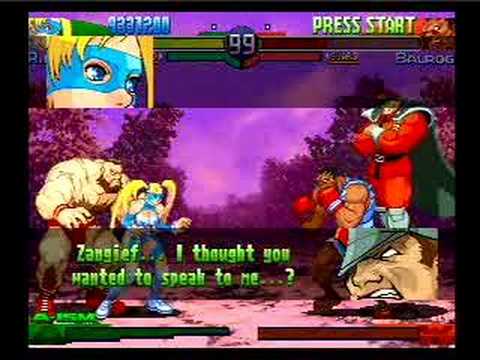
2 characters, such as the yoga master Dhalsim’s stretchy limbs, Guile’s sonic boom, and Russian wrestler Zangief’s atomic buster.
Seth's ultimate goal is a little less simple than simply wanting to become all-powerful. He organizes the Street Fighter 4 tournament in order to bring out Ryu's dormant Dark Hadou, as that is the last missing piece of power he needs to complete his project known as BLECE. BLECE (Boiling Liquid Energy Cell Explosion) is a special implant that uses a person's ki in order to make all their cells (and thus, their whole body) violently explode. Such a weapon would allow suicide bombers to go undetected through security and could spell chaos if it were ever completed and distributed. Before focusing on Ryu, S.I.N. captured a number of martial artists, presumably in an attempt to learn to manipulate ki.
Working under Seth is the franchise’s only villainess (not counting Bison's brainwashed female bodyguards): Juri,
a hedonistic, psychopathic, masochistic tae kwon do master who was given what
seems like a miniature Tandem Engine called the Feng Shui Engine in her
left eye. Though it can’t copy moves
like the Tandem Engine, the Feng Shui can absorb ki from her surroundings to
substantially increase her physical performance, as shown in her ultra combos.
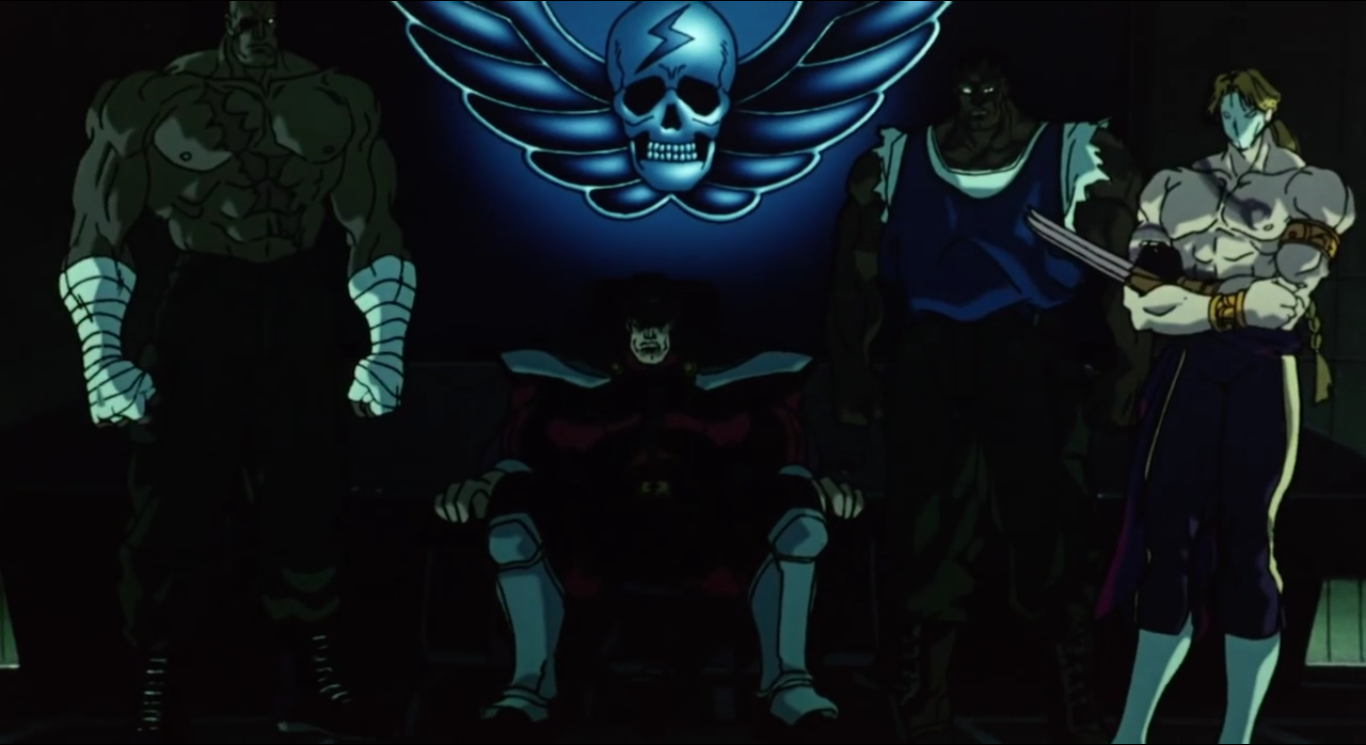
Siding with Bison is Shadaloo’s fearsome trio of their
strongest fighters: Vega, a narcissistic and acrobatic Spaniard who wears a
mask to protect his beautiful face, Balrog, a brutish boxing thug only in it
for the money, and Thailand
muy thai bruiser Sagat.
Sagat is more of an anti-villain compared to the psychos
Vega and Balrog. Ever since Ryu (or rather, Evil Ryu) defeated and scarred him in the first tournament, Sagat has sworn to defeat him with the help of Shadaloo. He’s not obsessed with beating Ryu like so
many similar villains are with their arch nemesis, but needless to say, if he
sees Ryu, Sagat won’t let him walk away.
Eventually though he learns that revenge is not the way to go, leaves Shadaloo, and quits
being evil, unlike his fellow chums.
Unaffiliated with any other villain is the rogue warrior Akuma. Akuma is not unlike Darth Vader to Ryu’s Luke
Skywalker, except Akuma isn’t Ryu’s father.
Akuma embraced the dark side of the Dark Hadou, making him
stronger, but also ruthless. Throughout
Street Fighter’s story, Akuma seeks worthy opponents to beat into a pulp,
usually with his signature move the Shun Goku Satsu (Wrath of the Raging Demon). When using it, the screen turns black (or
white, depending on the game) and the enemy is horribly mangled. What exactly happens at that time depends on
the source, but it’s known for being a dangerous, forbidden technique. Akuma used the Shun Goku Satsu to (almost)
kill his brother Gouken, Ryu and Ken’s master, So he's primarily the enemy of the series' main duo. Like Ryu, Akuma travels the earth, and thus
crosses paths with the other fighters.
The villain of Street Fighter 3 is slightly less
of an obvious villain than M. Bison or Akuma, but only slightly.
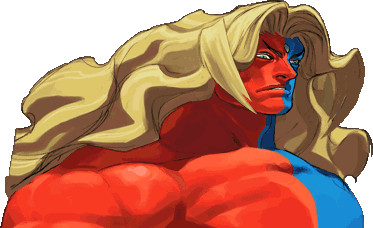
Gill is the modern-day leader of the Illuminati,
an organization has existed for thousands of years. The Illuminati have manipulated events over the course of history to
follow a prophecy that predicts the apocalypse, and have genetically
experimented with people to make supreme beings. Gill is their most successful supreme being, and the Illuminati believe him to be the reincarnation of their former emperor.
Gill holds the tournament
in Street Fighter 3 in order to find the best humans to repopulate the world
with after the apocalypse by taking them to a special area of the world that
will be safe when Armageddon comes.
In simpler terms: Gill and the Illuminati believe that the
apocalypse is going to happen anyway according to their prophecy, so he might
as well go with it and make the most of the end of the world by preparing to
rebuild it as best he can. Unlike Bison,
Gill believes what he does is for the benefit of mankind.
If his appearance doesn’t tip you off, Gill’s genetic
enhancements (somehow) allow him to use fire and ice, and his faux holy backstory
also gives him some divine power, most notably his seraphic wing and
resurrection moves. Seraphic wing does a
shitload of damage if you’re not guarding (similarly to a move from King of
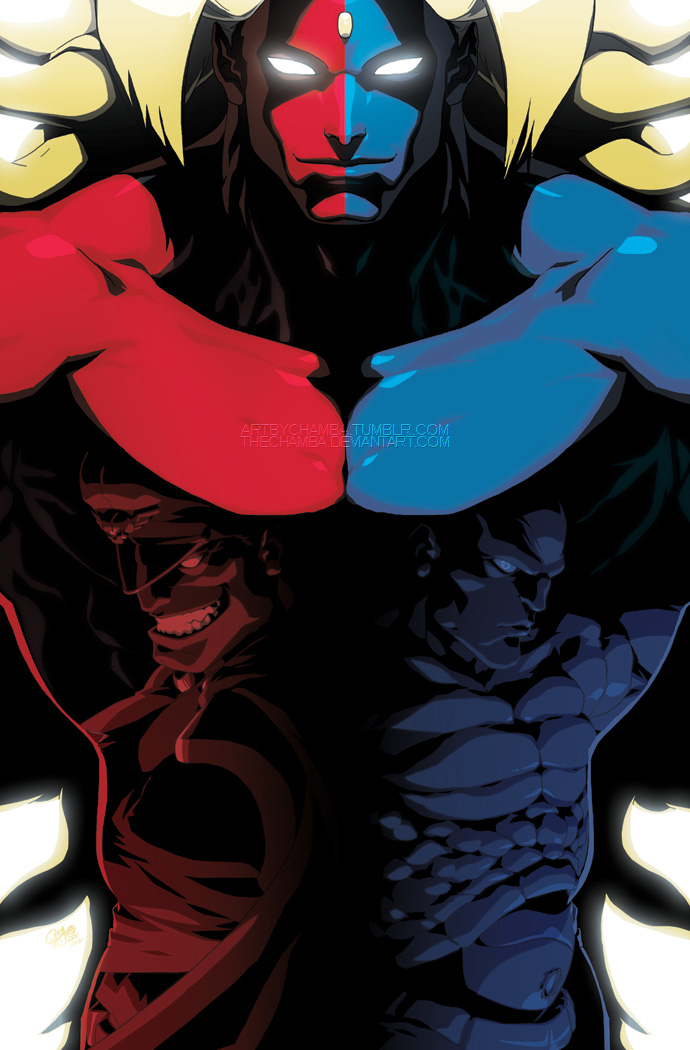
Fighter’s Orochi), and resurrection allows him to completely refill his health after being killed! Resurrection is probably campStreet
Fighter’s most despised super move.
"Ded."
The Other Guys
The handful of main characters don't do justice to the sheer volume of characters. Street Fighter has a vast collection of quirky fighters that are minor in the grand scheme of things, each with their own reasons for fighting, be it fame, the prize money or revenge. To name a few:
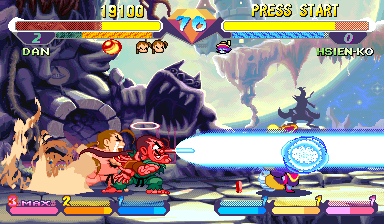
Dee Jay, a Jamaican dancing part machine, Cammy, a British special forces unit who was previously one of Bison's assassins, and Dan, a
jokingly pathetic fighter trying to promote his dojo.
Dan Hibiki is a playable mockery Capcom made to insult SNK, specifically the Art of Fighting games, now most known for its characters being in The King of Fighters. His "saikyo" (awesome) fighting style is a lot like the Art of Fighting's Kyokugen style... Only shit. His appearance is also one big composite, having Robert's face, a pink version of Ryo's gi, and some of Yuri's girly mannerisms, plus his dead dad's face looks like Takuma's Mr. Karate mask (though that was changed in the comics).
Dan was essentially conceived as a form of humiliation. You could prove how superior you are to someone else by using Dan as a handicap.
But come Street Fighter 4, the joke's on Capcom. Dan rules!
Almost as if by fate, Dan has been in the crossover games Capcom vs. SNK 2 and SNK vs. Capcom: SVC Chaos with Ryo.
There's also Rufus, who is simply awesome.
With all the muscular, serious, and prettyboy and muscular characters in Street
Fighter (and most fighting games, for that matter), Rufus stands out from the
crowd by being fat, talkative, and silly. He
rambles on, mistakes other people for his archenemy Ken Masters
(who doesn’t even know who Rufus is), and at the same time is able to kick
copious amounts of ass, practically ignoring his weight. It helps that his voice actor is Christopher
Corey Smith, one of my favorite actors in gaming, who does a fantastic job
giving Rufus a bumbling and semi-gruff voice to match his biker persona as well
as pulling off a funny Brooklyn accent.
He’s got a great leitmotif too.
Rufus is also example of what makes Street Fighter
characters so memorable: they’re exaggerated.
Whether it’s an exaggerated stereotype like T. Hawk or El Fuerte, or an
exaggerated character trait like Bison’s villainy or Vega’s vanity, Street
Fighter characters each have one trait that Capcom plays up. While several of the characters are established beyond that, they still reinforce their most noteworthy trait with virtually
everything they say and do on the battlefield, cementing their quirks into the
heads of players.
That exaggeration carries over into many characters’ visual
design. The constantly smiling Dee Jay
has a perfectly square jaw, the American fighter Guile wears an army uniform
with the American flag tattooed on his shoulder,
Turkish oil wrestler Hakan has red skin and metallic hair, and Akuma has a very
malformed, demon-like face. Several
Street Fighter characters are relatively normal-looking (by stylized anime standards), but for every 2 humans
Street Fighter has, it has one weirdo that symbolizes his or her big character
trait. That’s a good thing though,
because exaggerated characters are fun to watch and distinguish Street Fighter from
the other fighting game franchises.
Music
Complementing the characters are catchy
soundtracks. How the music is handled in
Street Fighter varies, but generally they have catchy beats you can tap your
foot to and never distract from the fighting.
They’re traditional game background music fitting with the stage or
characters that, in a way, make you want to keep your groove.
Street Fighter also has what I consider to be the best
character select music in gaming. In how many games do you notice that?
I’ll admit that SNK doesn’t have character select themes
nearly as awesome as these.
But as much as music, characters, and story are important to
a game’s identity, it’s the gameplay that defines it. Street Fighter (2) is practically the progenitor
of modern fighting games with its controls.
Combat
Players are given 6 buttons: weak, medium, and heavy punches
and kicks. Every punch and kick has its
own range, attack speed, damage output, and recovery time, some of which vary depending on the character and direction of the control stick when thrown. By using their moves in quick succession,
players can skillfully execute combos by not giving opponents the chance to
block (done by moving backwards). With
two ways to block (standing and ducking) and the ability to jump or bypass
blocking with a grab (how to grab depends on the game), there are a variety of
ways for players to keep their opponents guessing.
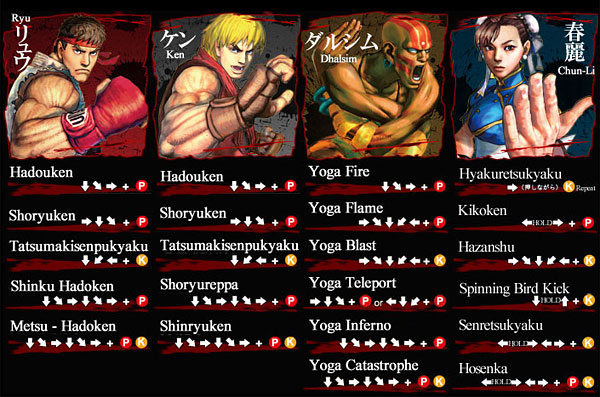
The big divider that differentiates the combatants are their special moves. By quickly inputting varying movement and/or
button commands (often circular motions and then pressing the corresponding
attack button type), characters execute more specialized and fantastical moves
that define the characters, such as Ryu's infamous Hadouken, Russian wrestler Zangief's Atomic Buster grab
move, or the acrobatic Vega's Flying Barcelona.
Adding to the
combat’s depth, the strength of the buttons used for the command usually
determines the move’s strength, speed, and/or range. For example, using the weak button for most
special moves may not do as much damage or have less range, but it’s faster and leaves you less
open if it doesn’t connect.
It's complicated at first, but get the half circles down and it's not that hard.
The combat rules beyond the core mechanics vary with each
installment in small ways. Eventually
Street Fighter adapted more powerful super special moves that could be used after
filling a gauge in varying ways. These super special moves are used through slightly more complex commands, such as
two quarter circles forward and a punch.
There are also EX moves in Street Fighter 3 & 4, done by pressing two of the required button
type at once, which use up part of the meter in order to enhance a special
attack.
Street Fighter 4 also introduced the even more powerful ultra
combo moves, the meter for which can only be filled by taking damage and at
most can only be used twice per match for each player (unless a near-impossible scenario occurs involving "white health"). Additionally, SF4 added focus attacks that take a
moment to charge, but can break through an opponent’s guard at
full power and shrugs off one attack during the charge.
Regardless of the Street Fighter you play, they are games of
pacing, method, and reaction. You have
to judge and adjust the distance between you and your opponent, think of what
your opponent might do to lower their guard, consider how long you’re left open
after certain attacks, react to them, and mix up moves so that your
opponent can’t predict them. This is especially emphasized in Street Fighter 3. In that game, tapping toward your opponent right before a hit strikes leaves you invincible for a split second to allow for a counterattack, putting an even stronger emphasis on pacing. Street Fighter is less for
the hot-blooded button mashers and leans more toward the cool, collected,
strategizing types. The
hot-blooded players are too busy playing The King of Fighters, which I will get
into in the next post.
This video embodies what makes Street Fighter’s combat so
fun and shows off camp Street Fighter’s most epic moment ever. Notice how often the players shifted left and
right or just struck the air in front of them.
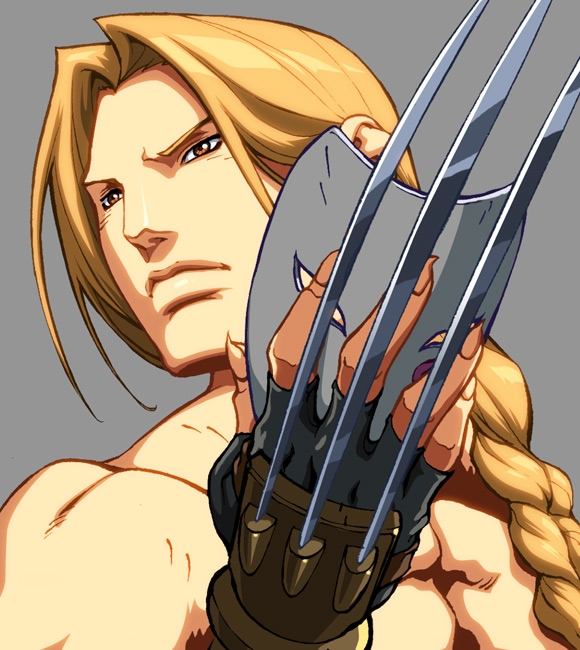
Personal fighter of choice: Vega.
Vega is a beautiful, flawless badass, and he knows it. Wearing a mask to preserve his beauty, Vega
works to get rid of everyone he finds inferior or ugly. He knows he’s awesome and vies to prove it
time and time again using his flashy and smooth moves, not unlike how I try to
look great when I play a game.
In battle, Vega is very acrobatic and has impressive range thanks to his clawed glove’s punches and special attacks. Vega has strong special and super moves that go straight across the
field, making it difficult for him to miss, provided you use good timing, and his scarlet terror attack is a good way to knock an opponent back at close range. In the right hands, he can be a seriously
slippery opponent.
His style of fighting is more in line with the faster
screen rakers seen in The King of Fighters, which made him much easier to
adjust to for me. In fact, he’s the
first character I beat Super Street Fighter 4 with on hard mode.
I don’t like being obvious with character choices by
choosing ones that are popular, but Vega’s fast play, eccentric
personality, and showmanship make him my character of choice in any Street
Fighter game he’s in.
As for Street Fighter 3, where Shadaloo is completely
absent, I go with Remy in Third Strike, because he is an actual King of Fighters character. He has Robert Garcia's projectiles from KOF 2003 as well as his dive kick, Ash Crimson's updraft kick and Iori Yagami's fashion sense (with Omega Rugal's insignia; that or a shirt once worn by Mick Jagger). Hell, one of his super attacks is practically the exact same as Ash's minus the green flames. I'd say they made him just for me, and there's clearly some inspiration from SNK visually, but Ash was actually made after Remy. Whatever was behind him though, Remy is my go-to Third Strike character.
The best of the bunch
If there’s any single Street Fighter
game I recommend, it’s Super Street Fighter 4.
Whether it’s the first Super Street Fighter 4 or any of its updated
re-releases, it stands above every Street Fighter game before it. While the Street Fighter Alpha titles are
strong on backstory and Street Fighter 3 has unique visuals and characters,
Street Fighter 4 has the strongest character count and content. Every character is fully voiced in English, endings are fully animated, there are actual prologues and the stylized 3D is
the perfect transition from the 2D titles before it.
I particularly recommend the 3D edition on the 3DS, which has every DLC outfit for every character unlocked
from the start, optional touch screen taps to use moves, an impressive 3D
effect with a special camera mode to show it off and the entire thing is portable. The trade-off is that
none of the stages are animated. Only the characters.
Why Capcom didn’t release Street Fighter 4 on the Wii, a
much stronger system, perplexes me.
I also enjoy the spin-off game Super Gem Fighter: Mini Mix, a much more lighthearted, simplified and cutesy Street Fighter game (with a few non-SF characters) in which most of the fighters change into different outfits for their combos and use the most delightfully absurd special attacks. You can get the original release on the PS1 or on the Street Fighter Alpha Anthology for the PS2. Yes, I have a disc with 3 of the biggest Street Fighter games and my favorite out of them all is Gem Fighter. Of course, it wouldn't be nearly as funny without knowing the source material.
"Oyaji biim!"
Other Media
As stated in the third paragraph, Street
Fighter has a lot of merch outside of the games. Some are promotional tie-ins, such as two OVAs for Street Fighter 4, and adaptations that tell their own stories. There’s the semi-famous live-action movie
starring Jean Claude Van Damme as Guile, as well as a 26-episode animated TV show slightly based off of it. Both the movie and show paint Guile as the
main hero, who fights the evil forces of M. Bison with other Street Fighters
from the games. As you can tell from the
premise alone, they deviate from the games in many many areas. Some people like to watch the live-action movie
for its cheesiness and Raul Julia’s acting in his final role, but the animated
series…
Just sucks. The characters are bland and derailed, fight scenes have no weight or finesse, the voice acting is poorly directed, and not to mention the animation is painfully inconsistent.
I’ve
heard some people like to watch it just to laugh at it, but I doubt anyone has
willingly suffered through the entire run and enjoyed it.
There’s another live-action movie based off of Street
Fighter called Street Fighter: The Legend of Chun Li, but it’s pretty much one
big insult to Street Fighter fans, possibly even moreso than the first live-action movie. You can see exactly why in Matthew Buck’s detailed review.
The Street Fighter movie you want to see is the animated movie based off of Street Fighter 2. It’s not great, and it certainly
suffers from some of the shortcomings 90s anime usually did, but the animation
is solid, the characters are accurate, and there’s a lot of (good) street fighting that
goes down. I guarantee the animated
Street Fighter 2 movie will give you more enjoyment than 5 episodes of that
awful TV show.
As sort of a follow-up, the animation studio behind the Street Fighter 2 animated movie also made a short series called Street Fighter 2V. Unlike the movie, 2V reinterprets the characters of the game in their younger years before the Alpha games came out, so knowing the characters well by this point makes it a bit of a pain to watch, honestly.
There were animated movies based off of the Street Fighter
Alpha games too, but trust me when I tell you that they are forgettable.
There are also Street Fighter comics. At first there was a comic adaptation by Malibu Comics, which was just about as bad as the TV show for many of the same
reasons, but since then there have been more faithful manga adaptations,
including a spin-off manga called Sakura Ganbaru, which centers on the daily
life of Street Fighter Alpha 2’s Sakura Kasugano. It’s amusing, but not especially notable.
The best comics are the ones by UDON Entertainment,
which I swear the Street Fighter camp immortalize on museum pedestals in vacuum-sealed diamond cases in a sacred booby-trapped temple. If they do, it’s for good reasons,
because the UDON Street Fighter comic may be one of the best comics based on a game I
have ever seen. It expands on the story and has strong, flashy fight scenes courtesy
of UDON’s nearly flawless artwork, in which they have great experience with
drawing for Capcom games (the endings in Tatsunoko vs. Capcom and all the graphics for Super Street Fighter 2 Turbo HD Remix, for example). Every panel in the Street Fighter comics are
rich, colorful, and full of texture and detail. To see a nice showcase of some of their work, browse UDON's official DeviantArt page.
Like I said though, "nearly flawless." On occasion characters can look off-model.
Apparently using the Tiger Shot too much shrinks your head.
Street Fighter is truly the fighting game of fighting games, like the Fist of the North Star to shonen. Once it kicked off the fighting game genre, we got the varied fighting game camps we have today.
If you think this wimpy franchise is badass
and action-packed, you’d best be ready for the next post, in which I’ll objectively
and completely without bias detail Street Fighter’s rival and SNK’s massive,
superior fighting game flagship (because I haven’t gone into detail on it
enough already)!