When it comes to shonen manga, anime and games, there are few with as much knowledge and love as the Shonen Otaku. Join me as we look at all different varieties of action-packed media. Mostly games.
2004 was the end of an era for arcades. The Neogeo had an astonishing 14 year run, a
true testament to its power, but after Samurai Shodown 5 Special, SNK decided
that it was time to move forward in their arcade technology so they started
using Sammy/Sega’s Atomiswave, an awesome system that allowed for an excellent
fusion of 2D and 3D visuals, not unlike the NAOMI system. Outside of the games SNK would make for it,
it had games like Dolphin Blue, Arc System Works’ Fist of the North Star game
and DIMP’s The Rumble Fish. All in all
it was a great home for SNK to make bigger and better arcade games.
What did Capcom have?
Capcom was doing very well for themselves on home consoles
and came out with some of the greatest games of all time, like the Viewtiful
Joe franchise, Resident Evil 4 and Haunting Ground. The arcades didn’t get any of the action from
them during this time, partially for reasons I’ve already explained regarding
home console hardware catching up and partially because as much success as
Capcom saw, this was also an era of Capcom idiocy.
“People didn’t like our half-assed asset recycle bin
fighting game?!Clearly the people don’t
want arcade games!” “People didn’t like our already mediocre game about Japanese
warlords?!But we edited the entire
setting with no context to replace it, made the music worse, changed the
gameplay and even cut content!Clearly those
stupid Americans don’t want it!What
they want is Beatdown: Fists of Vengeance!” “Hey, Hideaki Istuno!I have some stuff here left over from the guy who bailed!Make a sequel to Devil May Cry in a few
months, will you?”
SNK didn’t release anywhere close to as many games as Capcom
did, but since games on the Atomiswave were able to be ported to the PS2 and
Xbox very easily (not sure why not the Gamecube), this means they could cover
both fields..With the increased memory
capacity of PS2 discs, SNK was also able to dip into their arcade game library
and make compilations like the Fatal Fury Battle Archives and Art of Fighting
Anthology.
Finally and most notably, SNK made the King of
Fighters: Maximum Impact games, console-exclusive 3D KOF games with their own
continuities that for once actually got proper advertising and merchandise in
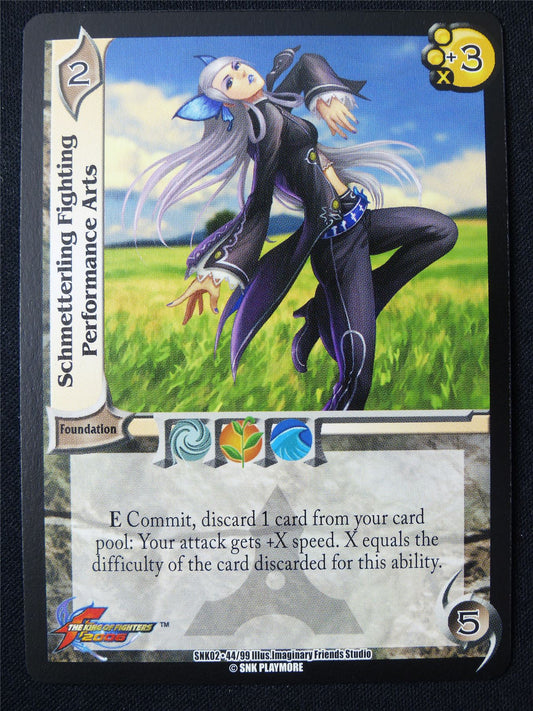
English.Ads for Maximum Impact appeared
in magazines, there were TV commercials, the Hong Kong
comic was released in English (as was KOF 2003’s) and Maximum Impact 2/The King
of Fighters 2006 got its own sets of trading cards for the Universal Fighting
System card game alongside Samurai Shodown 5.
Capcom would eventually make a big comeback to arcades with
one game in particular, but that wouldn’t come out until 2008, so until then we
got 4 different games on the Atomiswave for SNK to build their portfolio with
for this stretch of time before Capcom entered the picture again to challenge
SNK’s arcade dominance.
1991 started the era of the fighting game. With some precendent established, 1992 had
both companies start to pick up momentum on the craze Street Fighter 2 and
Fatal Fury started the previous year and expand on what they could do with this
new genre of games, all the while pumping out the sports, shoot-em-ups and
beat-em-ups that had by this point proven to be a safe bet. At least, SNK was pumping out the other
games.
Something you’ll notice about this year is that Capcom’s
arcade production is dwarfed by SNK’s.
This year I’ll be looking at 10 SNK games and only 5 Capcom games, 2 of
which are Street Fighter 2 reversions.
It’s as if they put so much effort into their big monster hit Street
Fighter 2 that they didn’t give as much attention to the rest of them. Their continued home console development
might have played a part too, I suppose, which includes a Super Nintendo port of Street Fighter 2 that made absolute gangbusters.
This was also the year Midway got into the fighting game genre with the first Mortal Kombat, starting a legacy that would last a lifetime, but let's not make this a 3-way battle.
What else happened in 1992?
Well, there was some cartoon that revolutionized
television animation and continues to get merchandise and high praise even 30
years later, but nothing important.
There are so many games (from SNK) this time that it will be
split into 2 parts.
In the realm of gaming, 1991 was very significant for SNK,
Capcom and Nintendo.Nintendo released
the Super Nintendo, their super powerful 16 bit system that would become home
to SNK and Capcom’s fighting games, which started kicking off the same year
with each company’s flagships and company mascots making their (actual)
debuts.Nintendo’s war was with Sega and
their Genesis on the home console battlefield though, a separate one from
Capcom and SNK’s arcade battlefield happening around the same time.Judging home ports might be a neat idea for a
future article, but for now I am deciding which company is the King of Arcades
for 1991.Naturally there’s a lot to say
about the two big titles for this year.
The King of Fighters is my all-time favorite fighting game
franchise hands down, but I’ve never been what some would call a purist. Some
fans spend a fortune trying to get original Neogeo hardware to play games on,
but I have always played pretty much anything but the original hardware unless
I come across it at an arcade. KOF 11
has a great PS2 port and 13 and 14 have solid multiplatform releases, as KOF 11
is when SNK really started upping their game in bonus content for home versions. The games before 11, however, have been all
over the place over the years, with many different ports that can give a player
a noticeably different experience and range of content despite the core games
remaining, be it in presentation or bonus features.
I very much want people to play all the KOF games that don’t
make you want to ram a nail through your skull (i.e. not KOF 94 & 95) and
there are so many different ways to get them now that it can be tricky to know
which ones gives you your money’s worth and is the best way to play them.For the sake of helping with such decisions,
and for an interesting little look at the differences, I have written this
little guide on a few of the different ports available for the KOF games before
KOF 11.