For 1984 it looks like Namco and Midway started moving away
from their shooter games and put more of their efforts into the innovation and invention
of new styles of play they were also seeing success in. This resulted in some games that could only
exist in that experimental, developmental period of gaming. Who made the better games in that time is
what we’re going to find out.
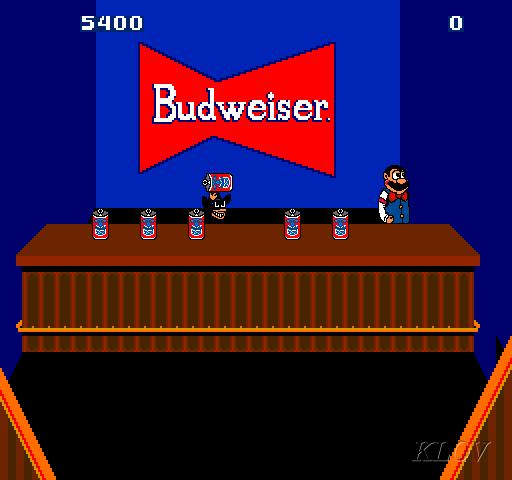
It’s a game all about juggling tasks, where you quickly get
everyone their (root) beer, catch used mugs and gather some tips for extra
points. Since you quickly snap between
each lane, there’s no need for precision in movement, making the controls nice
and tight. It’s a fun and unique enough
premise for a pick-up-and-play game, but what helps it along is its
personality. The bartender has a big,
expressive face for some cute victory animations and there’s a minigame in
between some levels to shake things up.
This game was memorable enough to get an appearance in Wreck-It Ralph.

It’s unbeatable without a guide and to make matters worse,
it’s one of the longest arcade games I’ve ever seen. It can take at least half an hour of dying
just to get past 10 floors and they want players to do 60! That doesn’t take into account all the ways
players can run into unbeatable situations and traps that send them back to
previous floors! I hope you don’t have
to use the bathroom at whatever arcade you’re playing it at! Maybe some of this would have flown for a
console game, but as an arcade game it’s one of the worst either company has
made!

In some re-releases of Tower
of Druaga , such as in the Namco Museum Tower
of Druaga
Again though,America
Again though,
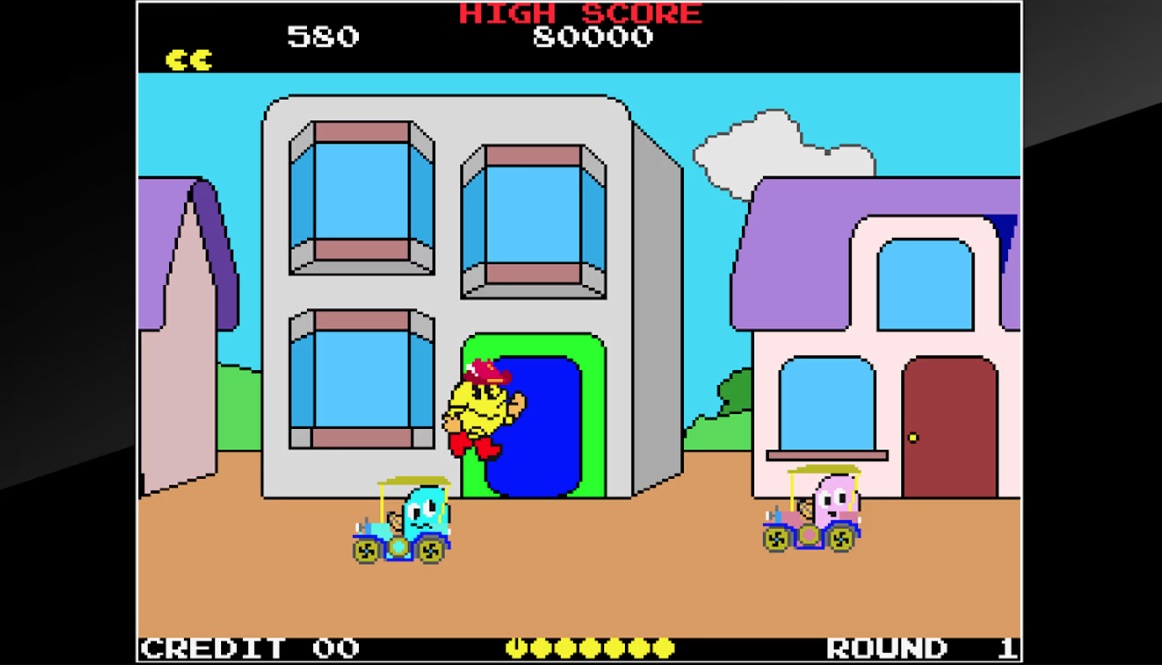
Pac-Land(NAM): Pac-Man switches genres into a platforming adventure in which he tries to return a fairy he finds to her home and then has to hoof it back to his one home once he's done. Pac-Land is in fact the first side scrolling platformer ever made and at first it's surprisingly decent, with varied environments, a fair number of different ways the ghosts can harass you, serviceable controls with both walking and running. Before long though it gets more frustratingly difficult than fun. Still, for the very first game of its kind I'm shocked it works as well as it does.
Marble Madness(MID): I had no expectations for this game
whatsoever. When I saw a game called
Marble Madness, I was expecting a bunch of circles ramming each other. I couldn’t have been more wrong. Marble Madness is actually Super Monkey Ball
before Super Monkey Ball. You control a
marble and carefully roll it down obstacle courses.

It’s not just a visual gimmick either. The levels are distinct from each other with
unique obstacles and enemies and there’s a surprisingly catchy soundtrack with more
layers than the simplistic jingles I’ve heard up to now.
The downside of Marble Madness is there are only 6 levels
and if you do a straight run without ever losing, you can beat it in 5
minutes. I’ve complained about the lack
of content in previous games, but that was referring to how the games pad
themselves out for longer than they had the variety for. Marble Madness is 6 levels of wholly unique
level design and I’d much rather have that than play 20 levels of the same Pac-Man
maze or Xevious background. It’s the
game of the year.
Dragon Buster(NAM

The Winner
Midway wins. I think
that’s pretty obvious. They had Tapper
and Marble Madness. Namco had Tower of Druaga
Meanwhile...
1984 was the year of Capcom. Alongside their forgettable and frustrating games were Sonson and 1942. 1942 looks better than anything here, even if the game gets stale, and Sonson is a much better action platformer experience than Dragon Buster. I think Marble Madness is the only one from either Midway or Namco that stands above Capcom's offerings for 1984 with its visuals, music and gameplay all impressing from a technical level. Midway can take that little win home.
After their initial slow period in their formative years, games from both Capcom and SNK will start being compared to the current contestants starting in the next post as I go over the games of 1985, where Namco has five games and Midway has... One... Gauntlet had better be amazing if Midway wants to win next time.

No comments:
Post a Comment