Good used game sellers are an important part of gaming. It’s thanks to places like Ebay, Gamestop,
Half-Priced Books and smaller retail shops that we’re still able to buy games long
out of production at generally reasonable prices. Say what you want about Gamestop, because
they deserve it, but there are several used games I couldn’t have gotten
without them, one of which was a big contributor to my Namco vs. Midway series
(sorry I haven’t gotten back to that, but I hit a snag with one of the
games). Without these decent sellers I
would have never gotten games like Neogeo Battle Coliseum, Ninja Gaiden: Dragon
Sword or the King of Fighters Maximum Impact games. These are the people that should be
supported.
Showing posts with label Konami. Show all posts
Showing posts with label Konami. Show all posts
Sunday, August 9, 2026
The Game Scammer Days of Reckoning

Saturday, July 4, 2026
Yu-Gi-Oh Early Days Collection Review Part 5
In 2004, the original Yu-Gi-Oh manga ended and America , being
as late to the party as we possibly could, only then started getting it
translated in 2005 while the anime was going into the filler arcs. You would think the original series would be
wrapping up with the story ending, but if you think that you clearly don’t know
Shonen Jump. The anime was such a money
maker in America
that 4Kids commissioned Studio Gallop to make a movie and the Capsule Monsters
miniseries. Even Japan wasn’t
done with the manga because they made Yu-Gi-Oh R! The original Yu-Gi-Oh was being kept around
for at least a little while longer while the sequel to the anime, Yu-Gi-Oh GX,
was starting to take off.
| Recommended read. |
That means more original-era games and the last game included in the Early
Days Collection.
Wednesday, July 1, 2026
Yu-Gi-Oh: Early Days Collection Review: Part 4
A player might notice something around this time of Yu-Gi-Oh game releases; there were no new characters introduced in them and, barring the game-original Reshef of Destruction, there hadn't been for a while. That's because Battle City was the last part of the manga to center around the card game. After that came the final part with exploring the pharaoh's memories, where only two card games would be played for the rest of the story, none of which was between any new characters. By 2004, in Japan, at least, the original manga ended. This means the games had to start using the same roster of characters in new ways.
Yu-Gi-Oh Expert 2 is the only game in the Early Days Collection
that has no translation, at least for its original version. After Eternal Duelist Soul borrowed Expert
2’s dueling system for the English release, Expert 2 as a whole would get a
revision released for international audiences.
I call it a “revision” and not an “updated version” because it takes a
handful of cards out, changes some art and tweaks a few things that could be
considered either for better or for worse.
I guess Digital Eclipse threw the original version in there for the sake
of thoroughness and for the Japanese gamers that care. The game we got in America
Tuesday, June 23, 2026
Yu-Gi-Oh: Early Days Collection Review: Part 3
The Game Boy Advance era is where I think Yu-Gi-Oh games hit
their first big stride. Up to this point,
the games other than Capsule Monster GB with cheats have only reached the level
of “good enough.” Dungeon Dice Monsters
comes off like an experiment to see what the designers could do with the GBA’s
increased power and memory, which would explain why the monster clashing
graphics are the most visually interesting and system-pushing part of the whole
thing in an otherwise barebones framework.
After that, they took a big leap and made the first Yu-Gi-Oh game to
follow the rules of the real card game, the game that would be released in
America as Yu-Gi-Oh: The Eternal Duelist Soul.
Sunday, June 14, 2026
Yu-Gi-Oh: Early Days Collection Review: Part 2
At the turn of the millennium, Yu-Gi-Oh started finding its
footing and established what the franchise would become moving forward. The official card game from Konami was taking
hold and just as impactful was the premier of the Yu-Gi-Oh Duel Monsters anime.
There was no stopping the Yu-Gi-Oh hype train in Japan
and that meant there was no stopping the assembly line of Yu-Gi-Oh games to
feed the hungry masses that couldn’t get enough of it. It was another year and another Yu-Gi-Oh
game, this time titled Yu-Gi-Oh: Tri Holy God Advent. In Japan , that is.
I could go on a long-winded old man monologue about how it
was the hottest thing in cool and one of my first shonen anime ever that I still
enjoy to this day despite its faults, but this is a game collection review so
I’ll keep it short. Yu-Gi-Oh’s anime
became a monster hit, but the manga it was based on still wouldn’t be
translated to English for a few more years.
If you look on the back of some of the English game boxes (they’re in
the instruction manuals in the collection) they say they’re based on the hit
television series, which is not technically true, and on the back of some manga
releases, a bit of text tacked on says it’s the inspiration for the hit anime
featuring scenes too intense for television, which actually is true in both
languages. In America , Yu-Gi-Oh was riding the
coattails of the anime specifically.
Tuesday, June 9, 2026
Yu-Gi-Oh: Early Days Collection Review: Part 1
As I already stated in my review of Yu-Gi-Oh: Duel Links,
I’ve been a fan of the original Yu-Gi-Oh ever since it arrived in America through
the anime from Studio Gallop. When
Kazuki Takahashi wrote his manga about a kid gaining Egyptian magic and playing
games, he couldn’t have predicted the phenomena that it would become, let alone
that his little one-off Magic: The Gathering knock-off would be at the center
of it all. When Shonen Jump gets a hit
manga on their hands you’d better believe they’re going to merchandise that
sonbitch.

Inevitably that meant games across all manner of consoles,
in particular Nintendo’s handhelds. The
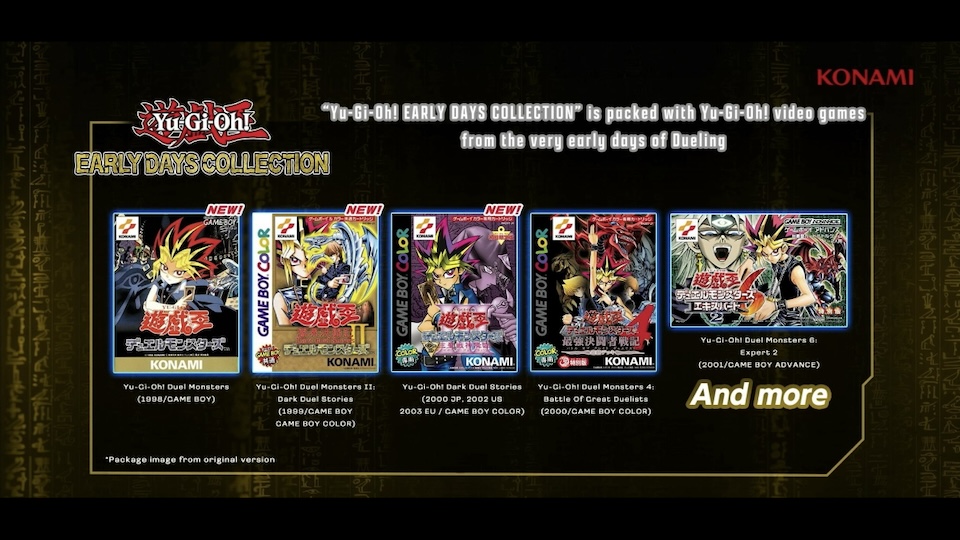
Yu-Gi-Oh Early Days Collection puts the first 13 (the marketing says 14, but
I’ll get to that) Nintendo handheld Yu-Gi-Oh games into one package and I was
hyped to get to both replay games I used to love and play games I never got to
before. The enhancements and new
translations made it all a big deal, but I swear you wouldn’t know just how big
a deal it was if you read the reviews.
Friday, April 6, 2018
Yu-Gi-Oh: Duel Links Review
Before I named myself the Shonen Otaku, I grew up on a lot
of the shonen anime for the younger audience in the 90s and 2000s with 4Kids
and Saban dubs. The Pokemon anime in
particular took the world by storm and while I was definitely a big fan of that
for a while, the series that stuck with me the most was the original Yu-Gi-Oh,
or at least the original for America
I loved the fun dubbed dialogue, the monsters battling each
other through the finesse of a card game (even though rules were loose in the
anime), the way each character’s deck reflected their personalities and the
high stakes with the magic and sci-fi elements that kept me wanting to see what
happened next. Even today I can watch it
and enjoy it and I highly recommend giving it a watch either on the official
Yu-Gi-Oh website or Netflix.
Friday, November 20, 2015
Castlevania Dracula X Chronicles Review
I love game remakes. Classic games of old can be made even better using modern resources and dated aspects can be ironed out for a much better experience, usually more in line with improved later installments, in the case of franchises.
 |
| Left: Cheesy. Right: Scary. |
I also love compilation re-releases for the simple fact that you're getting more than one game for the price of one and having them all in one package makes getting previous installments of certain games less of a hassle for newcomers.
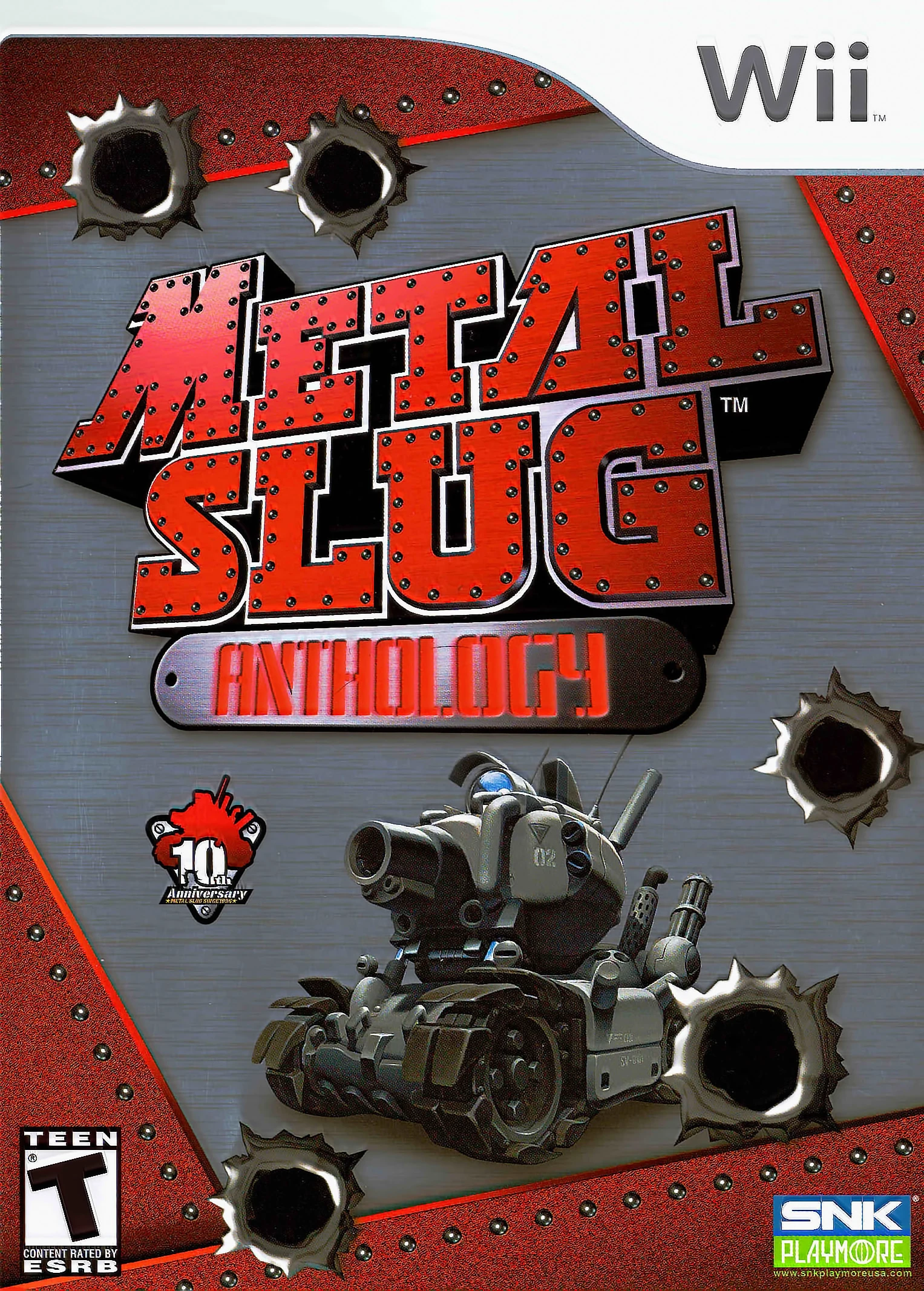 |
| With this, the Samurai Shodown Anthology and Orochi Saga Collection, I have 17 SNK games accross 3 disks. |
Castlevania Dracula X Chronicles for the PSP is a combination of both by having three games: A 3D remake of Castlevania: Rondo of Blood, the original version of it, and the extremely beloved Castlevania: Symphony of the Night, all from happier times before Konami lobotomized themselves. Like how Samurai Shodown 6 was first released in America through the Samurai Shodown Anthology, this is the first international release of Rondo of Blood and the only one until a Virtual Console port a few years later.
Subscribe to:
Posts (Atom)