When it comes to shonen manga, anime and games, there are few with as much knowledge and love as the Shonen Otaku. Join me as we look at all different varieties of action-packed media. Mostly games.
As I already stated in my review of Yu-Gi-Oh: Duel Links,
I’ve been a fan of the original Yu-Gi-Oh ever since it arrived in America through
the anime from Studio Gallop. When
Kazuki Takahashi wrote his manga about a kid gaining Egyptian magic and playing
games, he couldn’t have predicted the phenomena that it would become, let alone
that his little one-off Magic: The Gathering knock-off would be at the center
of it all. When Shonen Jump gets a hit
manga on their hands you’d better believe they’re going to merchandise that
sonbitch.
Inevitably that meant games across all manner of consoles,
in particular Nintendo’s handhelds. The
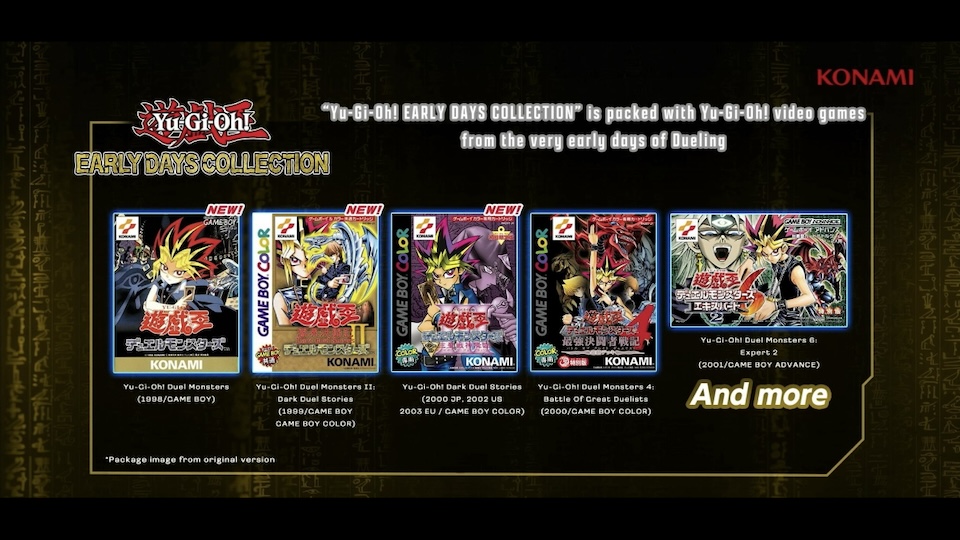
Yu-Gi-Oh Early Days Collection puts the first 13 (the marketing says 14, but
I’ll get to that) Nintendo handheld Yu-Gi-Oh games into one package and I was
hyped to get to both replay games I used to love and play games I never got to
before. The enhancements and new
translations made it all a big deal, but I swear you wouldn’t know just how big
a deal it was if you read the reviews.
I was going to get the collection anyway, but I’m
disappointed by the reviews of it I’ve read thus far. Regardless of whether I agree with them or
not, most give a general overview of the collection and come across as though
they only played each game for a little while before writing them off. Understandable, since there’s 13 games and they
only have so much time, but I’m of the mind that even if one were to recommend
the game, readers might want to know which games are more worth their time, how
many are any good, what to expect from each game in more detail and what the
cheats included in the collection can do to enhance their enjoyment.
The other sentiment I see is that it’s a collection made
only for the old-school Yu-Gi-Oh players and that the only people who will
enjoy the games are the ones nostalgic for them. I think that’s both a reductive way of
thinking and not true. There are games
in the collection that, even today, are a fun time, outdated cards or not. I would love for younger people who weren’t
around for them to experience some of these games and maybe get invested into
the card game’s simpler times.
I’m going to review the Yu-Gi-Oh Early Days collection more
thoroughly, less at the package as a collective whole and more the parts that
make it up so that readers can make a more informed purchase. I’ll look at every game in the collection,
give some context of where the source material was at the time of each game’s
release and some context of where I was at the release of some of these
games. I am writing this as a fan, but
I’ll try to keep the nostalgia goggles off.
To set a general rule, I never use the option to get every
card in the game. Every single
card-based Yu-Gi-Oh game in the collection (i.e. most of them) have a cheat
option to fill your card trunk with every single card in the entire game, but I
do not recommend doing that. I think
doing that takes a third of the fun out of a COLLECTIBLE card game. I like to roll with the randomization games
give me and there’s something special about having a card that the laws of
causality decided to give to me. Getting
everything without effort is unearned. I
would only use that if I played online, which I don’t. Besides that, it’s much more manageable to
have cards delivered piecemeal so I can gradually process what I can do with
each one instead of get bombarded with everything at once. I’m not a purist who won’t use any cheats because
some of the other cheats are downright mandatory, but getting every card for
nothing is a line I won’t cross.
I will also use the English names the games use for the
characters. The English manga uses their
original Japanese names, but ever since then the names from the English dub of
the anime have been used in all other media, including all the games, although
there are some translation quirks I’ll bring up.
Starting things off is the very first Yu-Gi-Oh card game
simulator and second Yu-Gi-Oh game ever, released in English for the first time.
Yu-Gi-Oh Duel Monsters GB
At the time of the game’s release, Joey was just starting to
duel Bonz at duelist kingdom in the manga and Toei was taking a crack at
adapting the first parts of the manga before Duel Monsters/Magic and Wizards
took over the story.
The Toei anime is often called Season 0, but it’s really an
early adaptation that has nothing to do with the later anime by Studio Gallop
and it isn’t even an especially accurate adaptation of the manga either. It’s kind of like what the 1999 Hunter X Hunter
anime is to the 2011 one. Since it was
the most recent anime at the time, the manual and box art of the game uses the
character designs from the Toei anime.
Like the anime, the card game before the Gallop anime was
also done by a different company than what it’s known for today. Konami did make the video games, but the
physical card game was later made by Bandai. There were no concrete rules in
place for how the card game shown in the manga worked so Konami also had to
make their own take on it. The monsters
from the later, better-known card game’s early days are in it, but the rules
are a whole other story.
The first Duel Monsters game establishes how most of its
sequels would be structured. There are
tiers of duelists to play against and once you beat each duelist of one tier a
certain number of times, you can move on to the next until there’s a final
opponent to beat. Each time you win, Tea gives you a single card, which given there aren’t a lot of cards in the game, isn’t
as meager as it sounds.
In this game the tiers start with the boat to DuelistKingdom,
where you can duel Yugi and his friends, and then DuelistKingdom island itself,
where several duelists in the manga up to that point are hanging around. These duelists include Bandit Keith and the final opponent
is Pegasus, which might seem odd because the manga hadn’t gotten to either of
their big duels. For Pegasus, the game
models his deck after how he was playing in that brief duel with Yugi over a
video tape, where he used dark and illusion cards. For Bandit Keith, his character sprite
implies that his deck is made up of the ones he smuggled into DuelistKingdom
so he uses a variety of cards, including some of the ones he gave Bonz in the
manga.
I probably just made non-Yu-Gi-Oh fans do a double-take
mentioning playing a card game with a video tape.
With such a simple structure for the card game it’s
important that the main gameplay is kept fun to hold a player’s interest and…
Well… Early Yu-Gi-Oh is sometimes pejoratively called Caveman Yu-Gi-Oh because
of how much simpler everything was. I disagree
with that regarding the real card game, but this game is even simpler than that
and much of it can be summed up as “unga bunga!”
There are very few magic cards, no effect monsters and no
cost for stronger monsters. Play your
strong monster and go unga bunga. Once
you get to stronger opponents, you practically have to hold the fort until you
get your giant beat stick monster (Garoozis, for me) to save the day.
I can’t say it’s not on-brand for the time. That’s pretty much how the game went in the
early chapters of the manga. Having the
highest attack cards is what made you win.
When he was dueling Kaiba, Grandpa Mutou even said he just needs to draw
his Blue-Eyes White Dragon to win and once Kaiba flashed 3 unga bunga dragons
of his own, Grandpa just gave up. Yugi
couldn’t even beat the dragons in his duel with Kaiba. He had to use his instant win monster. It was fun to watch the monster fighting, but
also painfully obvious Takahashi didn’t put a lot of thought into the actual
rules.
There are a few quirks that keep Duel Monsters GB from
being completely brainless. In a rule
alluded to in the manga, the players must play one card per turn, whether they
like it or not, and every monster on their field must either attack or
defend. You cannot leave a monster in
attack mode without attacking, which means the defense points of you and your
opponent’s monsters need to be taken into consideration. If the opponent has a monster with more
defense than any of yours, it’s not a wise idea to have them all attack
it and take damage, but it’s also ill advised to leave a monster with crap
defense in defense mode.
Good for unga bunga. Not so much for bunga unga.
Fusion monsters can add a little to the unga bunga
proceedings and are the only thing that make players think about what’s in
their deck beyond replacing monsters with objectively better ones. A monster can be played on top of another
monster, both for the mandatory card play regardless of the field and to allow
for fusion. If a monster is put on top
of a compatible monster, they combine into a more powerful one that you don’t
need to own. If they aren’t compatible,
the monster under the new card is replaced.
It’s a cool idea that adds some some much-needed thought,
but there’s a major problem with it; the game doesn’t tell you any of the
fusion combinations or even hint at any.
The manual gives you 3 examples of fusion combinations and is an
indicator of the kind of 90s adventure game logic at play. For example, Time Wizard with embryonic beast
makes Summoned Skull, implying embryonic beast is a young summoned skull.
I suspect that this was meant to get people talking and reading magazines, exchanging the fusion combinations everyone
found or styling on friends via link cable with a monster they weren’t
aware of. For Americans today, without
resorting to the internet, you can probably guess them if you remember the
combinations of the very first fusion cards in the Konami card game, like
Dragoness the Wicked Knight or Carbonala Warrior.
Duel Monsters GB is such a rudimentary and shallow game that
it’s easy to write off and tell people to skip it, but there’s something about
it I respect and vibe with. It was made
right around the same time as the Pokemon TCG game boy game and SNK vs. Capcom:
Card Fighters Clash wouldn’t come out until later so there wasn’t really a
standard for a card game on such a primitive handheld for them to refer to, to
my knowledge. For 1998, it was
practically a new concept.
I think for the time it served a purpose of easing players into
this rule set before later games added more to it. The quick, lacking combat animation and unga
bunga gameplay also means that duels can go at a fast pace, sometimes less than
2 minutes, making it feel like less of a grind and more friendly to pick up and
play.
Besides that, I love how it looks. Character sprites and backgrounds were taken
straight out of the manga and converted into pixilated form and all the cards
have big, expressive artwork very reminiscent of the aforementioned Card
Fighter’s Clash. The Early Days
Collection also lets you choose from a few different Game Boy color variants
and screen filters to really bring out your favorite retro looks just for this
one game.
I can’t in good faith say that Yu-Gi-Oh Duel Monsters GB is
particularly good game, especially not with some of the other games in the collection
that improved upon it, but as a curious piece of Yu-Gi-Oh gaming history I
appreciate it’s there for American players to experience. It puts the early in Early Days Collection.
Duel Monsters 2: Dark Duel Stories
This game came out not even a full year after the first one
so, as you can expect, it doesn’t exactly overhaul the gameplay, but the improvements
it does make were very significant. It’s
now in color, you’re shown the cards as you get them instead of Tea making you
go to your trunk to look at what the new card is, and with the manga getting to
the DuelistKingdom finals, there are some new
opponents like the Paradox Brothers. Since the TCG we all know and love was getting ready for release, this is also the first game to allow players to input the codes found on them at a very hefty cost that's not even worth it. That’s just the little things though.
The big additions are the elemental system and deck capacity system.
Dark Duel Stories introduces elemental weaknesses. In the manga up to this point there were
instances where apparently certain monster types were weak or immune to other
monster types. That concept was dropped
after Joey’s duel with Bandit Keith, but the designers implemented it into
their version of the card game. It’s very simple.
There are two divisions of monster weaknesses, one for earthly elements
and one for otherworldly forces of light and dark. A monster of an element another monster’s
element is weak to will kill it instantly in battle regardless of stats. It’s a good way of balancing the game because
it means having to think about what monsters to play in more detail instead of
simply going unga bunga on the other player all the time and it gives players a
way to defeat a high stat monster they otherwise couldn’t, unlike the first
game.
I think this is the Japan finals arena Rex and Weevil dueled in.
The deck capacity system is the game’s other means of
balancing and it isn’t as elegant. Now
every card has a cost to be in the deck and the cost of all the cards in a deck
can’t exceed a maximum that slowly rises as you win duels. I get the intention of making players think
about more than just replacing cards with objectively better ones, but the computer opponents aren’t
beholden to such a rule and it feels more like the game unfairly gimping the player
for artificial challenge, especially with how stupid high the cost of the better cards can be. Thankfully in
every game that has it you can use a cheat in the Early Days Collection to get
max deck capacity immediately, if you are inclined. That will become very very very very
important with a certain other game in this collection.
Fusion also became a lot more flexible and viable even
without a guide. Now there are certain
monsters that will fuse with any monsters of a specific type rather than one
specific card, meaning guesswork is drastically cut down.
Dark Duel Stories introduces trap cards, but like spell
cards, there are barely any and trap cards are even more
useless. Trap cards in Dark Duel Stories
only stay in play for one opponent’s turn and then go away so the only way to
get any use out of a lot of them is by clairvoyance or as a precaution to
clench a victory. I guess you can have
your own form of clairvoyance if you use the collection’s rewind feature and/or
save states though.
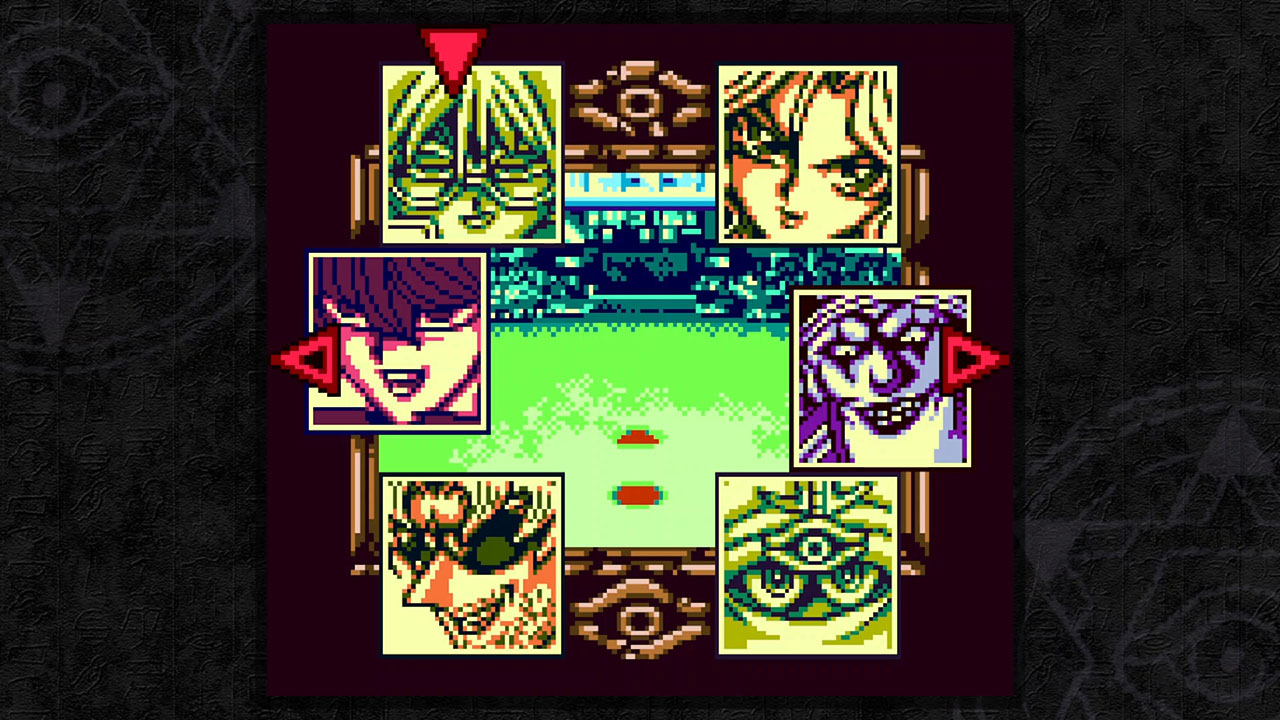
The pixel artwork is still good.
Ritual cards were added too and those are especially useless. First of
all, you can't use the damn things unless you're at a crazy high level.
Second, they’re very impractical with how they require specific monster
tributes for a monster that might just get killed by its elemental
weakness anyway. Thirdly, ritual spells are consumable and removed from
your deck after playing one. What? Do you burn it after use as some
kind of flex?
This game should be better than the first because it adds things in without taking anything out, but what kills it for me is how slow it
is. I suspect all the new rules were
overloading the Game Boy’s system or something because it takes a
half second to do everything and this is one of those games where the small
bits of lag time add up.
It takes half a second to look at a card’s details, half a
second to close out of that screen, half a second to enter the short combat
animation, half a second to exit out of it and you have to manually end a turn
this time, which takes a half second to do.
In that half second the control pad won’t respond to my inputs because the
game doesn’t keep up with how fast my brain operates, leading to disorientation
unless I slow myself down to its level.
Ra help you if the enemy starts attacking with multiple
monsters in a turn. It takes the
computer 2 full seconds to think of every move they do, no matter how
straightforward, and that’s in addition to the half second it takes for
everything else. They’ll wait 2 seconds, take half a second to go into the
combat animation, then it’s half a second to go back to the playing field,
followed by another 2 seconds before their next attack. Repeat upward to 4 more times.
This wasn’t a problem in the first game and that’s part of
why I kind of like it. Maybe with more
development time this could’ve been fixed, but I don’t find much fun in the end
result, especially when there are other games in the Early Days Collection I
could be playing instead. Games like…
Monster Capsule GB
Of all the games in this collection, this was the one I was
the most interested in. This isn’t
another card battle simulator. In fact,
there are no cards at all. This is a
full-length JRPG experience utilizing ideas from both the Monster World RPG and
Capsule Monster Chess.
All of these are in the game.
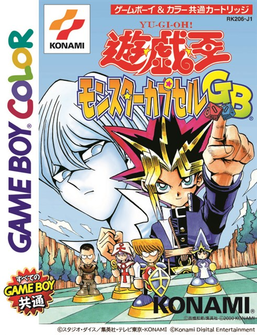
Technically the Early Days Collection titles the game
“Monster Capsule”, but you can clearly see on the box the letters
“GB” next to it, which is important because that distinguishes it from the
other Capsule Monster game previously made only in Japan for the PS1. I am also far too used to the game being
referred to as Capsule Monsters, both from the manga and the anime miniseries
so I’ll be referring to this game as Capsule Monster GB. Capsule Monster GB actually has a story. After failing to defeat Yugi at Doom-T (named
Death-T in the manga), Seto Kaiba comes back and traps Yugi’s friends inside
the same figures from Dark Bakura’s Monster World RPG. To get them back, Yugi has to ascend Kaiba’s duel tower
and defeat 5 dark masters to get his friends back by battling with Capsule
Monsters instead of Duel Monsters. The duel tower may or may not be the one from Yu-Gi-Oh R. Playing Capsule Monsters is so simple I can sum it up in one
paragraph. Battles are on a grid and
each monster has an attack pattern that determines what spaces get hit then
they attack. A scant few do something instead of attacking, like heal or
debuff. Each turn a player can move one
monster and attack. When a capsule
monster is on a space matching their attribute, if they attack a creature in an ally creature’s attack range and/or the target creature is of an attribute the attacker is strong against, it gets a boost. There’s a percentage chance of attacking and
dice are rolled to determine if it hits.
That’s pretty much it, but because there’s such a variety of attack
patterns and monsters, it doesn’t get stale.
That gameplay alone could’ve made for an alright time
waster, but there is so much more to this game.
There’s a lot of dialogue. On
every floor of the duel tower are characters from the manga, including many
from before DuelistKingdom, all of whom can
be battled with accompanying dialogue. Duel
Monsters players like Bonz or the Puppeteer of Doom have their signature Duel
Monsters and are considerably better, but there are also early characters like
Nezumi and Hirutani.
Using star chips attained from defeating other players, you
can challenge each floor’s dark master, where the overworld almost literally
turns into another game entirely. Each dark master is someone from duelist kingdom (starting with Mokuba, the
original Capsule Monster player) running their own Monster World campaign
utilizing monsters from the franchise to tell their scenarios for Yugi to play
through, usually giving their signature monster a spotlight. They’re stories within the main story and
very lengthy ones too. There’s towns to
visit, self-contained world building, scripted cutscenes and plot twists. If you loved the Monster World arc of Yu-Gi-Oh
and wish there was more of that, Capsule Monster GB is a dream come true. Nobody ever seems to point out how much effort had to have
gone into this game. It’s one thing for
Digital Eclipse to translate intro and victory dialogue in the other Game Boy
games, but it’s quite another to translate whole conversations and storylines,
especially on this game that’s over 2 decades old. This came out in English before Sengoku Basara 4.
There’s so much to love in Capsule Monster GB. It’s fun to explore the monster worlds, talk
to the manga characters and play the core capsule monster battling, all with a
really great soundtrack. The music in
the first 2 Game Boy games are repetitive, uninteresting loops, but with this
game Konami started putting their best foot forward. This is the chiptune music I like to hear and
it’s a crying shame the collection doesn’t have a music player like most other game collections do.
The catch with Capsule Monster GB is that cheating is
mandatory to have any fun. It is brutal
and punishing in many ways that the cheats included in the Early Days
Collection greatly alleviate. For
maximum enjoyment, follow these guidelines:
For
the love of all that is good and holy, turn on infinite star chips! Getting star chips in Capsule Monster GB
is the most agonizing grind I’ve ever seen!
Getting star chips in Capsule Monster GB is the second most agonizing grind I've ever seen! When challenging another player in the
tower, you have to bet a star chip.
Win and you get another one, lose and that star chip you bet is
gone. It costs one star chip to buy
a random capsule monster out of the machines, something you’ll want to do
on every floor several times, and the cheapest door to the monster world
costs 10 star chips to open. You
only get one measley star chip per battle and if you lose you have win a
battle to recoup your loss. Even if
you save scum to prevent losing, that means a lot of battling the same
opponents over and over and over and over again. Fuck that! I would never get past the second floor
without the cheats! As if that
wasn’t mind-numbingly tedious enough, you have to put each individual star
chip in the doors one-by-one and the game will ask if you want to every
single time. The infinite star chips
cheat is downright mandatory and one of the few times the collection is
justified in labeling the cheats as “enhancements”.
Once
in a monster world, I recommend only saving and loading using the
collection’s save states instead of in-game saving or doing the opposite
and making a save state before entering a monster world. Once you’re in one of the monster worlds,
you can’t leave so if you feel like you need to go back for anything in
the tower, too bad. Technically you
can get out by giving up during any battle or losing all your capsule
monsters, but if you do that you can’t get the capsule monsters of Yugi’s
friends even if you come back and win.
Not that they’re especially useful, but for completion’s sake you
probably don’t want to permanently miss them.
Abuse
the rewind system for random encounters.
Capsule Monster GB is the only game I’ve ever played that outright
shows you the random encounter process.
Whenever you enter an area with random encounters, it tells you the
percentage rate of an encounter happening and how many steps you can
take until it determines if there is one.
After the specified number of steps, a pair of the Monster World
dice roll in the corner of the screen and if the number is equal to or
lower than the encounter percentage, a battle starts. If you get sick of the random encounters
slowing the pace of the game, you can make things go a lot smoother by
rewinding to reroll the dice until you get the desired result. It seems to have a higher chance of
changing up the number if you take a different walking route, for some
reason. Also use rewind instead of
backtracking after reaching dead ends so that you don’t add more steps to trigger a random encounter roll.
Don’t
feel bad about rewinding during battle either. This game has permadeath. If you lose a monster, it’s gone forever
and there are no capsule machines in the monster worlds to replace them. You can have a sizeable surplus of
decent level monsters going in, but when your best, highest level monster
dies from a lucky critical hit, it’s demoralizing and doesn’t feel
fair. I won’t judge anyone for
rewinding to redo their turn or give themselves saving throws. Yami Yugi cheating his dice rolls is
canon anyway.
In
each monster world you can find capsules that permanently boost the stats
of a monster or, if certain monsters are at a certain level, an evolution
capsule can evolve them Pokemon-style, even though you need a guide to
know which ones. You probably won’t
need to until the late game, but don’t feel bad about using the cheat for
unlimited capsules to buff your monsters and even the playing field
either. It might be the only way to
get use out of the human figures.
Reading all that might make it look like the game is
actually really bad if you have to cheat, but if you think of the cheats like
options for an easier difficulty mode, you can enjoy all the best parts of the
game without guilt. There was a lot of
effort put into it from the original designers and from the English translators
from Digital Eclipse. It’s one of the
most unique and content-rich games in the collection and I would hate for all
of that to go ignored, which sadly a lot of people seem to be doing just
because they didn’t grow up with the game.
Frankly the marketing should’ve emphasized the fact that the Early Days
Collection includes a brand new Yu-Gi-Oh RPG adventure available in English for
the first time. Doesn’t that sell
itself?
So far we have one game that's kinda neat for a retro title, one game that isn't especially good and one game that, using the cheats provided, is a hidden gem among Yu-Gi-Oh's many games.
After these three newly-translated Yu-Gi-Oh games in the collection, the next part will start with a game that was already translated and was in fact the very first Yu-Gi-Oh game ever released in English. Consequently, it's the first of the games I ever played.







/Update%2006/3-oX08pKY.png) Getting star chips in Capsule Monster GB is the second most agonizing grind I've ever seen! When challenging another player in the
tower, you have to bet a star chip.
Win and you get another one, lose and that star chip you bet is
gone. It costs one star chip to buy
a random capsule monster out of the machines, something you’ll want to do
on every floor several times, and the cheapest door to the monster world
costs 10 star chips to open. You
only get one measley star chip per battle and if you lose you have win a
battle to recoup your loss. Even if
you save scum to prevent losing, that means a lot of battling the same
opponents over and over and over and over again. Fuck that! I would never get past the second floor
without the cheats! As if that
wasn’t mind-numbingly tedious enough, you have to put each individual star
chip in the doors one-by-one and the game will ask if you want to every
single time. The infinite star chips
cheat is downright mandatory and one of the few times the collection is
justified in labeling the cheats as “enhancements”.
Getting star chips in Capsule Monster GB is the second most agonizing grind I've ever seen! When challenging another player in the
tower, you have to bet a star chip.
Win and you get another one, lose and that star chip you bet is
gone. It costs one star chip to buy
a random capsule monster out of the machines, something you’ll want to do
on every floor several times, and the cheapest door to the monster world
costs 10 star chips to open. You
only get one measley star chip per battle and if you lose you have win a
battle to recoup your loss. Even if
you save scum to prevent losing, that means a lot of battling the same
opponents over and over and over and over again. Fuck that! I would never get past the second floor
without the cheats! As if that
wasn’t mind-numbingly tedious enough, you have to put each individual star
chip in the doors one-by-one and the game will ask if you want to every
single time. The infinite star chips
cheat is downright mandatory and one of the few times the collection is
justified in labeling the cheats as “enhancements”.


No comments:
Post a Comment