A player might notice something around this time of Yu-Gi-Oh game releases; there were no new characters introduced in them and, barring the game-original Reshef of Destruction, there hadn't been for a while. That's because Battle City was the last part of the manga to center around the card game. After that came the final part with exploring the pharaoh's memories, where only two card games would be played for the rest of the story, none of which was between any new characters. By 2004, in Japan, at least, the original manga ended. This means the games had to start using the same roster of characters in new ways.
Yu-Gi-Oh Expert 2 is the only game in the Early Days Collection
that has no translation, at least for its original version. After Eternal Duelist Soul borrowed Expert
2’s dueling system for the English release, Expert 2 as a whole would get a
revision released for international audiences.
I call it a “revision” and not an “updated version” because it takes a
handful of cards out, changes some art and tweaks a few things that could be
considered either for better or for worse.
I guess Digital Eclipse threw the original version in there for the sake
of thoroughness and for the Japanese gamers that care. The game we got in
America would be titled Yu-Gi-Oh:
Worldwide Edition: Stairway to the Destined Duel.
Worldwide Edition: Stairway to the Destined Duel
I didn’t play this game growing up and for the longest time
I thought the “Worldwide Edition” title referred to traveling the world
participating in tournaments or involving other nations in a grand event, like
the Kaibacorp Grand Championship the anime later had.
In actuality it refers to the fact that the game has 6 different
language options.
That may not seem like the kind of thing you’d try to market
a game off of, but back in 2003 it was uncommon to have two language options in
a game, let alone 6, and on a Game Boy Advance cart, of all things. Plus, having that many languages makes the
game more accessible to a broader demographic and it means every nation got
more or less the same game cart without having to manufacture significantly separate
versions, although the European version replaces the American flag with the
Union Jack.
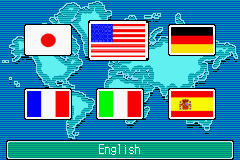 |
| We are AMERICAN here! We're the nation of Crackhead Donny! |
Anyone playing this coming off of Eternal Duelist Soul is
going to get major deja-vu because, again, EDS lifted the dueling and music
from the game Worldwide Edition is a revision of, meaning the dueling part is
identical. There are some small changes
here and there, like the faster speed being the default, the animation for
declaring a direct attack being shortened and the chain activation screen only
being shown when something is actually chained, but 90% of it is exactly like
in EDS. I already sang the praises of
how well EDS plays and that still applies to Worldwide Edition.
It’s everything around the dueling that changed from Eternal
Duelist Soul. The manual says it takes
place during Battle
City, but even though it
features the characters from that story arc, there’s no plot. Things happen, but there’s no storyline to
follow except for one story event that is triggered after certain conditions
are met. One of the recurring
occurrences is card tournaments. Am I
expected to believe people are competing in a tournament while a separate tournament
is going on? The overall premise is that
the player is in Domino
City and everyone’s out
dueling people. I won’t think about it
beyond that.
Worldwide Edition ditches the traditional tier system and
opponent select screens for something more integrated. The player can travel to an adjacent area of
the city and either challenge a duelist in that area or talk to a random,
faceless passer-by who gives some kind of gameplay tip or observation. It’s like a randomizer the player has
some control over and the initial character roster starts out strong with over
10 characters from the get-go ranging in difficulty from the usual entry-level
fodder to higher tier duelists like Kaiba and Ishizu. It makes it much easier for the more advanced
players to get straight into the challenge if they’re inclined to.

Like in EDS, days pass when characters (civilian or duelist)
are interacted with, but Worldwide Edition cuts down on the number of menus and
that means the calendar is out. Only the
days of the week are tracked because, with a couple exceptions, all the game
really keeps track of is the weekly magazine handouts and the weekend duels and
tournaments, but the tournaments are optional in this one, in case the player
doesn’t feel like doing a best 2 of 3 match.
In Worldwide Edition, players are given a choice in what
they want to do as they partake in the dueling and that’s a great design
decision, but it’s made even better with how Domino City
and the characters come alive. The
sprite work for characters still look great, but the attention to detail given
to them, like their ace monster materializing behind them, adds that extra bit
of spice to the presentation.
I can’t speak for how good the translation is for the other
languages, but the English script does a good job having characters speak in a
way unique to themselves and there are interactions between characters and the
player that makes choosing an opponent more dynamic than getting a couple of
lines of text before the duel starts. For
example, each character has their own unique dialogue during a weekend or
tournament match. Yugi and Bakura switch
between their Egyptian alter egos and their normal forms between match duels,
with Yugi even referencing the mind shuffle he used on Pegasus. I’m not sure what it changes in the gameplay,
but it’s fun to see play out. The
backgrounds being nicely drawn recreations of locales from the series that are
dependent on the map location is a nice touch too.
 |
| Nice alliteration. |
With slightly more characters, the same kickass music and overall
better game design, it seems a no-brainer that players can ignore Eternal
Duelist Soul and just play Worldwide Edition.
That’s mostly true, but I think EDS has its place as a better
introduction for newcomers. The starter
decks in Worldwide Edition aren’t garbage, but they aren’t as powerful as the
ones in EDS that were rocking Mirror Force and Swords of Revealing Light. In EDS, having the extremely powerful cards
worked as a crutch so that even bad players stood a chance after making a
few mistakes, but later opponents with cards just as good forced players to be
less reliant on them.
In Worldwide Edition, most opponents other than the easiest
ones almost always have at least one of those powerful cards and it can be hard
if the player is new and doesn’t know how to play around that. This might be the only Yu-Gi-Oh game I’ll
ever play where having card-specific counters like Anti-Raigeki or White Hole is
a good idea because it seems everyone has one of the cards they counter.
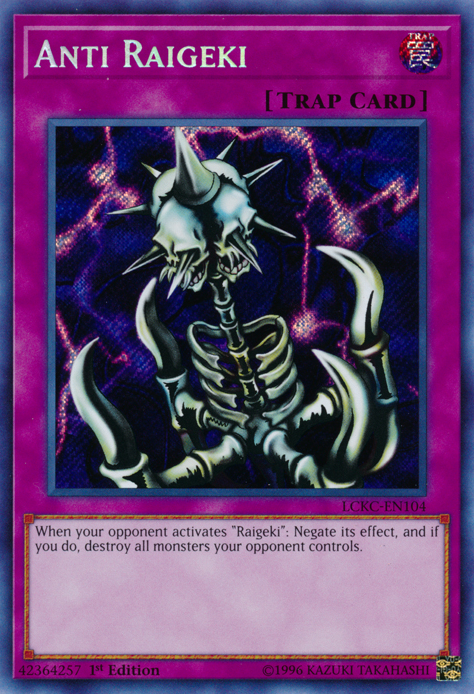 |
| You don't get a harder counter than this. |
For anyone who knows how to play the card game, Worldwide
Edition is a better, more complete package, probably the best in the whole
collection, and Eternal Duelist Soul can safely be skipped, even if it’s great
on its own merits. I do recommend newcomers play Eternal Duelist Soul for a while until they’re comfortable
with the game and then they can move on to Worldwide Edition when they think they’re
ready. Regardless, both are a great
time.
World Championship 2004
Talk about a total 180.
This is the worst Yu-Gi-Oh game I’ve ever played in my
life.
With any other Yu-Gi-Oh game I’ve
played, even the Power of Chaos games, I at least have a few good things to say
about it.
Not this time.
World Championship 2004 does everything wrong
and I do mean everything.
The presentation sucks.
There are no more moving and detailed character portraits or dialogue to
give them personality. Now you choose
from a series of poorly rendered still images of the characters. Backgrounds during the duels don’t change
with the field spells anymore and the whole thing is sterile and boring to look
at. Music is a limited selection of short,
repetitive loops, but at least I can say they fit quite well with the boring
visuals.
That would be forgivable if the game played well, but the
gameplay sucks too!
Like in Eternal
Duelist Soul, you have to hold down a button before the duel to make it run at
a faster speed, but even that faster speed is noticeably slower than that game!
None of the animations are quick and snappy
like they should be and yet somehow
the
game has slowdown! I doubt that
slowdown is an emulation problem on Digital Eclipse’s part either because every
other game in the collection runs just fine!
If one can tolerate the slower speed then the opponents
themselves will kill whatever joy they could get out of dueling. I doubt anyone
making this game cared about the still image duelists because their decks have
no personality either. Every other deck
is loaded with the same handful of powerful cards, meaning virtually everyone uses Slate
Warrior or Torrential Tribute in the game whether it makes sense or not. I think the ultimate indicator of crappy deck
design is that Bonz, the zombie duelist, doesn’t have any zombie cards!
Maybe they had to give everyone a universal deck boost to
make up for the game having
the worst
computer opponents ever in a Yu-Gi-Oh game. I stated before that there’s something endearing about the opponents
making dumb moves every once in a while, but WC2004 has computers making the most
mind-bogglingly stupid moves at every opportunity!
They’ll use Axe of Despair, an attack boosting card, on a
monster in defense mode. They’ll use
Change of Heart to take control of a monster and then give it back without
doing anything with it. If they use
Mystical Space Typhoon, a card that destroys a spell or trap, and there’s no
target to use it on, they will destroy
the MST itself, which isn’t legal! Apparently most characters have a copy of
Snatch Steal, a powerful monster-stealing card that was later banned, but, because
of a glitch, they’ll never use it! My
favorite example of supreme stupidity is that if you use Imperial Order or
Royal Decree, cards that render spell and trap cards useless, respectively, the
computer will throw away all their spell or trap cards trying to use them! This isn’t like dueling someone who makes
some goofs. This is like dueling
Onlyusemeblade after he’s had a few too many drinks. It isn’t fun.
To make things even less fun, some of the opponents fucking
cheat!
Data miners found that they will draw exactly the
overpowered card they need when they need it, overriding the randomizer.
The computer opponents are so shit they need
to cheat to stand a chance!
Even the deck construction got worse! There’s now 3 different decks the player can
have, which is a step in the right direction, but there are fewer filters to
parse through all the cards and there’s no more password system to get the cards
you want!
It’s a shame that this crap was the one chosen to get online
play for the Early Days Collection and it’s the only game with the official
rules that was given that feature. The
only reason for that is likely because it has the most cards out of any game in
the collection. Maybe it can be a little
better if played online because then there are no stupid, cheating, cookie
cutter computer opponents, but I don’t like playing this game in any
capacity. Fuck this game. It’s the worst in the collection. I’m sure someone is going to disagree because
the game that often gets the title of worst Yu-Gi-Oh game ever is…
Destiny Board Traveler
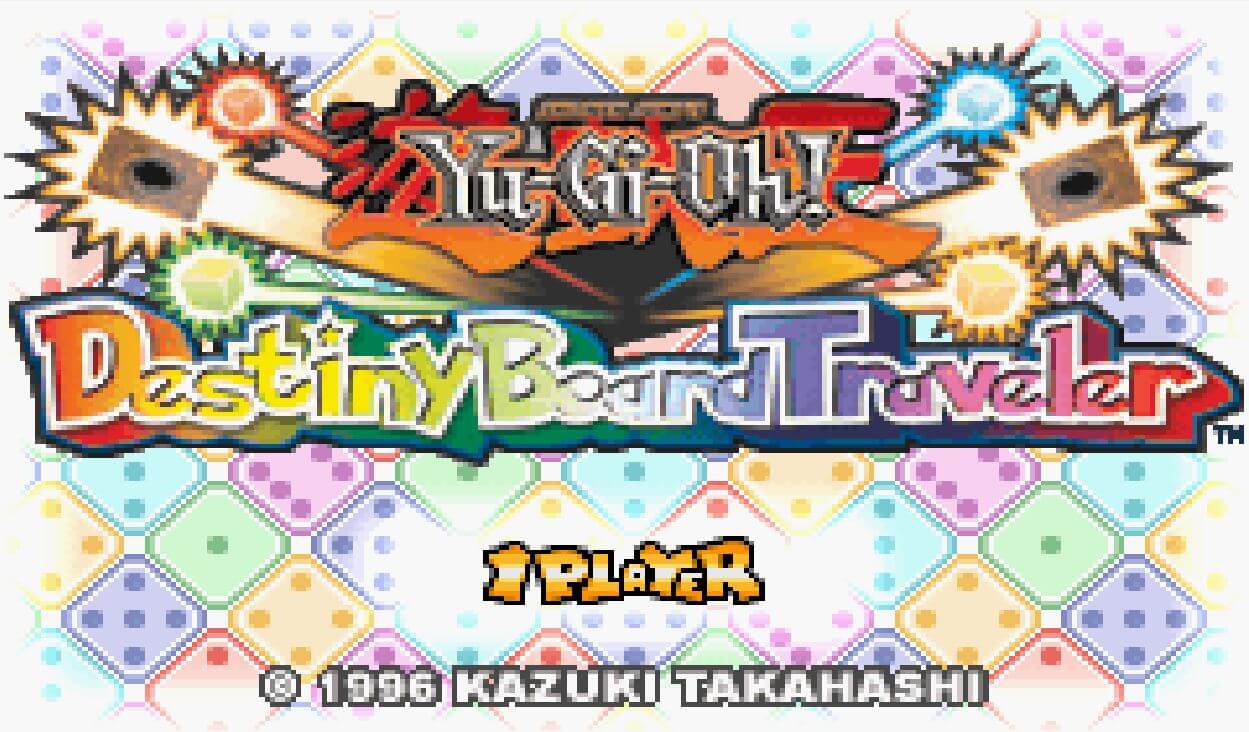
While often considered one of, if not the, worst games in
the franchise, I’ll nip that accusation in the bud now. I had nothing nice to say about World
Championship 2004 and there are some things to like about Destiny Board
Traveler so right out of the gate it does not win the “worst ever” title. It’s still not that good, but unlike WC 2004,
someone gave a shit making it.
Destiny Board Traveler is a Yu-Gi-Oh spin on a territorial
control game where the goal is to use monsters from a character’s deck to take
control of spaces until either the combined level stars of monsters controlling
spaces reaches the set point goal or a player is the last one standing, because there's life points. Each
character has their own deck of monsters and a special ability that is readied
for players at random. It’s a neat
premise for a smaller-scale game.
The graphics alone puts Destiny Board Traveler above the
sensory deprivation chamber that is World Championship 2004. Some board maps are original, but several are
based on places in the Yu-Gi-Oh franchise, be it the manga, the anime or even
the games, featuring lots of cameos.
There’s a map depicting a scene from Reshef of Destruction, a map with
the classic Domino
City water fountain in
the middle and even a Death-T map (still renamed Doom-T) with an appearance
from the Chop Man. It’s a good thing he’s
just a background cameo because if he did anything this game would not get an E
rating.
There’s also voice acting for an extra hit of fan-pleasing.
All the game’s many characters have a few surprisingly
clear voice lines from their English actors just for this game and I can always
appreciate a little Eric Stuart and Dan Green shouting their special character
abilities.
The actual gameplay though is not anything to write home
about. There is some fun to be had with
Destiny Board traveler, but in order to get that fun it’s very important to be
aware of the space-to-victory point ratio.
Setting up the maps for the game is customizable and the player can have
as many of those 5 by 5 maps interconnecting with each other as they want, but more
maps means more spaces to control and, depending on the point goal set, means
less need to fight other players.
Destiny Board Traveler is at its most interesting in the
late game, when the spaces controlled by the initial weak monsters are running
out and players have to start strategically picking fights with each other and
making tricky decisions. If there are a
lot of spaces and a low victory condition, players can go the whole game taking
spaces with little resistance or player conflict As long as the game is set up right to keep it from
going for too long or too short, it can be fun, but the sound direction puts a
damper on that in extended play sessions.
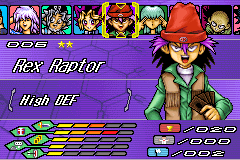
 |
| I'm not getting that space. |
The music on its own is already unimpressive, but when
playing on interconnected maps, the music for each map resets whenever the view
switches to it and that happens every few seconds because the camera is
constantly switching to show players being affected or the battle screen. It’s downright headache-inducing hearing the
same starting notes over and over and over again.
In the 2 decades since Destiny Board Traveler released I’ve
played board game simulators leaps and bounds better and more worth your time,
but even when it came out DBT didn’t have a lot to offer. The core gameplay is ok, but it had no
business being a full retail release.
Sure, there are a healthy number of maps and characters to choose from,
but there’s no single player campaign and the different maps and characters that
can be unlocked aren’t that transformative of the main gameplay. Use a cheat to unlock everything for this
one. DBT is a game that should be
included as a bonus side game in something like Danganronpa V3, which is
probably why Konami re-released it in a dual GBA pack with Dungeondice
Monsters.
It’s kind of neat to play once or twice as a side game, but
it’s forgettable and I’d rather play The King of Fighters: Battle De Paradise
for my board game spin-off fix.
It’s crazy how much the games rose to such high highs and
then fell right after, but I guess that's what happens when there are so many games released in the span of just a few years. There is still one more game in the Yu-Gi-Oh
Early Days Collection to go over before I assess the value of the package as a
whole.




No comments:
Post a Comment