With Nobunaga dead, the last 2 parts of the Extra History videos cover Hideyoshi, his death and the battle of Sekigahara. This post is going to be shorter than the other ones because, well, the videos go into a lot of backgrounds that Sengoku Basara chooses to push to the wayside for the sake of an exciting action story, but there is still a fair bit to note.
"Operating on that notion, he [Mitsuhide] killed pretty much everybody who could threaten his new position."
If it wasn't obvious why his Sengoku Basara version is a kill-crazy psycho by now...
"Mitsuhide was not expecting Hideyoshi to move so fast. His forces are scattered by Hideyoshi and he himself is killed by a group of peasant bandits as he tries to escape."
The manga, Sengoku Basara: Samurai Legends, makes it more exciting by having the buff gorilla man Hideyoshi kill Mitsuhide himself by crushing his skull with a single hand.
A popular myth, however, is that Mitsuhide didn't die, but instead escaped, changed his name and lived the rest of his life as a monk named Tenkai. Sengoku Basara's canon and Nioh both go with that. The Tenkai of Sengoku Basara serves as a sarcastic and manipulative advisor for Hideaki Kobayakawa, who will come up later.

"After that, the next several years are pretty much a cavalcade of suppressing rebellion, expanding on Oda's conquest and yes, beating down some more warrior monks."
In Sengoku Basara 2, Hideyoshi is a feared powerhouse. Sengoku Basara took his figurative immense power literally by giving him super strength. Thanks to his monster strength and his cunning strategist Hanbei, Hideyoshi's forces are the major power players of the game. By the time of Sengoku Basara: Samurai Heroes, he's successful in conquering Japan.
One of the places Hideyoshi conquered during this period is Shikoku, led by Motochika Chosokabe, who in Sengoku Basara is a rough and tough pirate man. The games and anime recreate this battle.
"Tokugawa and Hideyoshi even went after each other at one point, but both of them realized they'd bleed each other dry if they fought so in the end Tokugawa acknowledged Hideyoshi as his lord and Hideyoshi gave a number of special privileges to the Tokugawa clan, including the exemption from serving in Hideyoshi's army for 10 years."
Ieyasu's Peter Beckan-narrated introduction in Sengoku Basara: Samurai Heroes only says this: "After losing in battle to the forces of Lord Hideyoshi, Ieyasu was forced to resign his efforts to unify the lands." The game implies that Ieyasu served under Hideyoshi alongside Mitsunari after that and that they used to be friends. It's a more simple explanation. He lost and when you lose the winner is the boss.
Extra history then goes over the civil administration side of Hideyoshi's rule. There is no civil administration in Sengoku Basara. The administration is "all citizens who don't cooperate will be assigned one giant power fist." There is one part to note though.
"He felt like having a massively armed populace was a destabilizing factor, leading to peasant revolt, banditry and insurrection and he was probably right[...]"
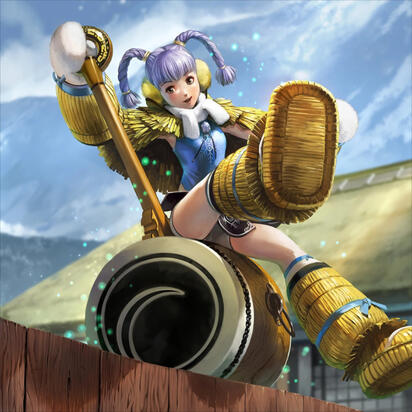
There were peasant revolts at the time and in Sengoku Basara, represented by the character of Itsuki, a little girl with a giant hammer given to her by a nature goddess to fight the samurai that were desecrating the land with war.
"Now all that's left is to figure out what to do with all those few hundred thousand armed men kicking around his country who have no marketable skill other than being trained killing machines and since we all know that having a great number of warriors with no war to fight never ends well, Hideyoshi found something for them all to do. Namely, conquer China. Suffice it to say, they never got further than Korea."
Hideyoshi's disastrous Korean campaign is something Japanese media doesn't like to bring up. Sengoku Basara instead changes things a little to have that not happen, but still acknowledge it. In Sengoku Basara: Samurai Heroes, it's said that after he had Japan unified under his rule, Hideyoshi was planning to expand his conquest into other countries. He is stopped by Ieyasu before he can execute that plan, which is another divergence from history.
We are now at the final part: the battle of Sekigahara, the part of the story in which Sengoku Basara: Samurai Heroes is based.
Extra History portrays Hideyoshi as simply dying in bed. Sengoku Basara: Samurai Heroes (and End of Judgement) thought that was boring and instead Ieyasu kills him in a super powered fist fight. Mitsunari Ishida sees Ieyasu fly off on Tadakatsu and, holding Hideyoshi's dead body, vows that he will kill Ieyasu no matter what.
"Ishida was a courtier and not a warrior."
The Sengoku Basara version is a warrior. The designers knew he wasn't, obviously, but they were trying to tell an epic battle story and both sides being able to fight each other made it more interesting.
"As Ieyasu continued to consolidate his power, often ignoring Hideyoshi's previsions against strategic marriages and hostage exchange, Ishida Mitsunari began to plot against him."
It wasn't enough that Ieyasu outright kills Hideyoshi in Sengoku Basara. Mitsunari also fervently respects everything Hideyoshi did. He does not tolerate any disrespect for Hideyoshi or his vision. This is likely an exaggerated reference to how the real Mitsunari wanted to keep things the way Hideyoshi did them and opposed Ieyasu's way.
Mitsunari does not secretly plot against Ieyasu in Sengoku Basara, however. His Sengoku Basara version is 100% honest 100% of the time and he has no problem yelling at people that he will kill Ieyasu. Both sides are totally open that they are gathering allies to fight the other. Instead there's scheming that goes on with his trusted friend, Yoshitsugu Otani, but none of his plots resemble the one Extra History details here.
 |
| Yoshitsugu was Mitsunari's closest confidante. |
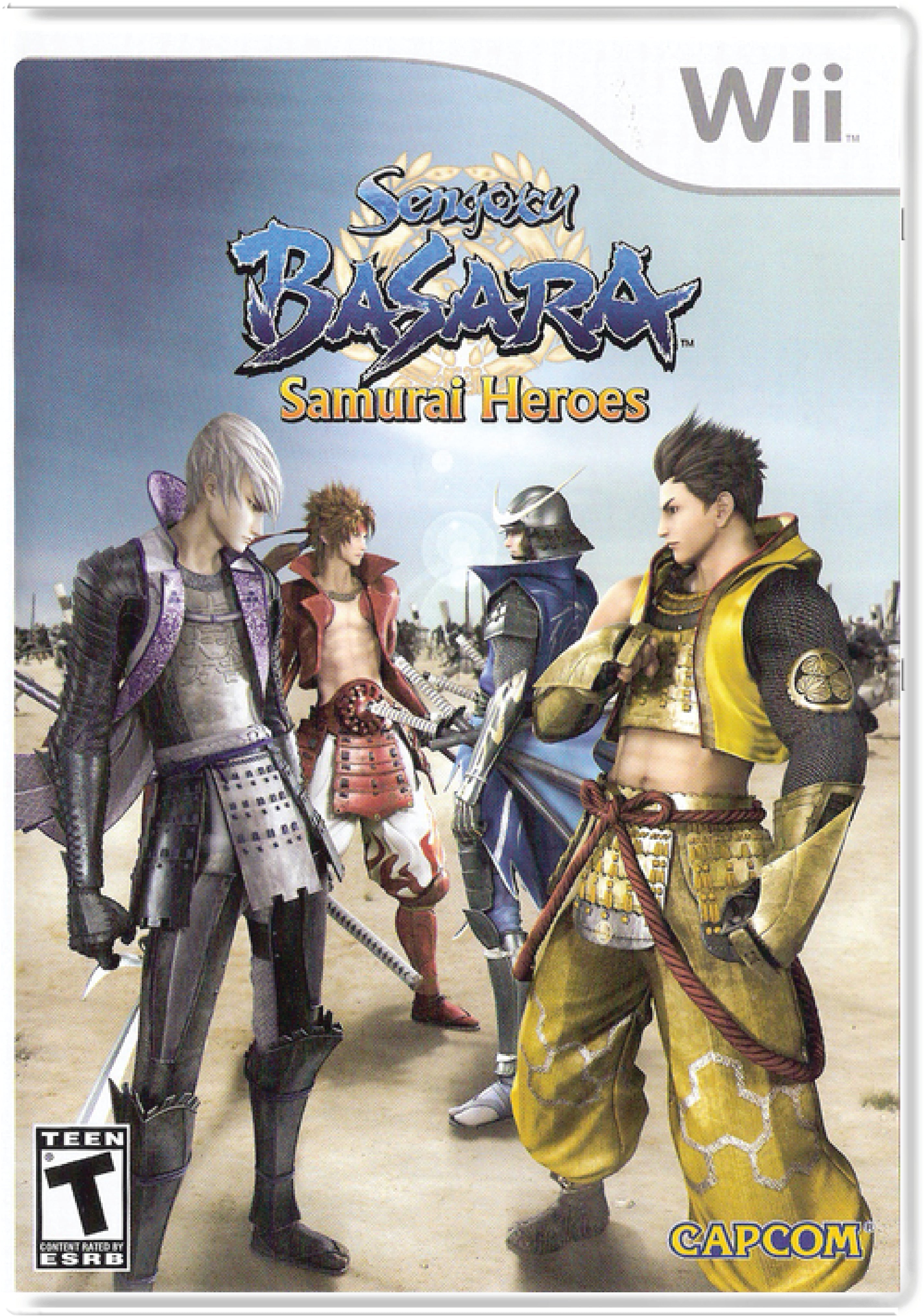
Sengoku Basara plays with history a lot for the battle of Sekigahara, namely that it puts Masamune on Ieyasu's side and Yukimura on Mitsunari's side when neither of them were even there. Again, the creators were aware of this and wanted to make Sekigahara a big battle with the major characters of the series. It sure looks good on the box.
Sanada Yukimura Den is closer to history by having Yukimura and Masayuki battling Nobuyuki's forces at Ueda castle while the battle of Sekigahara happens elsewhere and is conveyed by both messengers and Yukimura sensing energies like it's Dragon Ball Z.
"Some of his forces weren't responding to his command and he'd gotten some pushback on a few of his orders for pretty minor reasons, but the fight was still going his way."
Mitsunari was known for not being much of a people person and his Sengoku Basara version has people like Yoshitsugu doing things behind his back. As a possible reference to the insubordination, in Sengoku Basara: End of Judgement, the Xavists (Jesuit Christian allegories) abandon the battle in the middle of it and weren't really doing any fighting there anyway.
"The 16,000 men commanded by one Kobayakawa Hideaki didn't move."
In Sengoku Basara, this is because in two different versions of the battle of Sekigahara, Hideaki is indecisive, which has to do with his characterization, which is a funny adaptation of the backstory Extra History proceeds to get into.
"Ishida had promised great rewards to Kobayakawa Hideaki and brought him on his side."
I let out a big, loud snort at this. In Sengoku Basara, Mitsunari threatens Hideaki to get him to cooperate. I guess promising not to kill him is a reward.
 |
| "You're going to say it. 'I will deny Ieyasu's request.' Your life depends on it. SAY IT!" |
"Y'see, during the Korean campaign years ago, Ishida accused Kobayakawa of recklessness and Hideyoshi had taken away much of Kobayakawa's land based on that charge. Only to have them later restored when Tokugawa intervened."
In Sengoku Basara, Hideaki thinks Ieyasu is a nicer guy. However, he sides with Mitsunari to begin with because Hideaki's Sengoku Basara counterpart is pathetic and sides with whoever he's most scared of. Hideyoshi bullied him, a nod to the mistreatment Extra History details, Mitsunari bullies him into an allegiance and that allegiance is broken by Ieyasu bullying him. Even Tenkai sort of bullies him by abandoning him when he needs help for no other reason than his own amusement.
He also fights by stumbling, falling and accidentally hitting enemies when he bows and similarly to Imagawa, he trembles when he blocks and scurries away when he dodges. What a weenie.
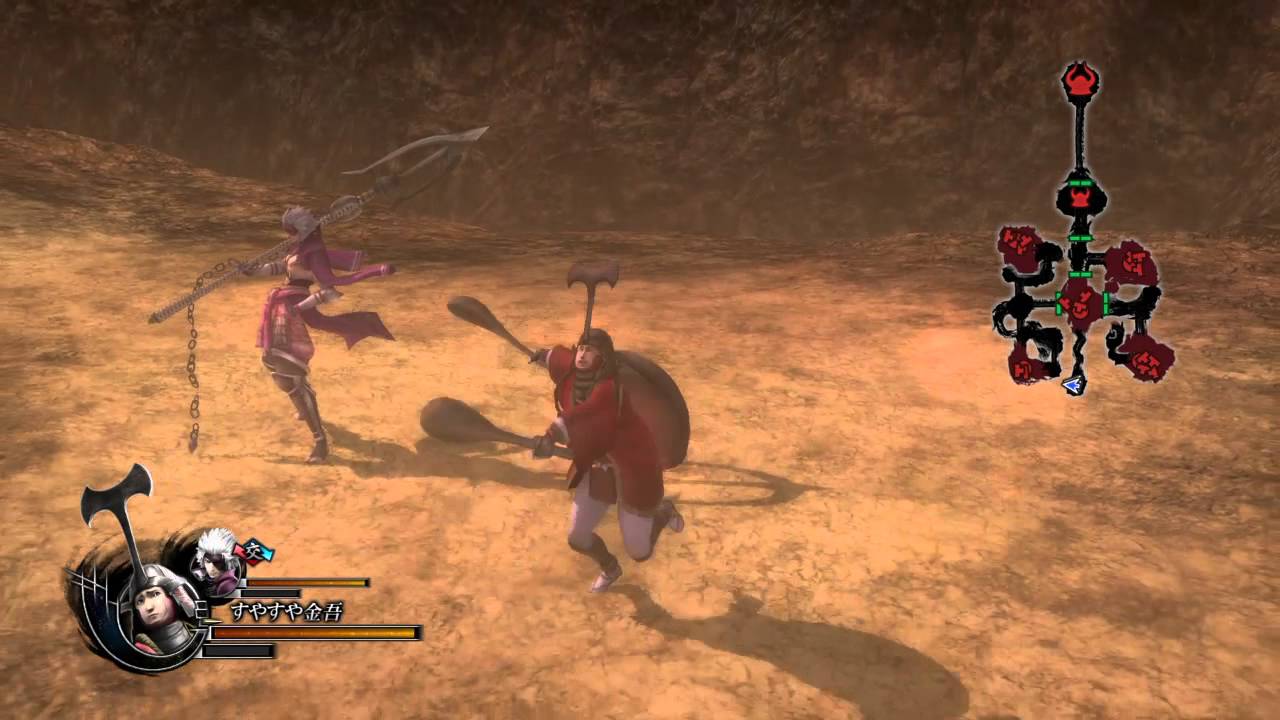 |
| He fights with spoons! |
In the version for Mitsunari, Tadakatsu fires an artillery cannon at him and he runs for Ieyasu to defect. If he gets there the player has to fight both Ieyasu and Hideaki, but if they're fast enough they can reach Hideaki further down the battlefield and kill him first. Every time the player captures a command camp, Hideaki is intimidated and stops to think about if he really wants to defect.
Both versions have the same interpretation of why Hideaki's troops wouldn't move: "I just can't deciiiiide!"

The game ends after the battle of Sekigahara, with some extremely sad endings for both Ieyasu and Mitsunari's stories, where one kills the other and is very unhappy with the result. Obviously, in history, Ieyasu is the winner though.
With that, there's not really anything else to talk about. Extra History goes on a little longer, but the only time Sengoku Basara does is in Sanada Yukimura Den, the events of which are not discussed.
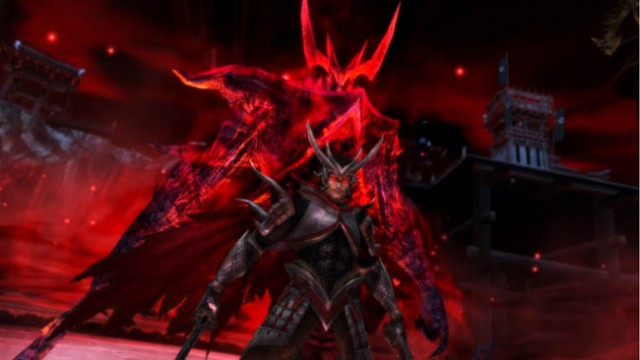
Hey wait! Extra History didn't talk about Tenkai using Oichi to bring Nobunaga back from hell as a soul-sucking demon! How did they forget that?!

No comments:
Post a Comment