Thursday, January 24, 2013

KOF Finales: 2000

After beating 6 opponents, something seems to go wrong with Heidern and Ling’s plan.  Things aren't playing out the way Heidern was expecting them to.

We did have a plan, right?


But Ling isn’t worried.  According to him, it's fine.

You rigged the fights?.... Why didn't you tell me?!


Heidern is puzzled by Ling’s words, but before he can react, Ling orders the people in the control room to guide the finals team to some kind of lift, and then activate a generator.  Apparently he had this all set up, but didn’t let Heidern in on it.


Heidern reminds Ling that he’s in charge, but Ling disagrees and says his mission will be realized once the generator is charged and the “Zero Cannon” is prepped.
Heidern is befuddled by what the Zero Cannon, a series of military satellite weapons made to combat NESTS, has to do with anything.

Uhhhh... Guys..... Personal space.


Ling tells Heidern that was indeed the mission….. Officially…


Yes, Ling was apparently conspiring this little scheme from the start, and used his position of power to do so….. Or did he?


Before the story continues, you have to fight one more time.  It could just be another team, but there is also an optional boss.
Much like Iori and Kyo in the last game, having enough battle points lets you fight a different opponent, but unlike KOF 99, it’s actually possible to have enough.
Technically this can happen earlier in the game, but generally doesn’t.

A communications disruption can mean only one thing...


The girl with the icy hair is Kula Diamond, a superhuman assassin made to counteract K’ with her ice abilities.  Though she seems deadly at first, she's actually extremely childish.
Kula has been ordered to kill your team so that she can “crush Zero’s plans.”  At this point, you don’t know how exactly killing your team will do anything or who Zero is, so we rightfully defend ourselves by fighting this little girl.  Hey, we got to punch Bao, right?


Whichever stage you fight Kula in, it freezes over entirely.  It’s strange how she never does it again in subsequent games, but in this case she may have had some help.
On her own, Kula is acrobatic, but not the speediest character.  Her breath attack has great range, and she loves to slide and pirouette around the stage, making her very tricky to pin down.  I guess you could say she’s as slippery as…… ice.


She also has far more health than the average character, which is odd, because in every other game she appears in, she doesn’t have nearly as much!  Do the playable characters just have some kind of plague going around that weakens bosses to their level, or is it just the game designers cheating for balance with inconsistency?

And she seems half-asleep most of the time.


As a striker, Kula has her robotic sister figure Candy (no doubt named after Kula's favorite food), who uses Kula’s pirouette attack.  It can be really annoying when Candy comes out as you’re trying to jump kick Kula, which you’ll want to do to jump over her icy breath attack.

It’s a challenging fight, so don’t be embarrassed if you lose.  The abnormal motions of her moves are sure to trip up most people on their first try.


I love her victory poses.


Kula’s theme here is very different from most of the other tracks in King of Fighters.  It’s calming and cold, but still has a strong rhythm for the battle.  It's the perfect background noise for such a peaceful-looking winter wonderland with a fight going on in it, and that is quite a small niche to fill.


Once you win, the guys in the control room regain control of the system and Kula leaves your team alone.


What?


O.K.  Well then… On with the show.

Before reading the following exposition, I suggest readers try reading the pre-fight explanations with its background music playing.  It’s strange for me to acknowledge cutscene music, but it does a fantastic job of building anticipation and making the scene more exciting.


SGC!  Woooooo!


Oh.


The project starts with the ceiling opening and the floor lifting your team up into a temple of some sort, where Ling is there waiting for you.
Yes.  There are two Lings: One holding up Heidern and another standing in front of your team with a fancy sarong, whom Heidern is viewing from the control room at gunpoint.  But Heidern knows that this man is not the Ling he knows, and asks for his real name.


No.


No.


No.


No.


Yes.


Yes, Zero was that disembodied voice from KOF 99, which means this must be the second phase he was referring to… Even though this has nothing to do with the original.

But that leaves the question of where the real Ling is.  Zero just tells Heidern that “he’s resting.”  I don’t know if that's supposed to mean he’s dead or not, but regardless, Zero took the man’s identity and had a clone of him stay with Heidern.


But that brings up the question of why he’s keeping his disguise on even now.  My theory is that he had to have some kind of surgery done to change his appearance, so he can’t simply remove it.  I have another theory too, but I won’t explain that until 2001.

Zero tells Heidern that neutralizing everyone (through wearing them out with the tournament, I imagine) was the fastest way to get the Zero Cannon without resistance, but Heidern doesn’t understand why he didn’t just kill everyone instead, as he probably could.


The Zero Cannon needs fighting spirit in order to work.  As a demonstration, Zero uses it to demolish a big chunk of a nearby city, which is revealed later to be Southtown, Terry’s hometown.  Sadly, they don’t show the explosion.  All they show is the beam coming down, and a black circle appearing on a map to indicate the blast radius.  Budget cut much?


But wait, there’s more!  Zero informs Heidern and your team that there’s a generator under the temple that will absorb your team’s power and send it to the cannon.  Once that’s accomplished, he can use it to take over the world!


And I do mean him and him alone, as Zero says he couldn’t care less about NESTS, so when he says he’s going to rule the world, that includes NESTS.

Methinks he underestimates our military.


Your team doesn’t pay attention to details like that though.  Their plan of action is to fight him and stop the cannon…. Somehow.  Like the Orochi team situation in ’97, this seems counterproductive, but if I didn’t get to fight the villain in a game called King of Fighters, I’d feel pretty cheesed off.

I dared to keep fighting Krizalid until I won!  I'll do anything!


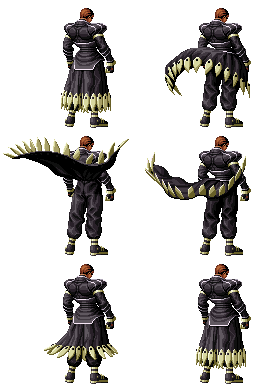
SNK once again shows us their creativity in character creation with Zero: A character who rarely jumps and attacks by whipping his bladed cape-like clothes.  In what other game do you see something like that?


Even though he can throw some lightning-fast punches and kicks, that sarong whip is his primary attack.  It has excellent range and lingers in the air for a good while.  Just touching the blades, even when he’s retracting them, cuts you for a good chunk of health.  He even has a combo super attack for it in which he spins in the air for over 20 hits!


And he’ll have plenty of opportunity to use that move too, because Zero’s super meter charges at an insanely fast rate.  He gets practically a bar and a half for hitting you once with his primary attack, even if you’re guarding!


That super meter doubly acts as a big warning sign to not use strikers.  If Zero has even one super stock, you should not use strikers at all.  The exact moment you do so, Zero uses his black hole super attack, which fills the screen and does heavy damage if you’re not guarding (and you likely won’t be because you just summoned a striker!).  At one point I was able to summon a striker without doing the calling animation, and he was still able to react perfectly before the striker even appeared onscreen!  He had no way of knowing a striker was going to come out!  He reads your button input!

That is f*&!<ing cheating!

Punching the floor always works.


But that’s not the worst of it.  Zero’s cheapest special attack is his shadow strike.  You have to react fast when he says “wakaru” (“understand”) and jump, because if his shadow connects (regardless of whether or not you’re blocking), he delivers a 4-hit combo, ending with a back kick that sends you flying through the air!  This guy knows some good kung-fu.

Less cheap is what may be one of the best special moves ever in a fighting game, and not because it looks cool; just the opposite in fact.  For this attack, Zero kneels down and emanates purple flames right in front of him.


If you’re hit by the flames, he locks you in place as he turns around, and his cape rises up to slash you for heavy damage.  It’s actually probably a reference to Fist of the North Star, in which a man moves so fast, you only see his cape catching up to him and it looks like he didn’t move at all.
Here… well…. Let’s just say SNK nicknamed the move, the “Zero fart.”
*Inappropriate sound effect.*
When you get right down to it though, Zero is one of the easier bosses in the series.  He’s a lot more like traditional game bosses in that you can notice his patterns and timing.  He’ll still beat you at least twice, but he’s nowhere on the level of Goenitz or ‘98’s Omega Rugal.  That’s actually part of what makes fighting him fun though; it’s a nice break from the merciless killing machines players have had to deal with up to this point, but it’s still sufficiently challenging.  Plus the music is once again a great final boss track that sounds like a hymn from the church of Mechonis.


Even when the battle's over, Zero has one more trick up his sleeve.
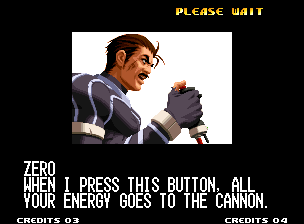
Where did he pull that from?


Your team says they’ll stop him, but Zero had a backup for that as well.  Even if he dies, his clone has his own button to do it in his stead.


Either way, Zero presses the button.  It seems as though the villain has won in the end…. Except something goes wrong.
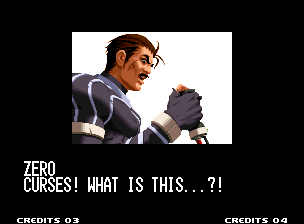
Back at HQ, Zero's massage chair vibrates.


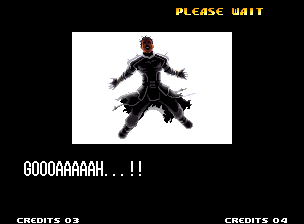
And the generator explodes under him.


Luckily the blast isn't fatal, but Zero doesn’t know what’s going on.

If you beat Kula earlier, you get this little scene.

I wouldn't exactly call this "merriment."


These are Kula’s mothers (she has two), Foxy on the left and Diana on the right.  Like Kula, they work for NESTS, and aren’t ecstatic about Zero’s plan, nor about him not telling them about it.  The punishment: obliteration.
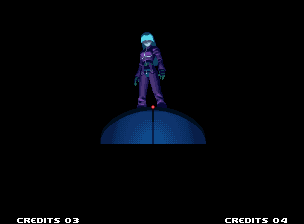


Up in space (because there’s plenty of air up there), Kula apparently aims the cannon at Zero, and...
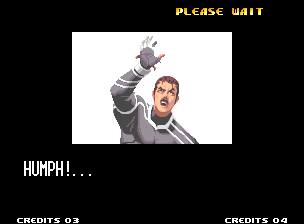


If my plans were screwed over and I was about to be killed by a satellite cannon aimed by a little girl with blue hair, my last words would not be “humph!”

But if Zero is incapacitated, why didn’t the clone take control?

Nice moves, Colonel.


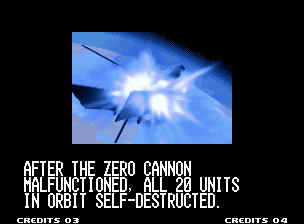
20 units?!  Wow.  There must be tons of debris raining down upon the earth after such a skyward cataclysm.  Did anyone bother to do anything about that?  You may think that because they’re in space, the debris would float in zero gravity, and I’d buy that if it weren’t for the fact that in Kula’s special ending, she falls from the cannon!  And that begs the question of why all the cannons weren't dropping like rocks already, but I'm not physicist.
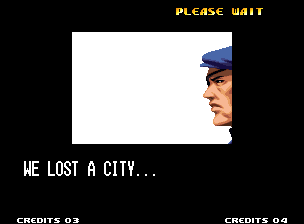
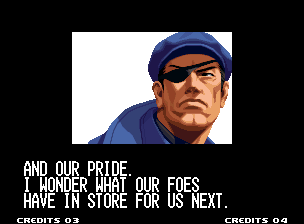
I don't know, but if this gets any more ridiculous, I'm quitting the force.


Frankly, for as long as it is, not much got done in KOF 2000's finale.  Sure, we learned who Krizalid’s superior was and met a few new characters, but that’s just about all that’s important in the long run.  The zero cannon plot is almost never referenced again and has zero impact (pun intended) on the overall storyline.  We didn’t learn anything about how NESTS operates or even what they do (except that they punish traitors), and even the cataclysmic destruction of Southtown hardly leaves a lasting effect.  It’s like this whole thing is mostly filler.

That said, it’s still good filler.  Zero’s idea was a lot more sensible than Krizalid’s, and it's presented well with SNK’s consistently great artwork and music.  That combined with the originality of Zero’s fighting style makes 2000’s finale memorable enough to stand on its own.  It’s not one of the stronger finales, but it’s pretty good.  I think the next game has a better one though.

Monday, January 21, 2013

King of Fighters Retrospective: '99

The Orochi Saga is probably the most loved King of Fighters saga for starting the series off with its staple characters and mechanics.  I also think it's because the saga’s urban fantasy storyline and diverse characters resonate well, the same way shonen anime like Yu Yu Hakusho, Bleach, and, for a more skewed example, Yu-Gi-Oh do.  It certainly did for me.
And like those three series, King of Fighters would get stagnant if it didn’t have a shift in focus to make things interesting.

Yu Yu Hakusho had the Dark Tournament, in which focus shifted to the fights and the plot became a tournament structure with many things happening behind the scenes.
Bleach had the Soul Society, in which Ichigo and his friends entered an entirely new, unfamiliar world with several new key characters.
Yu-Gi-Oh had both Battle City, where the rules drastically changed, and the Millennium World, which, in addition to the setting of ancient Egypt, featured very little card-playing.

In the case of The King of Fighters, focus was shifted to sci-fi element instead of the previous saga’s mystical elements.  That was the beginning of the NESTS Chronicles in 1999.


Notice that the opening says the game is the fifth episode, officially acknowledging that King of Fighters ‘98 isn’t canon.  That means in the storyline there hasn’t been a King of Fighters tournament since ’97.  After the whole human-destroying god debacle, it’s not hard to see why funding was pulled.

But in 1999, the tournament comes up once again, and this time participants enter in teams of four.  Three team members fight, while the remainder acts as a striker, who can enter the fight for a few seconds to perform an attack.
Mysteriously, the event this year is largely a private affair, and each of the fighting venues are places where the Ikari Warriors have failed a mission in the past, prompting them to investigate once again.

The participants in the '99 tournament are a healthy mix of both old and new.
Since '97, Kyo & Iori have both gone missing, and Goro has gone home to be a family man (something that’s explained in a Japanese-only portable KOF game).

That leaves Benimaru in need of a team, but thanks to the mysterious benefactor running the tournament, he gets one in the form of Shingo Yabuki and two more fighters supplied by the benefactor: the large cyborg man Maxima, and flame-shooting K’ (pronounced “K-dash”, for some reason).
Benimaru is pretty dang trusting considering he lets two teammates from an unknown organization join his team.  They could be spies, saboteurs, or even assassins for all he knows, and I wouldn’t immediately trust a guy with a gun built into his arm who analyzes everyone he meets with a built-in scouter.  I guess Benimaru is naive like that.

K' and Maxima
K’ and Maxima take the spotlight as the heroes of the NESTS Chronicles, and they’re both strong enough characters to carry it.  Maxima is a great character, somewhere in my list of top 10 King of Fighters characters.  He’s always serious about completing missions, but usually is a very friendly, laid-back, caring guy.  His nice guy status doesn’t go as far as to let people walk all over him, of course.  SNK said he was designed to be an older character, I suppose to balance out all the young ones all over the place, and if that was their intention, then it worked.  He's much more rational than a lot of the other fighters.
K’, on the other hand, is not so friendly.  He’s constantly annoyed by everything around him, including the KOF tournaments he keeps getting dragged into, but when he has to fight, he tries to keep calm and cool in battle, putting on and taking off his sunglasses and standing like he’s falling asleep.  I swear he’s showing off.


K’ has control over his own flames he shoots out of his right hand, a power given to him by the evil organization NESTS by infusing him with Kyo's DNA.  However, he can’t control it without wearing a special red plated glove on his right hand.  Without it, the flame simply burns out of control.  Imagine the pain he feels, being unable to shake hands, high-five, brofist, or play any video games other than the Kinect.

I like the way K’ fights and the way he plays off of other characters, but I don’t like K’ himself as much.  He’s kind of a jerk, which leans him more toward being an anti-hero.  He has a good sense of right and wrong, which is a redeeming trait, but righting the wrong is something he’d rather not do.


With the four-member team rule in place, other teams needed their own stand-ins and extras.
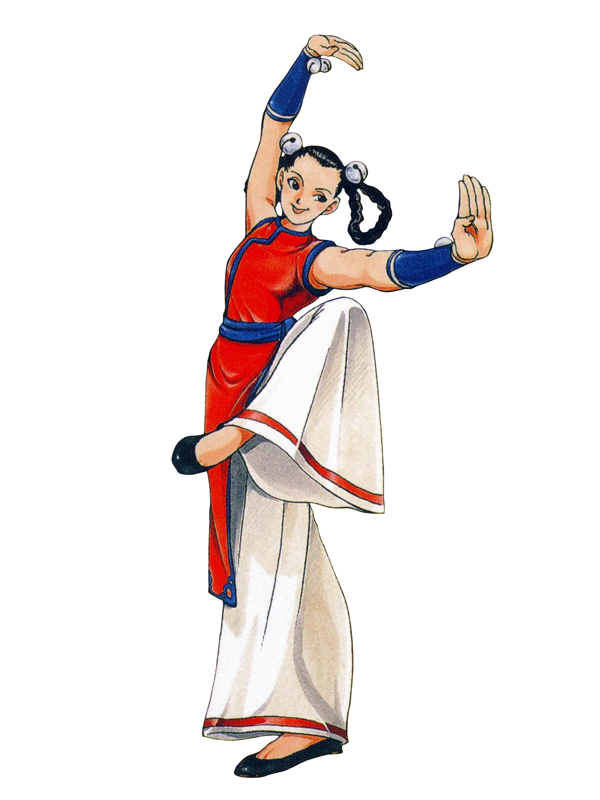
Mai joins the Fatal Fury team, and Yuri goes back to the Art of Fighting team, as does her dad, Takuma.  With Chizuru leaving the series for a while after KOF 97, the gaps in the Women's team are filled by Kasumi Todoh (from ’96), Blue Mary (who cut herself off from the Geese's men), and Fatal Fury character Li Xiangfei.

She’s a very minor character with little establishment, but I always liked Li's playfulness, energy, and cheer.  It shows how SNK strives to cover all the bases when it comes to making characters.

Other team slots are filled with a young woman transferred from another platoon named Whip for the Ikari Warrior’s team, little shotaro boy Bao for the Psycho Soldiers, and Kim’s rival Jhun Hoon for the Korean team.

I should point out that the character of Whip, in addition to her namesake, uses a f%^#ing desert eagle!  Are there no regulations on firearms?  I guess it doesn’t matter if there are, because she only ever points it at the ground!  The fights could be over if she just shot her enemies at the word go!  Even though she doesn’t, her whip gives her all the range she needs anyway.

She uses her whip instead of punching most of the time.


There are also two teamless clones of Kyo Kusanagi you can play as.  They have no place in the story and only exist to give players the option to play with the Kyo Kusanagi move set from KOF ’94 & ’95, and the one from ‘96 & ‘97.

Moveset changes are not something new to King of Fighters, and a strong number were made for the new saga.  Blue Mary controls very differently from ’98, Robert had his special move commands changed, and (most notably) Kensou lost his psychic powers after Bao joined.  Other characters had new super special moves added or outright changed.  Benimaru, for example, now has a super move in which he strikes his opponent with afterimages of himself, a far cry from his close-range super moves.
When I mentioned big changes at the end of my '98 post, I was not using the words lightly.

This shift may understandably have turned some people off, but the fighting system and many of the characters we all know and love are still present, just with a few alterations (as per usual).

New strikers, new characters, new outfits.
In addition to some altered move sets, there's the obvious gimmick of the strikers mentioned earlier.  By pressing the strong punch and weak kick button at the same time, and at the cost of a gradually-regenerating striker stock, you summon whoever you chose as the striker to do one attack and then leave.  Most of the time though, their attacks require the enemy to be close, and if they aren’t, the striker will only taunt and leave without doing anything other than annoying the enemy (the lazy jerks).  Strikers also can be hit to end their attacks prematurely, and against some attacks, act as a human shield, so using them strategically is important.
Strikers add a fun, if experimental, layer to an already great combat system.  Some characters don't work that well as strikers, but when they're used right, they can lead to some great moments.  There's something satisfying about hitting an opponent with your strongest move while Benimaru, Shingo, or Maxima are holding them in place with a grab attack.  That's teamwork.

The computer rarely uses them though.
The special move system also underwent changes.  There are no longer any choices of play style like in ’97 & ’98, and relationships aren’t a factor anymore.  You still build up to 3 stocks like in the previous game’s advance mode, but those stocks do not carry over.

Instead of two play styles, there are two super modes.
Your special move gauge stocks can be used for two different super modes, each at the cost of two super stocks.  After their effects wear off, you can’t use your gauge for a few seconds.
By pressing the two weak attack buttons and strong punch button at the same time, you enter counter mode, in which your attacks do more damage and you can use a stronger version of your super move.  It’s the same super mode as in the last game’s advance mode, for the most part.
By pressing the weak kick button and two strong attack buttons at the same time, you activate armor mode, in which you take less damage and don’t stagger when hit.

Personally, I rarely use either of the super modes.  I prefer to use those stocks for special attacks.

Moby Games?  That ain't no striker I've ever heard of.


Finally, on a more minor note, is the way character order in KOF 99 is selected and how the continue bonuses are done.  Starting with KOF '99, players no longer choose their team order with the control stick, and instead use buttons and hide the order so the opponent can't see.  As stated in the '98 post, the continue bonuses were also no longer a roulette, but instead a choice between three options or none at all.

Once again, King of Fighters mixed their fighting game up just enough; enough for people who have played the previous games to quickly adjust, at least.  The striker system, new characters, and four-man team system was a great way to give the NESTS Chronicles an identity of its own, and using the strikers allows for many more possibilities.  It could be seen as little more than a gimmick, but the striker system is still another feature to play with and adds depth.  It’s a shame one of the most useful mechanics got borked.

In the previous two games, you could evasively roll away from and toward the opponent to both dodge and adjust the distance between the fighters.  In KOF ’99, rolling away from the opponent causes the character to immediately jump back slightly in front of where they started rolling from, defeating the purpose of having it in the first place!  It terribly hampers what is otherwise a strong fighting system, and was promptly put back the way it was in every game to follow.  In KOF ’99, rolling away is almost never a good idea.

Rolled backwards, then jumped right back into the fire.


On the presentation side of things, the technological advancement shows off '99’s stronger points with what I think is the best in-game character artwork in the series until King of Fighters 11.  It hardly looks like pixel artwork as much as it does something somebody hand-drew entirely.  King of Fighters 98 looked almost as good, but I thought it was hampered by some questionable victory art.

I'm like motherf*$#ing Indiana Jones!
And the soundtrack kicks ass.  You should expect nothing less.


The excellent music and character designs both combine at the end of the game to form one of my favorite, yet most infuriating, final bosses in the franchise.  See just why that is here.


King of Fighters ‘98 was a pretty tough act to follow, but by introducing new elements and characters, as well as kicking off the new storyline, King of Fighters 99 kept it fresh, and with great presentation and combat, it stands up with the best of them.
It's actually one of my favorites because it fills a certain niche the games before it didn't.  KOF 97 had a good story, but few character music, and KOF 98 had character music, but no story, while KOF 99 has the best of both.
It’s another worthy entry in the franchise, and well worth any gamer’s time.

Though there aren't as many as in '98, special intros return.


The PS1 version of King of Fighters 99 is available on the Play Station Network, and a more arcade-accurate port is on the Wii's Virtual Console.  Both have upsides and downsides.

The PS1 version has to load before every match, before every cutscene, before every round, and at one point, before a loading screen!  The loading times aren’t long enough to be a deal-breaker, but they hurt the flow of the game’s matches.  The PS1 version also does not let you use the control stick for some baffling reason, so you have to make those circular movements on the control pad and get blisters all over your thumbs.

I suppose it does kind of add anticipation.


On the plus side, the PS1 version uses the arranged soundtrack and has several menu options, like the standard selectable difficulty and color edit modes, in which you can customize the colors of character sprites.
The best thing the PS1 version has going for it is the art gallery and end-game art.  The art gallery shows off various concept art pieces, special illustrations, and alternate sprites, displaying ideas that didn’t make it into the final product.
End-game art is displayed after beating the game with a specific set of characters in the PS1 version.  They’re wonderful to look at, vary in style, and were not in the original arcade version.  The PS1 version is great for fans that have an adoration of the series’ artwork, if nothing else.

The Wiiware version has standard modes and options like selectable difficulty and single play.  It also takes out hit flashes (the screen flashing white to emphasize damage), apparently because of some kind of fear Nintendo has of causing seizures.
You'll have to get one of these digital versions, because they're the only way you’re going to play the game short of owning a Dreamcast and spending an unreasonable amount of money for that version (which has many enhancements of its own).

With the new storyline underway, SNK moved on in the year 2000, which was almost their last.

KOF Finales: '99

I have my work cut out for me again.  I already posted about King of Fighters 99’s finale.  Like ‘97’s though, I didn’t go into the ending due to rage quitting.  Since writing that post, I have been able to beat Krizalid, which means I can confirm how the game ends.  Before that though, there are some details I left out:

*I said the team members you lost stay lost, which is true, but anyone left has their health and striker stocks restored for the second fight.  That means if you can beat Krizalid’s first form with only one character, the second fight is as if the first never happened.
*You CAN jump over the tornado kick, but it’s tricky, as you need to dash for only a quick second and then make a long jump over to where he is, and hope he doesn’t grab you with his overhead kick (how does he not dislocate his leg doing that?)
*He has way too many invincibility frames.  If Krizalid is in the middle of an attack, yours go right through him, even if they clearly connect.
That is f*&!<ing cheating!

Ore no atarashi manga da!

Remember when I found that kickass, rare, colored Fist of the North Star manga volume at a used book store?  Well, I went back there today, and found another rare piece of awesome I didn't know existed.


Indeed, there is a full-colored King of Fighters manga that retells The King of Fighters 2003.  I was aware they had a prequel manga for King of Fighters 96, but that wasn't released in America, to my knowledge.  It's a shocker, to say the least.  It's almost like that time I found my Viewtiful Joe figures.

Admittedly, the artwork isn't the best, as some lining is jagged and many faces look the same, but I do like the writing.  It plays around with the characters and expands on a few things; kind of like good fanfiction.  You can expect me to reference it at least once after I get to 2003 in my retrospective, but that's quite a ways away.

'99's will be up soon.