When it comes to shonen manga, anime and games, there are few with as much knowledge and love as the Shonen Otaku. Join me as we look at all different varieties of action-packed media. Mostly games.
On very rare occasions, every half-decade or so, when the planets and
stars align, there comes a game that is so excellently done in its every aspect
that it’s near-impossible to criticize.
These games are usually ones with fancy current-generation graphics
by huge companies with the best voice actors and motion capture money can buy,
such as the case with the recently-released Psychonauts 2, Bayonetta 2 and
Xenoblade Chronicles. Imagine how
bizarre it is that this new game in the pantheon is a $20 2D indie game made by
one man. Call me an elitist, but I
generally look over indie games because they run out of game too fast and don’t
have the big expansive worlds or the Crispin Freeman like the big boys, yet
here we are with Iconoclasts, a game that manages to reach the heights of its
strongest peers.
While I am definitely a fan of JRPGs (I seem to be one of
the only people who likes the original Persona’s remake), I’ve never played
some of the more talked-about ones like Earthbound or, even still, Persona 5 (that
will be a while).I’ve also never been into
what’s called “post-modernism.”I guess
I interpret things too logically.I
didn’t take much interest in Undertale and the apparent metacommentary in the
Danganronpa games and Metal Gear Solid 2 fly right over my head.I may not be the target audience for a game
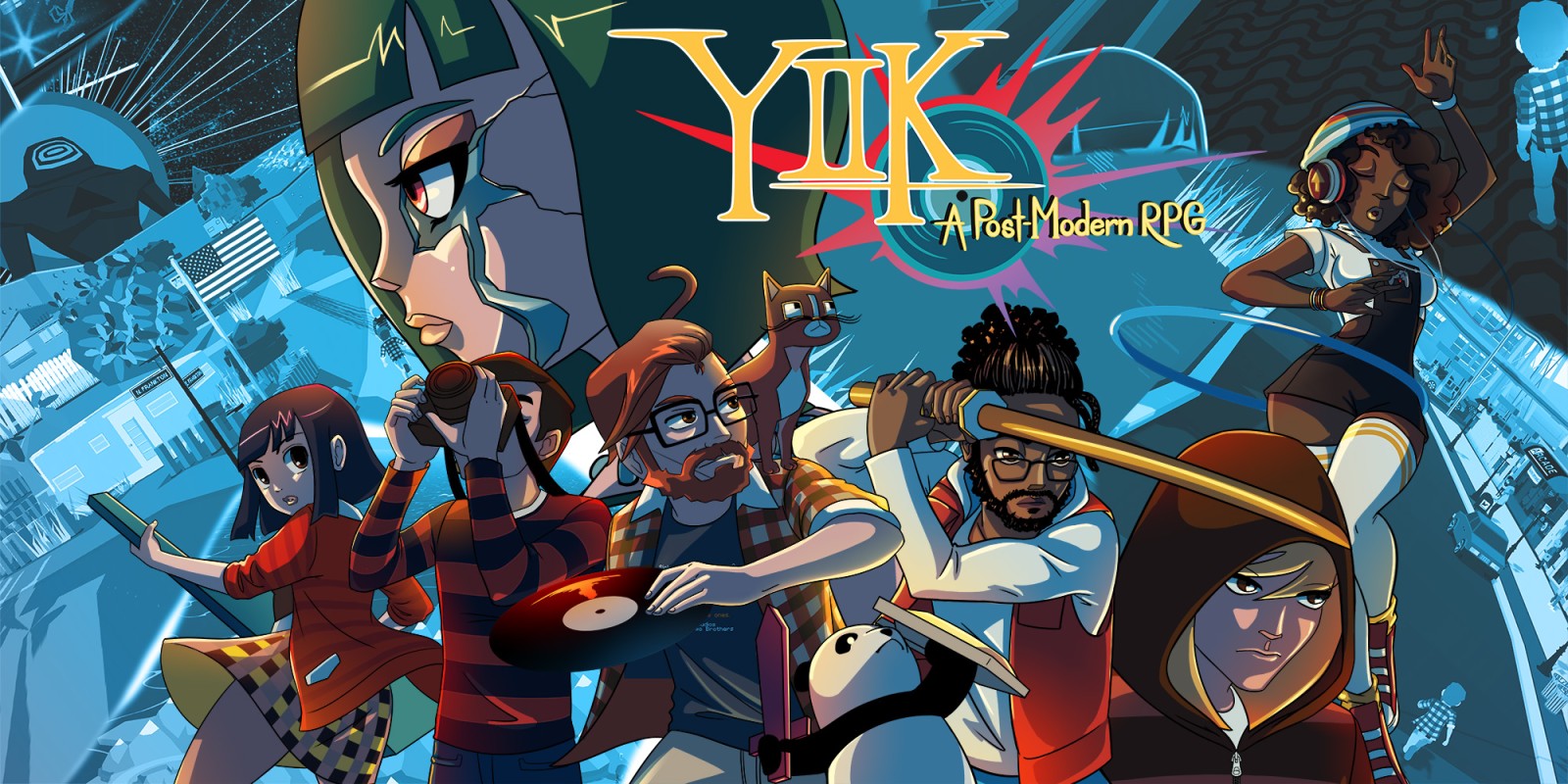
that calls itself a “postmodern RPG”, but I keep an open mind and I can get
behind a game made by 90s gamers full of strangeness and references.Plus I can recommend practically anything,
even a little bit, if the writing’s good, no matter how dreary the rest of it
is.As for whether or not it deserves
any recommendation at all, that’s what we’re here to find out.
I was very late to play Persona 4: Dancing All Night.
I remember the hype back when it came out, but I didn’t pay it much mind.
Compared to the likes of The Rhythm of Fighters and especially
Theatrhythm Final Fantasy: Curtain Call, Dancing All Night’s song list looks
really paltry. It limits itself to one game and its spin-offs and a good
fraction of the songs are remixes, limiting its actual track list even
further.I knew there was a story to it,
but I didn’t think it could be anything more than a joke scenario or half-baked
excuse to get everyone dancing, like Senran Kagura Dekamori.
Once I actually got around to playing it, I loved it.
The whole game radiated energy and fun.The dancing, music and accompanying visuals made for an explosion of
color and lights like it was party time all the time, right down to the
menus.Simply buying stuff had Tanaka’s
notoriously catchy and in-your-face theme play while Patrick Seitz yells at you
and the menu music was always on point.You could dress up everyone in all sorts of outfits for added flair and
all the songs had a variety of partners with their own little duo dances during
the mid-sections.
The story was better than I expected too. The dancing
was worked into an established theme that fit with the Persona universe and it
had a lot of detail put into what was happening. It was great seeing
returning characters like Nanako and Kojima contribute to the plot and the new
characters were very sweet and endearing.It was a solid and highly polished package and I wish I played it
sooner.
As you can expect, that got me excited for the new dancing
games based on Persona 3 and 5, but mostly 3 because I played it many years ago
and in recent years have come off the arena games and Persona Q, familiarizing
myself with the cast even more. I’m currently in the process of playing
every Persona game in order and I’m still on 2: Innocent Sin so I haven’t
played Persona 5.As far as I’m aware,
the main character has a bunch of crystal skulls and fights Batman, Viewtiful Joe,
Klonoa and Hitler.
My excitement took a hit after it was announced that the
Playstation Vita version of the game would not be available for retail and
would only be available for download. We all know what I think about that.
I would get more mad, but Atlus has been in my good graces,
unlike Bandai Namco.Atlus has always
been very good about releasing Vita games physically. The Vanillaware
trilogy, all the Persona games and even lesser games like Conception 2 have all
been on cartridges. Atlus is like Bandai Namco’s good counterpart that
actually cares and doesn’t want to be garbage.I’m going to give them the benefit of the doubt and assume that this is
an honest mistake on somebody’s part there. With Vita cartridges ending
production in 2019, someone may have missed a deadline or something.
They try to offset this major shortcoming with bonuses and
pricing. Vita owners buying it on the first week get Vita-exclusive
costumes, but those costumes were available on the physical version in Japan so that’s
not really a bonus. It’s just implementing something to patch up their
mistake.Early purchases also give both
versions of each game one of the DLC songs with their own dancer, both of which
were not pre-order bonuses in Japan
and are a $5 value. Added onto that is the Vita version being $40 instead
of the usual 50 for physical Vita games. With all of that, there’s a bit
more value in these games than other new Vita games.Whether it makes up for not being able to own
a copy depends on the overall value of the game and that’s what we’re here to
look at.
Since I haven’t played Persona 5 and know barely anything
about it, I’m sticking to Dancing in Moonlight for this review so I know more
than half of what I’m writing about.
Odin Sphere, Muramasa: The Demon Blade and Dragon's Crown are sort of a trinity of Vanillaware games people actually care about. All three use George Kamitami's fantastic artwork and tell classical stories using certain mythological inspirations. Among the trinity, I've always considered Odin Sphere to be the best one overall, even after playing Muramasa, a faster-paced game on a stronger system.
I got the original Odin's Sphere on a whim. I was at Gamestop to buy a copy of The King of Fighters 11 and 13, but since there was a buy 2 get 1 free sale on used games I also got Odin Sphere, which I remember being referenced in Nintendo Power as one of the Muramasa creator's previous games. Essentially I walked out of a store with the two greatest fighting games ever made and a decent action game.
There was a lot to like in Odin Sphere, but technological restraints of the time weighed it down a bit. It could get too unforgiving, loading times for the pretty graphics added up, some of the enemies required exploiting some kind of arbitrary flow-breaking weakness and the final part of the game, without spoiling anything, is bullshit at worst and vague at best.
I beat it, but never got the best ending, as that required repeating a certain set of missions, refilling the success-critical items for each time and having to wait through several loading times. If it weren't for all the little problems Odin Sphere had I would've finished it fully.
Even with those gripes it's still my favorite Vanillaware game thanks to its story, a classical mythological tale of dueling kingdoms, dragons, forbidden magic and the underworld told across five different characters with their own play styles. With the wrinkles ironed out it could almost be considered a masterpiece.
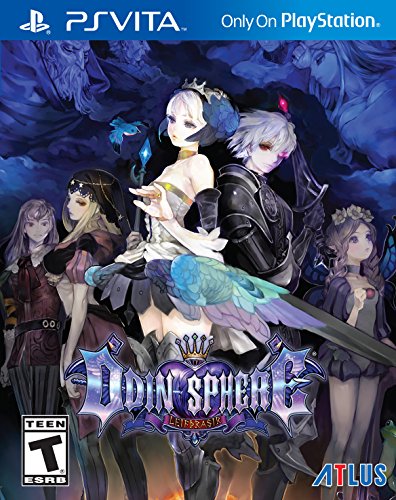
Lo and behold, Vanillaware promised to make it the fantastic game it could be with Odin Sphere Leifthrasir, an HD update to the game for the PS3, PS4 and Vita. With my fond memories driving me, I got the Vita version, because with Muramasa Rebirth and Dragon's Crown on there, why not complete the set?
Senran Kagura 2 was my 2015 game of the year. It enhanced everything that made the original game great, refined everything and packed it full of content and polish. It had a huge assortment of costumes and accessories to play around with, the series first playable male character, an epic story with great enemy designs and the best soundtrack in a Senran Kagura game to date.
I recommend Senran Kagura 2 to any and all Nintendo 3DS owners. It has some room for improvement, but is still an absolute must-buy.
Such a game is a bit of a tough act to follow, so I wasn't nearly as excited for Senran Kagura: Estival Versus on the Vita, especially since it follows the more competitive aspect of Shinovi Versus. I still got it, of course, in the Endless Summer Edition that came with a third 2-disc soundtrack, second art book and holographic cards.
That increase in content is indicative of Estival Versus itself, because it's definitely the biggest, fanciest Senran Kagura game yet.
Oh boy. This game looks like a fun and interesting one that I would like to buy and own. I shall go to the store and buy it to put on my shelf instead of getting it digitally, because Playstation Vita memory cards are expensive and fully-priced retail games take up several gigabytes in addition to the fact that digital distributors can take the games away at any time. I am glad that I have a choice and the worst option is not being forced on me by a shitty garbage company deserving of an eternity of being torn apart by flaming barbed wire.
That's odd. I've gone to every store looking for the Vita version of the game, but I can't find it anywhere.
What's that? I can't hold the game in my hand and have to suffer more wasted memory space like with J-Stars Victory Vs.?
I don't consider myself a fan of the Final Fantasy franchise. Yes, the final boss of Final Fantasy 6 is one of my favorite final battles in gaming history, but apart from it and playing halfway through the Nintendo DS remake of Final Fantasy 4, I haven't played any of the main titles. I've only seen the other Final Fantasy games and before now the only other ones I've played are both the Theatrhythm games on the 3DS.
After getting a Playstation Vita last year, I added one more Final Fantasy game to my library; the PSP game Theatrhythm was spun off of and what is probably the most well-known title the system ever had: Dissidia Final Fantasy: Duodecim.
J-Stars Victory Versus and Senran Kagura 2 have been my two
most anticipated games of 2015. Both are
centered around extreme power-clashing speedline-using shonen badasses on powerful
handheld systems, but since J-Stars came out far sooner I counted the days for
its release first. That is, until Bandai
Namco told me it wouldn’t be released physically on the Playstation Vita.
Apparently Bandai Namco hasn’t learned what XSEED did after
the first Senran Kagura: that forcing customers to download a multi-gigabyte
full-retail game on their expensive (especially on the Vita) memory cards
through a digital distribution service that may not keep it forever is a really fucking stupid idea! I wouldn't even be that offended if they didn't release it physically on two other systems and showed that they're perfectly capable of doing so! Fuck you Bandai Namco!
At that point I should have stopped counting the days and not
given in to their stupid fucking digital-only fucking didn’t-learn-anything
fucking run-by-lobotomized-chimps fucking bullshit, but if I didn’t review a
game synonymous with the word “shonen” I might have this blog’s title called
out for being a lie. So I got the damn
thing, with only a Vita theme based on the game that plays its (admittedly
awesome) theme song as the background music as compensation for the lack of a
physical release’s pre-order bonus. Fuck you Bandai Namco.
If you can get over J-Stars Victory Versus’ slap in the face
for Vita owners and focus on the game as it is, then it’s an amazing action
game and for some will likely beat out Super Smash Brothers 4. The big question is whether or not you can
honestly do that.
Vanillaware is an example of an auteur game company that more companies should aspire to be. A company whose games are filled with love, care and everything that the developers like that, by extension, a good portion of players like them should like as well. Indeed, I have liked Vanillaware's games in the past. Odin's Sphere and Muramasa: The Demon Blade were both excellently-presented fantasy action games with substantial stories and simplistic head-on combat that only needed a few buttons at their core.
With Vanillaware's latest title, Dragon's Crown, I don't think me and the developers share the same tastes as well as in the past. Everything in its core is the company's enjoyable signature, but the smaller aspects around it keep Dragon's Crown from reaching greatness.
Being on an even stronger system than the 3DS with 10 more playable characters added to the lineup of cuties, I was expecting Shinovi Versus to be even bigger and better than the first. I was right about it being bigger, and even better in some ways, but maybe not quite better overall.