In 2004, the original Yu-Gi-Oh manga ended and America , being
as late to the party as we possibly could, only then started getting it
translated in 2005 while the anime was going into the filler arcs. You would think the original series would be
wrapping up with the story ending, but if you think that you clearly don’t know
Shonen Jump. The anime was such a money
maker in America
that 4Kids commissioned Studio Gallop to make a movie and the Capsule Monsters
miniseries. Even Japan wasn’t
done with the manga because they made Yu-Gi-Oh R! The original Yu-Gi-Oh was being kept around
for at least a little while longer while the sequel to the anime, Yu-Gi-Oh GX,
was starting to take off.
| Recommended read. |
That means more original-era games and the last game included in the Early
Days Collection.

As far as being a simulator for the competitive card game, 7
Trials to Glory is the best in the collection.
Players can make a whopping 20 different decks, the new basic wire frame
dueling screen shows the entire field at all times with minimal camera
shifting, the duel speed is adjustable and both players are given turn timers
as if the game is saying
For deck construction there’s a rotating ban list that the
computers abide by and the means of obtaining cards has been overhauled. Now, instead of getting a booster pack for
each win, players are given “duel points” currency depending on their
performance, which can be used at Yugi’s Grandpa’s shop to buy a variety of
card packs of their choice, including some of the real life starter decks. The shop provides information for the packs
for a more informed purchase, such as what kinds of cards are in them and what
percentage of the cards from the pack the player already has.
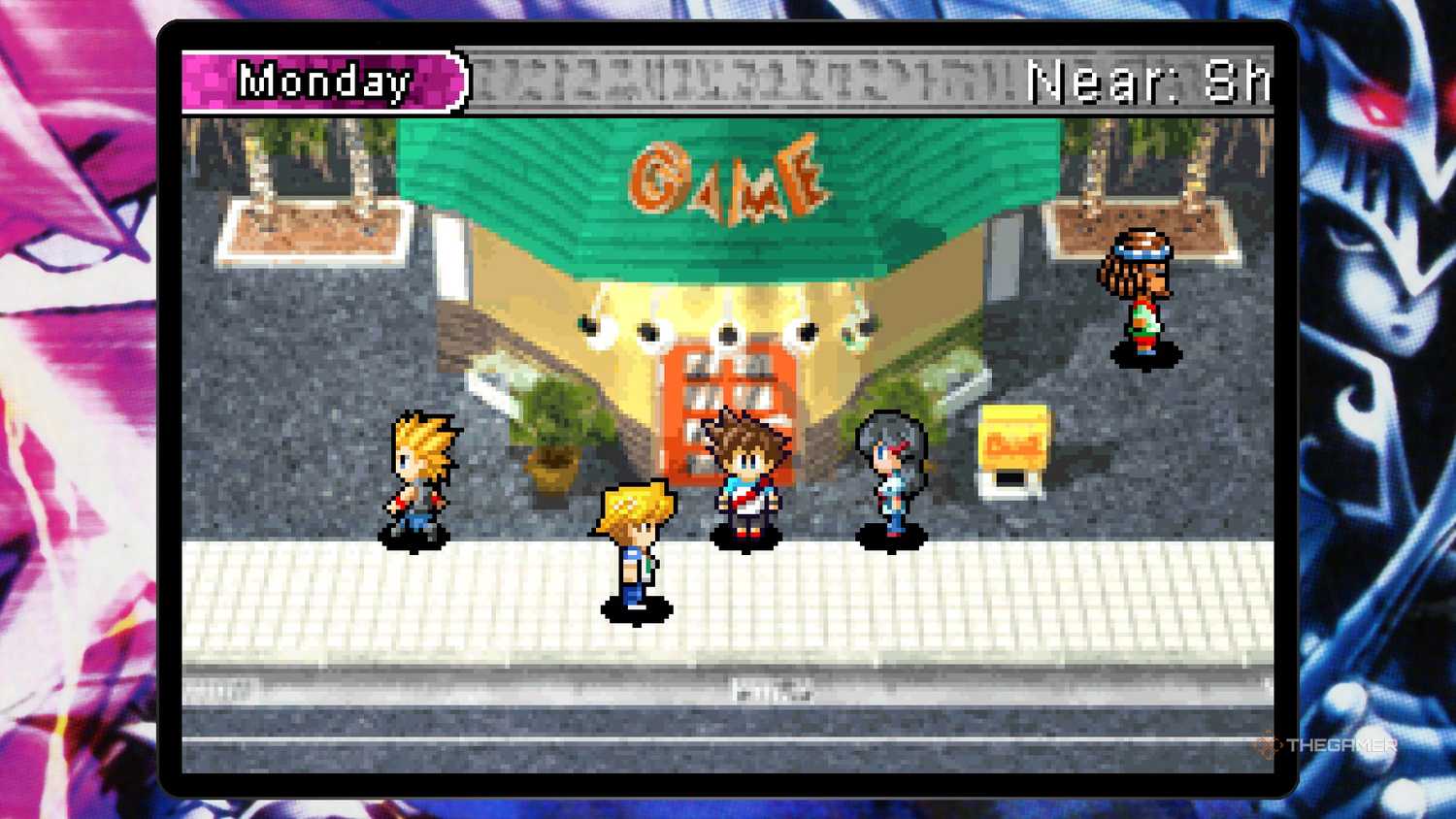
The titular 7 Trials to Glory refers to 7 different
tournaments that can be entered, each having a different rule set, but they
feel less like a goal to achieve as part of some grand story to becoming a
master and more like something to do because there’s nothing else to strive for. At least in Worldwide Edition things would
happen that changed things up and characters had different dialogue in
different situations. There are fewer
named characters in 7 Trials to Glory too, but at least the ones included have
some better decks. Unfortunately, though
the ban list helps, decks still have a lot of Penguin Soldiers and Summoned
Skulls regardless of which character it is.

The overworld, small as it is, also has a chill vibe to
it. Characters are manually challenged,
nothing shakes up the status quo and players can go to bed to pass the days and
enter tournaments at their own leisure.
The music complements this by being subdued, but without being a droning
bore like World Championship 2004.
Final Verdict
With every game in the Early Days Collection reviewed, that leaves the final judgment on the package as a whole. Compared to other game collections, like U2’s Castlevania collections, Capcom’s Fighting Collections or Digital Eclipse’s other collections, such as the Samurai Shodown Neogeo one, the Early Days Collection has little to offer in terms of bonus features. Other collections have concept sketches, interviews, art galleries and music players. All the Early Days Collection has is new translations for a few games, online play for 3 of them, the game box scans and cheats, which are all things the other collections have done on an individual basis.Duel Monsters 2: Dark Duel Stories: Nothing. I didn’t like it.
Capsule Monsters GB: 10 dollars. Not only is it a lengthy JRPG adventure, but Digital Eclipse deserves a little extra for translating it all.
Dark Duel Stories or Duel Monsters 4: Battle of Great Duelists: 5 dollars. Fun, but not all-time greats by any stretch.
Dungeondice Monsters: 6 dollars. A good game to play on the side.
Eternal Duelist Soul or Worldwide Edition: 8 dollars. Two of the best games ever.
The Sacred Cards & Reshef of Destruction: 15 dollars for both. It's important to remember this is with cheats.

World Championship 2004: I’d rather get paid to have to play
that shit instead.
Destiny Board Traveler: Nothing. It’s a bonus game.
7 Trials to Glory: 7 dollars. A step below Worldwide Edition for me, but solid.
That brings the value to 54 dollars, give or take, so I
think 50 is an ok asking price. The Yu-Gi-Oh
Early Days Collection, at a base level, has some really fun and varied
games. Even when mitigated by the cheats,
many of them definitely show their age and I can’t deny that even the best ones
aren’t as polished as other, similar games one could buy, but there’s a lot of old-school
virtual tabletop gaming with the franchise’s monster designs that you can’t get anywhere else. I’m happy the
Yu-Gi-Oh Early Days Collection exists and I give it a 7.5 out of 10.
Destiny Board Traveler: Nothing. It’s a bonus game.
7 Trials to Glory: 7 dollars. A step below Worldwide Edition for me, but solid.

No comments:
Post a Comment